THE PAP Government has long-term plans for Singapore’s built environment, shared Minister for National Development Chee Hong Tat in an interview published earlier this week with The Straits Times (11 Aug).
From 55,000 new BTOs for new homeowners between 2025 to 2027, upgrading old HDB flats for seniors and turning public parks and rivers into even more vibrant spaces for businesses and the public, here are three takeaways:
More new BTOs and flats with shorter waiting times
Source: Chee Hong Tat / TikTok
The HDB will launch some 55,000 BTO flats from 2025 to 2027, a 10 per cent increase compared to the earlier figure of 50,000.
The new flats will be across Singapore, including new areas like Mount Pleasant, Sembawang North and the former Keppel Club along the Greater Southern Waterfront.
About 4,500 Shorter Waiting Time (SWT) flats are coming in 2025 as well, exceeding the MND’s target of 3,800 by almost 20 per cent. “This will benefit many of our buyers, especially those with more urgent housing needs,” said Minister Chee.
MND will be able to build more of these SWT flats by starting planning very early, from infrastructure preparation and technical studies, to design development and contracting works.
“We understand that buying a HDB flat is a big life decision that’s close to the hearts of many Singaporeans,” said Minister Chee. “And providing our citizens with affordable and accessible housing is a key part of our social compact.”
The government will ensure that a steady level of private housing supply continues, he added. More than 25,000 private residential units will launch from 2025 – 2027 through the Government Land Sales Programme. In total, Singaporeans will have over 70,000 new private housing units to choose from come 2030.
Upgrading older flats and renewing older towns
Source: Chee Hong Tat / Facebook
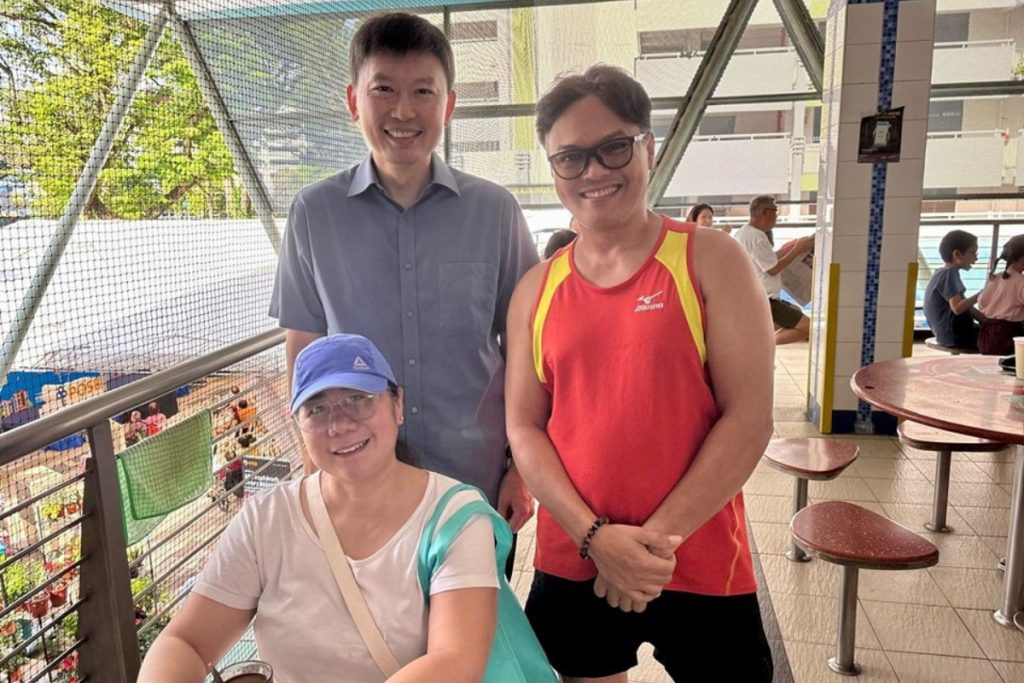
Homeowners, especially seniors, can look forward to rejuvenated flats and estates.
“This year, we expanded the Silver Upgrading Programme [SUP] to another 12 precincts across Ang Mo Kio, Bukit Merah and Toa Payoh, which will benefit 11,000 more households,” said Minister Chee about upcoming senior-centric features for estates with more seniors.
Senior-centric features may include rest areas along pathways, therapeutic gardens, fitness trails and 3-Generation playgrounds where seniors and children can play and exercise together. The SUP will develop 26 precincts in Ang Mo Kio, Bukit Merah, Queenstown and Toa Payoh in total, benefitting 24,000 seniors.
The PAP Government is also planning for homeowners’ futures with the Home Improvement Programme [HIP] 2 and the Voluntary Early Redevelopment Scheme (VERS). HIP 2’s enhanced repairs and renovations are in store for HDB flats at their 60- to 70-year mark, enhancing livability for residents.
“For example, HIP 2 will adopt enhanced solutions for spalling concrete. We understand this is a concern for some of the residents staying in the older flats. We will employ corrosion resistant repair, or the CRR method, which was rolled out for HIP last year, more extensively for older flats undergoing HIP 2,” said Minister Chee.
HIP 2 additionally will refresh the common areas, precinct facilities and greenery of estates, added the Minister. It will complement the rejuvenation efforts of the SUP and Neighbourhood Renewal Programme (NRP).
VERS will begin in the 2030s with redeveloping some HDB blocks aged about 70 years old, allowing a gentle pace of urban renewal.
“If we leave all the leases to naturally run down …we will need to relocate a large number of residents and build many new homes within a short time in the 2070s and 2080s because these flats were built in the 1970s and 1980s,” explained Minister Chee about the need to work before the flats’ 99-year leases run down.
“This will be very disruptive to residents who are staying in these towns. Hence, it is better to stage the redevelopment progressively over 20 to 30 years. This also allows us to be more strategic in how we replan our ageing towns, and to reap some of the land intensification and estate rejuvenation gains earlier,” he continued.
Creating a lively environment for people, entrepreneurs and businesses
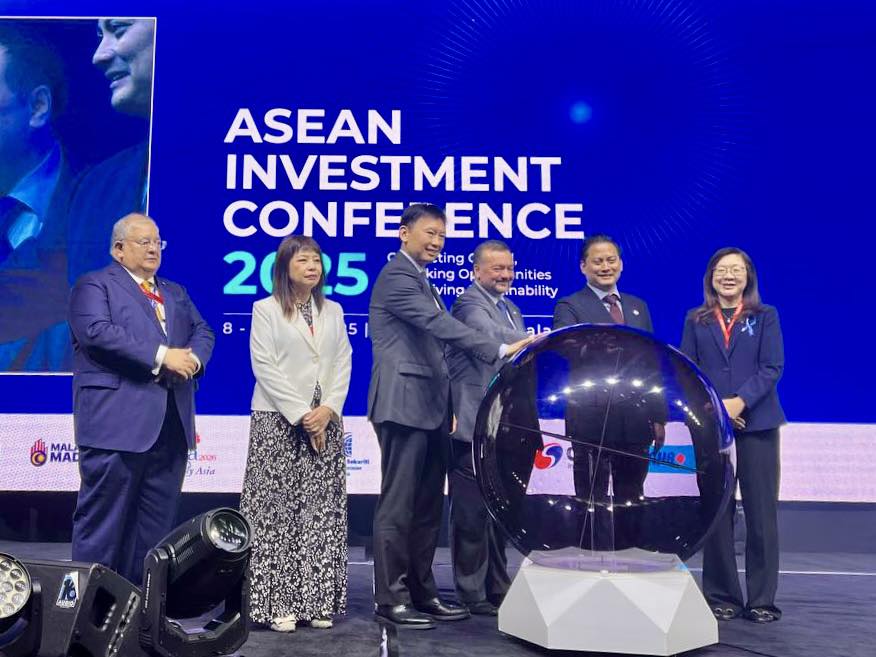
Source: Chee Hong Tat / Facebook
For entrepreneurs and industry partners, MND is improving the business environment. This includes streamlining regulatory processes as well as making it easier for industry partners to make use of new growth opportunities.
The CoreNet X platform for approving construction projects has allowed firms faster approvals. It will become mandatory for all projects with a gross floor area of at least 30,000 square meters starting 1 October 2025.
“Some projects even achieve time savings of up to two months at the construction gateway clearance stage,” said Minister Chee. “MND, BCA [Building Construction Authority], together with our industry association, we will continue to conduct training. We’ll continue to provide support to encourage our industry partners to come aboard.”
When changing a site’s use within a commercial space, business owners will only need to obtain the respective landowner’s consent and comply with the relevant authority’s requirements for their proposals. This is versus the current system, which involves informing the Urban Redevelopment Authority [URA] and can cost up to $3,500.
Eating house operators, similarly, will only have to seek the HDB’s approval when setting up outdoor refreshment areas, not both the HDB’s and town council’s as under the current system.
“This helps to reduce time taken for such approvals from 42 days to not more than 30 days,” said Minister Chee. “I hope to work closely with the industry to find out which other areas we can help them and work together with them to simplify our rules and processes, to cut red tape, to bring down processing time and costs for businesses.”
Commercial property owners can more easily make their streets and public areas into vibrant places under the expanded Business Improvement Districts (BID) programme.
“If you have enjoyed the light projections at the Singapore River Festival, or vibed to the pop and electronic music at the District M event in Marina Central, or tried out the interesting chairs at Raffles Place Park, you will have benefited from URA’s pilot Business Improvement Districts,” said Minister Chee. “MND will propose a new legislation to formalise the BID model. And we hope that by doing so, we can also scale up to more precincts, more areas in different parts of Singapore, working in partnership with our industry [and] our businesses.”
MND will also ramp up partnerships with local companies to improve built environment processes and help these companies to globalise, said the Minister.