
Former Member of Parliament Intan Azura Mokhtar once assisted two orphaned sisters with their university admission appeals. One of the sisters used a wheelchair after a road accident. Dr Intan was inspired by their determination in pursuing their education despite adversity.
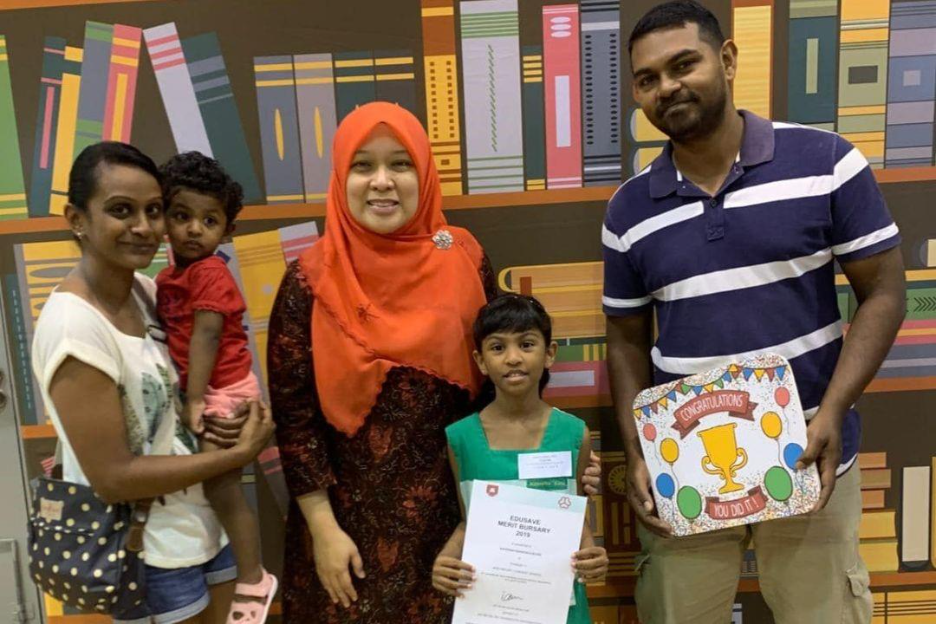
Dr Intan, 49, who served at Ang Mo Kio GRC for two terms, told Petir that the sisters sought her help for financial aid and university applications during a Meet-the-People session.
“Despite their financial difficulties, they had aspirations to continue their studies for better opportunities in future,” she said. “[What struck me most about] both sisters were their tenacity and perseverance. They never gave up, regardless of the obstacles or rejections they faced. Their resilience was truly inspiring – regardless of the hurdles and obstacles you face, keep at it.”
Dr Intan has since learnt that the younger sister was completing her university studies while the elder had secured university admission.
She is heartened that the universities looked beyond grades to recognise their potential.
“I’m glad we played a small part in helping them achieve their dreams,” she said. “This highlights the important role of an MP – getting to know residents, understanding their circumstances and challenges. How can we bring [their stories] to light and make people see beyond what appears on paper?”
Dr Intan, an associate professor and director of the Community Leadership and Social Innovation Centre at the Singapore Institute of Technology, entered politics in 2011 when she took charge of the Jalan Kayu division under Ang Mo Kio GRC.
Before joining politics, she worked as an educator and volunteered with several organisations including Mendaki, Singapore Muslim Women’s Association, and the Singapore Children’s Society.
While she never planned on entering politics, Dr Intan’s involvement evolved naturally from her community work.
“I saw it as the next natural step beyond volunteer work,” she explained. “I could have a greater influence on policies, laws, and other initiatives [that impact our community].”
Intan Mokhtar: Raising difficult and challenging issues with tact and finesse

Reflecting on the most challenging aspect as a parliamentarian, she highlighted the difficult balance between representing constituents’ interests and serving as a member of the governing party. This included the task of questioning her own party’s ministers and political office holders about government policies.
“When you raise those issues, you must have tact,” she explained. “Understanding that while you are all parliamentarians, you’re not exactly opposition. There’s always a fine line [to navigate]. At the same time, [being on the] backbench means you’re raising issues that can be quite difficult to address.”
Finding the “sweet spot” when questioning requires experience and humility – both to avoid difficult situations and to truly listen and understand different perspectives, Dr Intan shared.
As deputy chairperson of the Government Parliamentary Committee for Education, Dr Intan passionately advocated against academic streaming. Having taught Normal (Technical) stream students herself, she had observed firsthand how academic labels undermined her students’ self-confidence.
“Initially, when political officeholders from Ministry of Education said, ‘No, we still want to put academic streaming in place.’, I was naturally a bit upset,” she admitted. “But I had to always remind myself to distinguish emotions [from] facts and what is needed. So, it’s not easy to manage that.”
The issue has since seen significant progress. By 2024, all secondary schools implemented full subject-based banding, enabling students to take subjects at different levels based on their individual strengths.
She and other PAP MPs also advocated for nurses in the public healthcare sector to have the option to wear the tudung with their uniforms.
Over several years, parliamentarians consulted with nurses, healthcare providers, and patients to understand their various perspectives and aspirations regarding this issue.
She noted that as a diverse nation, Singapore needs to consider various sensitivities and concerns from different communities.
“It’s about finding the common ground to push for certain policies or laws to be enacted. It was a process that took time,” she explained. “When you come up with policies or laws that address the greater good, they [must be both] tenable and sustainable. It must be on middle ground.”
This careful deliberation led to policy change. In November 2021, the government allowed nurses in the public healthcare sector to wear the tudung with their uniforms if they chose to do so.
Over her nine-year tenure, Dr Intan found residents to be open-minded. She and her team built strong bonds with the community, their genuine care resonated with residents.
“The first thing that hits people is how [I look],” she said. “But I [see this] not as a hindrance but as motivation to [work harder] and dispel initial perceptions… At the end of the day, it’s about serving with what’s in here, your heart, and what you have up here (brains).”
“The connection we have with residents transcends any initial physical perceptions they might have had,” she explained.
Since Mandarin was the mother tongue of many residents, Dr Intan bridged the communication gap with the help of her volunteers who helped to interpret. She also learnt key Mandarin phrases herself. These efforts showed her commitment to connect with residents.
“So, it helps,” she said. “As I’ve always said, people forget about how you look. It’s the sincerity that shines through and the bonds you forge with them.”
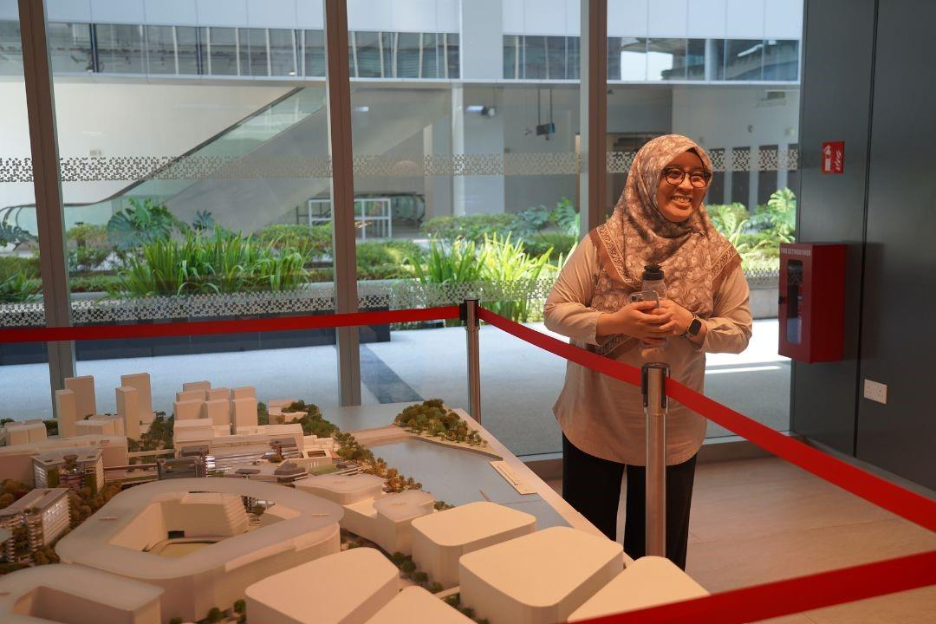
According to Dr Intan, Jalan Kayu constituency has diverse demographics, spread across both public housing and private estates. It required distinct outreach approaches for each community.
She said: “It was challenging, but it kept us on our toes and responsive to community needs. We actively reached out to residents to understand their different needs. Though demanding, it was a good learning curve for me.”
Dr Intan described her work as people-centric, partnering with various stakeholders to create initiatives that benefit residents.
“You cannot do things on your own. There’s an African proverb that says ‘If you want to go fast, go alone. But if you want to go far, go together’. So, it’s working together with many people in the community. Through [these] ground-up initiatives, we could go far and do more for residents.”
Dr Intan said she is blessed to have a dedicated team of volunteers, who devoted time and effort to serve their community. Their selflessness and genuine desire to help others inspired her. “That is something that we need to value.”
She readily admitted that she does not miss the demanding schedule of an MP after retiring from politics. Her role had essentially been two full-time jobs – handling her day job on weekdays while dedicating weekday evenings and weekends to constituency work.
“I really miss the people I used to work with. The activists, volunteers, some of the residents you get to know. I used to walk around in the neighborhood; I met familiar faces and said ‘hello’ to them. So, it’s the people and the bonds that we have forged that I miss.”