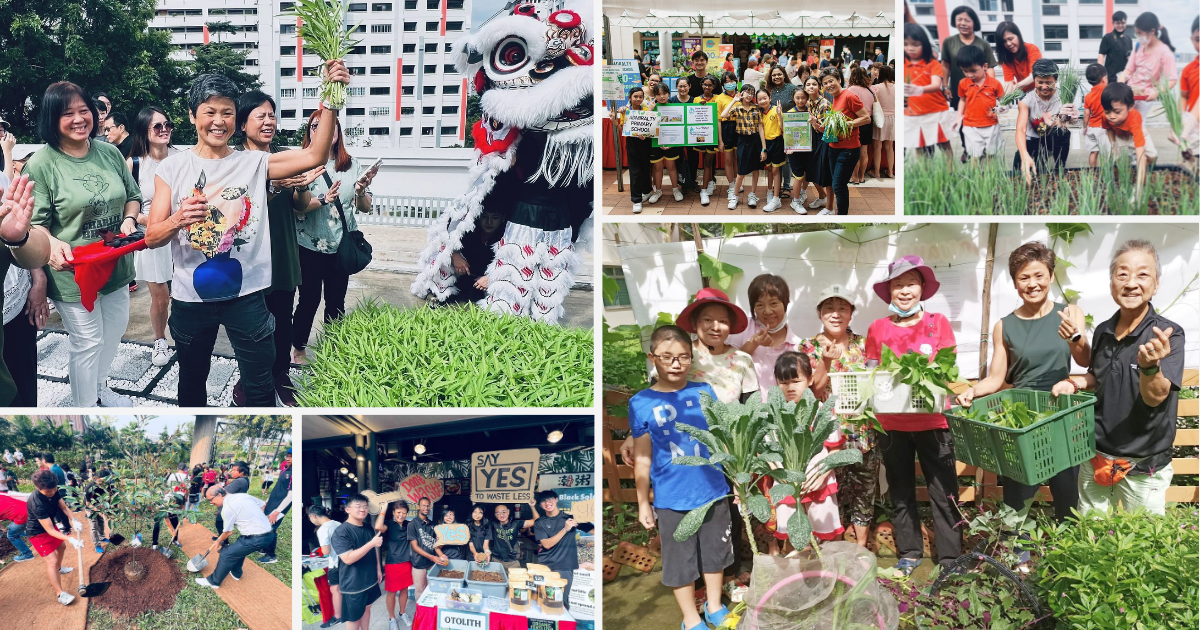
Poh Li San, Chairperson of the Government Parliamentary Committee (GPC) for Sustainability and the Environment, has outlined three key priorities for the upcoming term of Parliament.
They are: to check on the progress of the Singapore Green Plan, leveraging Members of Parliament’s influence to extend national programmes locally, and working with stakeholders on sustainability issues.
Ms Poh, Member of Parliament for Sembawang West SMC and former Deputy Chairperson, told Petir she is grateful for the opportunity to continue the committee’s work from the previous term.
“Environment and sustainability are everyone’s concerns. We have a lot to address across water, waste, energy, and the environment. We have important objectives and goals that we want to pursue as a society.”
A key priority of the GPC is to ask questions of the Ministry of Sustainability and the Environment’s (MSE) initiatives. This includes reviewing the SG Green Plan’s progress since its announcement five years ago.
“There were multiple goals set forth for the SG green plan. Now that it is almost five years since the launch, are we on track? Are there any changes or new ideas that are needed?” she said.
The GPC will collaborate with multiple stakeholders, including MSE, Ministry of Education, Ministry of National Development and Ministry of Transport, as well as community groups and businesses on this effort, she said. The committee will also evaluate other key MSE targets in waste management, water, and energy sectors.
The GPC’s second priority, according to Ms Poh, is for its MPs to “leverage their influence and outreach”. This way, they can start some of these impactful national programmes in their own communities and scale up successful ground up initiatives across the country.
Ms Poh shared that the GPC’s third priority will be to work closely with stakeholders, including business, interest, and environmental activist groups focused on climate change issues.
“Through the party HQ’s Climate Action Group, we will work closely with [these diverse] stakeholders to advance our proposals and policy ideas and bring them to the government, parliament, and society,” she said.
Poh Li San: Securing clean energy alternatives is crucial
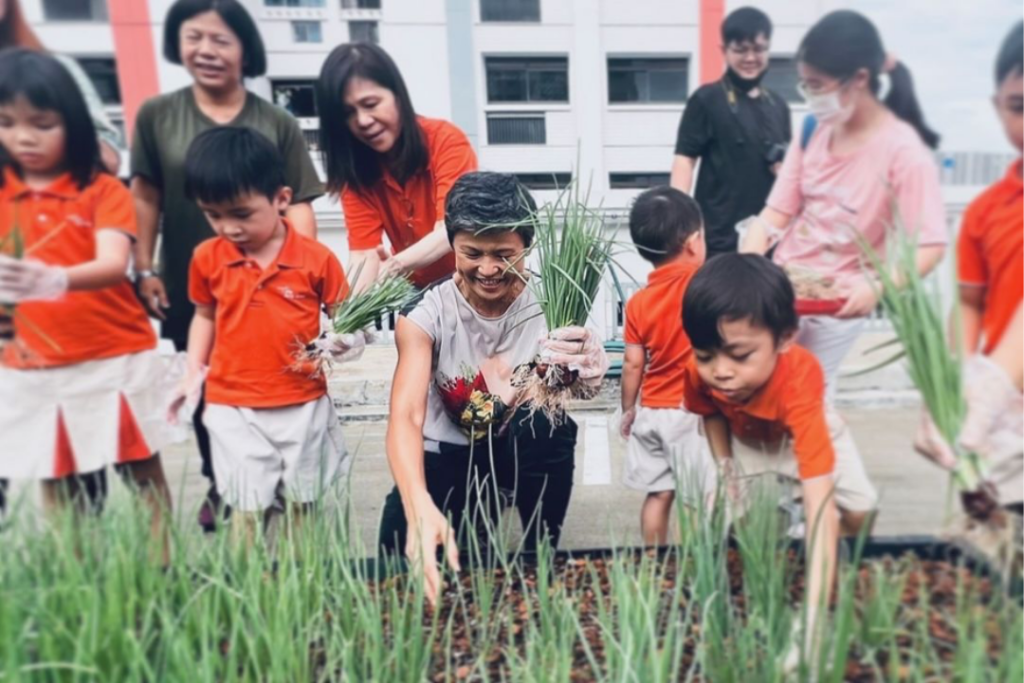
Beyond the GPC’s priorities, Ms Poh outlined three key areas she plans to champion. The first is energy capability development. She stressed the urgent need to develop long-term green energy alternatives, noting that Singapore currently relies on natural gas for 95 percent of its energy production – a finite resource that needs sustainable alternatives.
“We’re now talking about hydrogen or light nuclear [options]. Depending on which solution we adopt, it will determine the trajectory of how the society goes,” she explained. “Energy is the crux of our journey towards a net-zero society. If we can find green energy sources for energy production, we’ll be well on our way towards our net- zero [goals]. Building long-term capabilities in this area is [therefore] extremely important.”
The second focus area is the nation’s 2030 food security plan, led by the Singapore Food Agency. Singapore aims to produce 30 per cent of nutritional needs locally by 2030. Ms Poh proposed to evaluate the progress toward these targets as the plan has reached its midpoint.
“It’s not easy because the cost base is very high. What else can we do to help our urban farmers and the whole industry to make it work?” she said.
She recommended studying the approaches of small, technologically advanced countries and cited Switzerland as a model for food security and self-sustainability.
Waste management forms the third critical area. Singapore currently incinerates its waste and disposes of the by-products at Semakau island landfill. Ms Poh warned that this landfill will reach capacity within the next decade, a situation made worse by Singapore’s declining recycling rates.
“Once Semakau is filled, what do we do next? …It also takes space in the sea. If we don’t have a good solution on waste management, as well as to improve recycling rates, this becomes a big problem down the road.”
“What else can we do as a society to encourage people to recycle more and find solutions to manage waste more effectively?” she added.
Poh Li San: Shifting mindsets remains a key challenge in sustainability initiatives
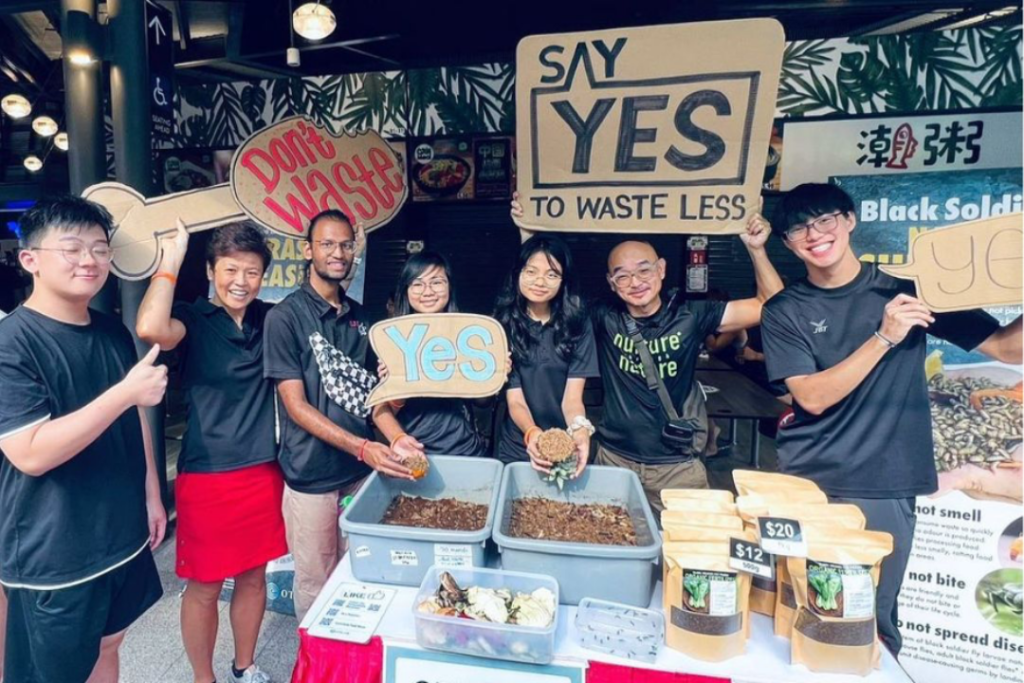
When asked about the challenges in promoting sustainability efforts in Singapore, Ms Poh identified shifting mindsets as a key challenge. While she is encouraged that Singaporeans, especially students, are learning about the importance of sustainability, she stressed the need for more awareness programmes targeting adults to change their mindsets.
“At the end of the day, [sustainability] may mean more inconvenience for individuals,” she explained. “Like you must bring your own shopping bags, sort your trash. You pay more for things like an additional five cents for plastic bags. With carbon tax kicking in, things may become more expensive.”
“It’s about helping Singaporeans become self-motivated and embrace these changes in lifestyle for the greater good of protecting our environment.”
Reflecting on her recent visit to Switzerland, Ms Poh noted how environmental consciousness is deeply ingrained in their culture.
“Their streets and lakes are always clean without cleaners cleaning. [In contrast], we are still very dependent on the large cleaning workforce. I hope we can develop a similar mindset like the Swiss, Japanese, and Scandinavians, who are far advanced in embracing environmentally friendly practices.”
Cost presents the second major challenge, according to Ms Poh. Sustainable options typically involve higher costs across various sectors. Businesses face higher costs when investing in energy-efficient systems and importing green energy would increase utility costs.
“[We face] a real trade-off,” she said. “While we aim to reach our net-zero goal, we’re already dealing with a high cost of living. [The question is]: are we prepared to add on another layer of cost in the pursuit of a lower-carbon society?”
The third challenge is time. Ms Poh warned against the “kick the can down the road” mentality, where people postpone action because they do not feel immediate effects.
“We’re racing against time to reach net-zero targets and prevent global warming. If we don’t deepen our efforts now, you will see more disastrous climate patterns around the world. This directly affects Singapore through rising sea levels and other impacts.”
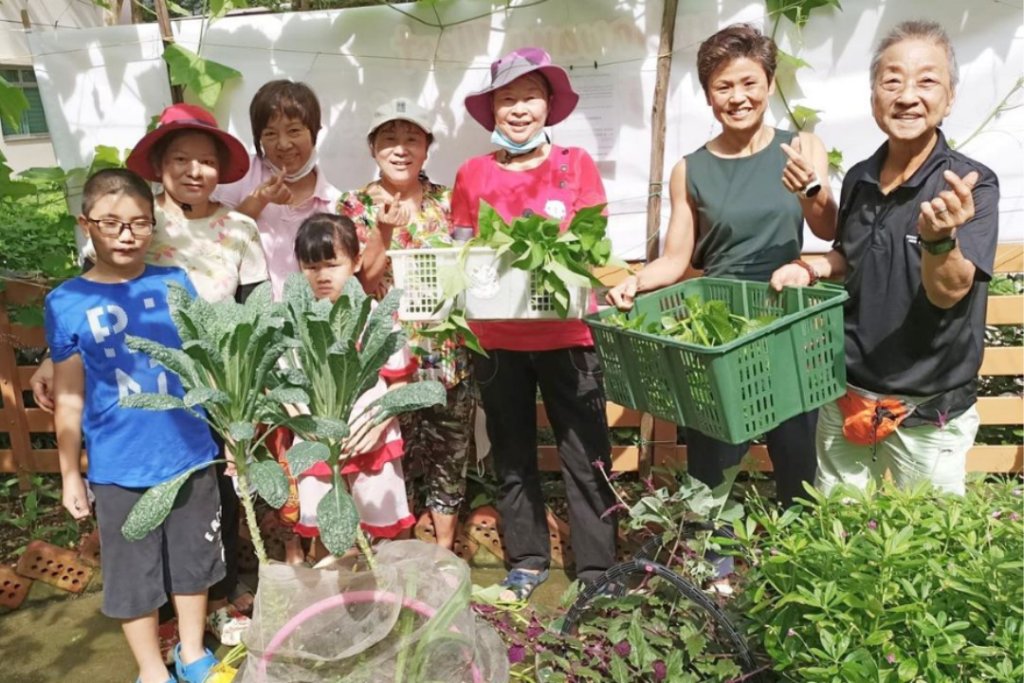
Having served as Deputy Chairperson previously, Ms Poh sees her role as continuing the important work that the GPC has done, which coincided with the launch of the Singapore Green Plan.
During the previous term, the GPC was particularly active, with members filing two parliamentary motions addressing climate change and its impact on Singapore in February 2021 and January 2022. Former Chairperson Louis Ng also introduced a private member’s bill targeting Singapore’s food waste problem.
“The refreshed GPC team under Ms Poh’s leadership combines new and experienced voices, including first-term MPs Foo Cexiang, David Hoe, Lee Hui Ying, Valerie Lee, and Ng Shi Xuan, alongside second-term MPs Deputy Chair Nadia Ahmad Samdin, and Hany Soh.
“We are a fairly young group, and our young MPs bring valuable perspectives from their professional backgrounds, interests, and community involvement,” she said.