
Former cabinet minister and People’s Action Party (PAP) stalwart Lim Swee Say received the Meritorious Service Medal at this year’s PAP Awards and Convention. The 71-year-old hopes that the pro-Singapore spirit continues to grow from strength to strength and transcends generations.
Mr Lim received the highest honour at the event on Nov 9 from PAP chairman Desmond Lee. He was among the 426 party activists acknowledged for their unwavering commitment and contributions to both the party and nation at Singapore Expo.
In an interview with Petir, Mr Lim said:”I am humbled by this award today and grateful for the opportunity to serve our nation and people alongside likeminded leaders and activists through the years,” Mr Lim said. “May our pro-Singapore spirit continue to grow from strength to strength, from generation to generation.”
Lim Swee Say: The Global Financial Crisis was a challenging moment
Mr Lim joined the Party in 1996 because he was “pro-Singapore”. He was elected as a Member of Parliament for Tanjong Pagar GRC in 1997. He later served in Holland-Bukit Panjang and East Coast GRCs until he retired in 2020.
Throughout his career, Mr Lim held key portfolios including Minister for the Environment, Minister in the Prime Minister’s Office, and Minister for Manpower.
As Manpower Minister and former Secretary-General of the National Trades Union Congress (NTUC), he championed workers’ interests by advancing fair employment, quality jobs, and lifelong learning. He also strengthened Singapore’s unique tripartite partnership among government, employers, and unions, ensuring workers’ voices remained central to national policy.
When asked about his most challenging moment, Mr Lim pointed to the 2008-2009 Global Financial Crisis as especially difficult. Serving as labour chief then, he saw firsthand the anxiety among Singaporean workers who were concerned about massive retrenchment and rising unemployment rates.
“We were worried that if Singapore’s economy followed the rest of the world by cutting jobs to save costs, many workers would lose their livelihoods,” he said.
Fortunately, as Mr Lim explained, Singapore’s tripartism enabled a different approach. The Labour Movement successfully convinced their tripartite partners—the government and employers—to reverse the typical strategy. Instead of cutting jobs to reduce costs, they collectively “turned it the other way around” by cutting costs to preserve jobs.
In 2009, the Government sought and obtained then-President S R Nathan’s approval to withdraw $4.9 billion to help businesses cut costs, save jobs, and stabilise the economy.
The Labour Movement, in partnership with employers, sent many workers for retraining and upgrading—what Mr Lim described as “upturning the downturn.”
As a result, Singapore emerged from the crisis stronger than before. “By the time the downturn was over, Singapore was among the first countries to move forward,” Mr Lim noted. “Not only did we manage to preserve our capacity during the downturn, but more importantly, we upgraded many workers to take on new jobs of the future.”
“This is really a strength of Singapore,” he concluded. “We do things differently. We focus mainly on our workers and fellow Singaporeans, in good times and bad.”
Lim Swee Say: Three pillars of nation building – a competitive economy, a cohesive society, and sustainable development
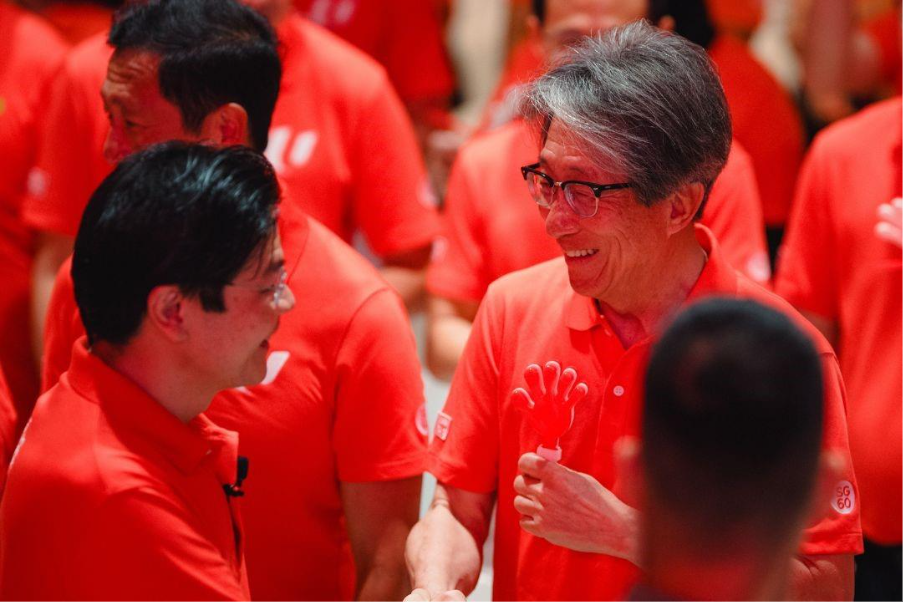
Within the Party, Mr Lim served on the Central Executive Committee, mentored young activists, and guided aspiring leaders.
Even after retiring from politics, Mr Lim remained dedicated to service. He continued to foster understanding and cooperation between party and union leaders. He educated new members and MPs on party history and ideology. He also mentored those serving in opposition wards, and played a key role in selecting and mentoring new candidates.
Reflecting on what he has learnt from his nearly 30-year political career, Mr Lim identified three essential pillars of nation-building. The first pillar, he emphasised, is to maintain a competitive economy “so that we don’t have to be poor together.”
The second pillar is to build a united and cohesive society.
“Economic competitiveness is merely a strategy,” Mr Lim explained. “The end objective of nation building is always our people—ensuring that all Singaporeans, not just some, not just the majority, but every Singaporean, can live better lives and enjoy a higher standard of living.”
“It’s about ensuring that our society remains united and cohesive. Therefore, it’s important that we always share the fruits of economic growth with all Singaporeans,” he added.
The third pillar, according to Mr Lim, is to ensure Singapore’s progress remains sustainable.
“It is important that we balance competitiveness and social cohesion in a dynamic way, depending on global and domestic situations,” he elaborated. “So that over the long term, we generate enough trust among our people, allowing us to move forward together as one people and ensuring Singapore’s development remains sustainable.”
“Nation building is a journey with no end. In short, the three pillars are: a competitive economy, a cohesive society, and sustainable development.”
Lee Kuan Yew was never shy to learn from others: Lim Swee Say
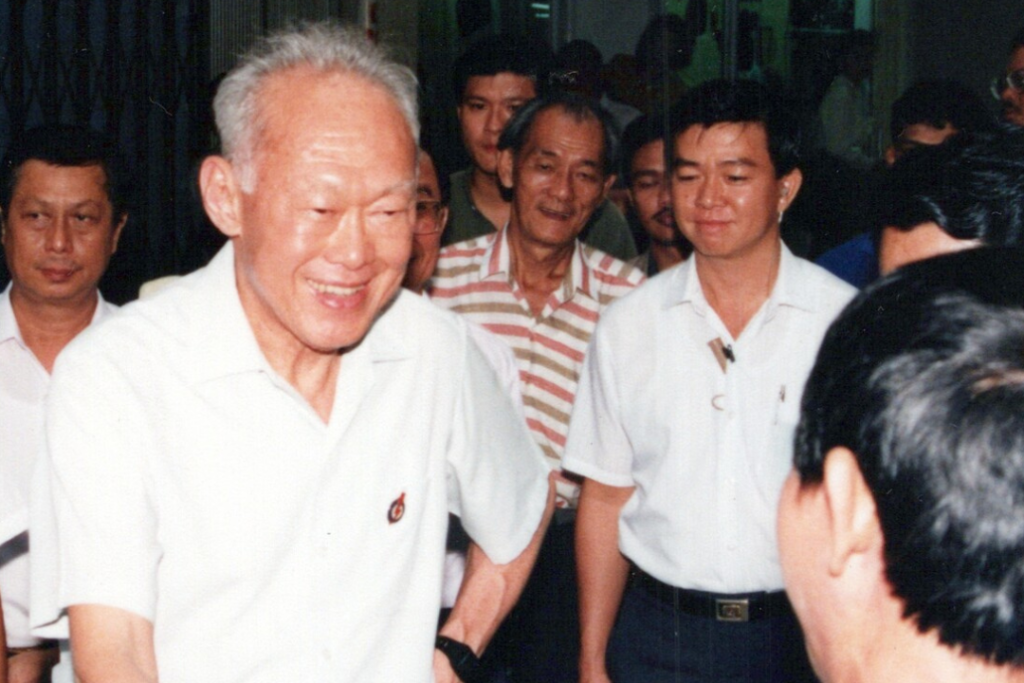
Mr Lim said he was fortunate to have worked with three former party secretary-generals and prime ministers. What struck him most about Lee Kuan Yew, the Party’s first secretary-general and Singapore’s founding prime minister, was his eagerness to learn from anyone.
” What I remember most about him is that we learnt a lot from him, and at the same time, he was never shy to learn from anybody else because he was always full of curiosity.”
During the dot-com boom period, Mr Lim recalled there was much discussion about business to business (B to B) and business to consumer (B to C), and Mr Lee asked Cabinet members to explain these concepts.
“Then he cited one example and he asked, ‘So in this example, is it a B to B or B to C?’ We replied, ‘No, no, no. This is an example of B to B to C,’ and he had a good laugh,” Mr Lim recounted.
“Mr Lee was a man of wisdom. He knew so much because he was never too shy to learn from others in areas where he wanted to know more about.”
Goh Chok Tong was a nurturing leader: Lim Swee Say

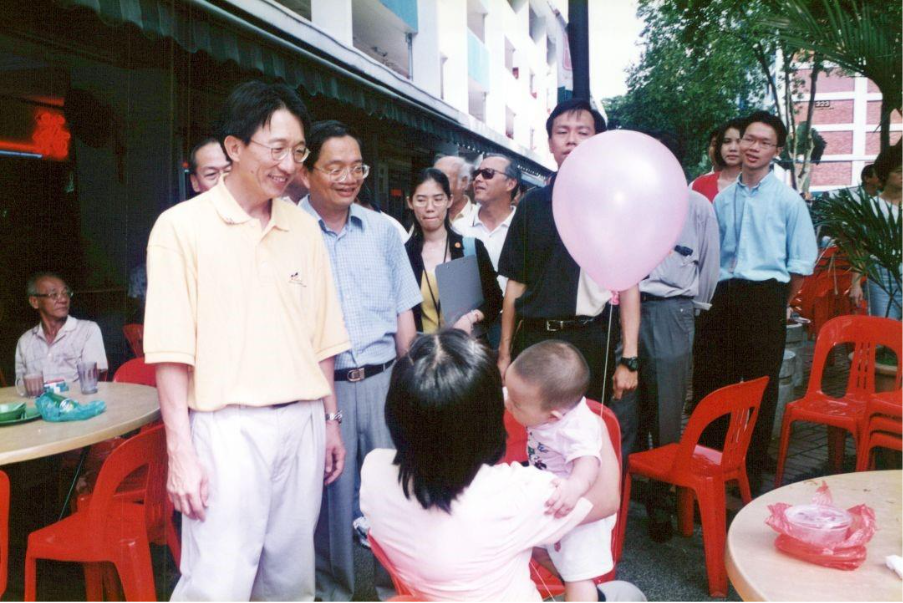
Under former Prime Minister Goh Chok Tong’s leadership, Mr Lim, then a new minister, proposed to upgrade the hawker centres. During Cabinet discussions, opinion was divided on the issue.
“Half said we should upgrade the hawker centres while the other half said, look, young people want to go to coffeeshops more than hawker centres. It was a split decision,” Mr Lim recalled.
PM Goh eventually supported Mr Lim’s idea, but with a condition, Mr Lim shared.
“I remember very clearly. PM Goh looked at me and said, ‘Swee Say, as a new minister, I want to support your ideas as much as we can, but I give you a quota of only one. In other words, you can only have one project where you can exercise this quota’. Then he asked, ‘Is this your quota of one—the upgrading of hawker centres?’” Mr Lim recalled.
Mr Lim confirmed this was indeed his choice. With the Prime Minister’s support, the government implemented the Hawker Centres Upgrading Programme (HUP) in February 2001. This 10-year initiative, led by the National Environment Agency, upgraded facilities and infrastructure of ageing hawker centres throughout Singapore.
Mr Lim described PM Goh as a nurturing leader: “When we had a new minister like me in those days, he would find ways to nurture, guide, and support us. That explains very well why the Cabinet team kept growing stronger and stronger.”
Lee Hsien Loong has “a very strong head, but his heart is even stronger”: Lim Swee Say

Singapore’s third prime minister Lee Hsien Loong is one of the smartest people Mr Lim has ever encountered.
“He’s very intelligent, very smart, and very action-oriented. Many people look at him as a prime minister with a very strong head. But my experience with him is that not only does he have a very strong head, but his heart is even stronger,” said Mr Lim.
During his tenure as Labour Chief, Mr Lim noted that PM Lee was the “strongest supporter of the NTUC” while the Labour Movement focused on supporting lower-wage workers in Singapore.
Mr Lim said that key initiatives including NTUC’s e2i (Employment and Employability Institute), the Progressive Wage Model (PWM), and the Job Re-Creation Programme were all implemented with PM Lee’s endorsement and backing.
“As a result, the Labour Movement was able to do whatever we wanted to do for the lower-wage workers.”
PAP leaders embody three “I”s: insightful, inspiring, and infectious, says Lim Swee Say

During the interview, Mr Lim expressed his deep respect for Singapore’s three former prime ministers, describing them as the three “I”s leaders.
He explained that the first “I” refers to “insightful” — they can see things that others cannot. The second “I” stands for inspiring, as he noted these leaders are “very inspiring in their own ways”. The third “i” represents “infectious”.
“They are able to spread their passion and commitment, not just to the cabinet, but to the entire parliament and beyond,” he explained.
Looking at leaders around the world, Mr Lim identified three distinct types. The first type are leaders who are self-centred. He referred to these as “小我”- the little me where self-interest predominates.
The second type, according to Mr Lim, are leaders who are effective, but highly egoistic. They believe they alone can lead their countries best.
“As a result, they don’t groom successor because they lead from the first day to the last day. When they are gone, the country goes downhill. These are what I call the ‘自我’, people with a bit of self-ego,” he explained.
PAP leaders, however, are different, added Mr Lim, describing them as “大我“(greater self).
“In the PAP, we are very fortunate to have secretary-generals who focus entirely on the country rather than themselves. They served the country to the best of their abilities while in leadership positions, yet never neglected the need to nurture successors,” he explained.
“[This ensures] that generation after generation, both party and country will always have leaders who are not only truly effective but genuinely selfless.”