The People’s Action Party’s Policy Forum has proposed several key recommendations for Budget 2026, focusing on advancing Singapore’s economy, securing good jobs, and uplifting Singaporeans to progress together.
These recommendations were presented to the Government Parliamentary Committee (GPC) for Finance and Trade and Industry. PAP MPs will bring these ideas to Parliament.
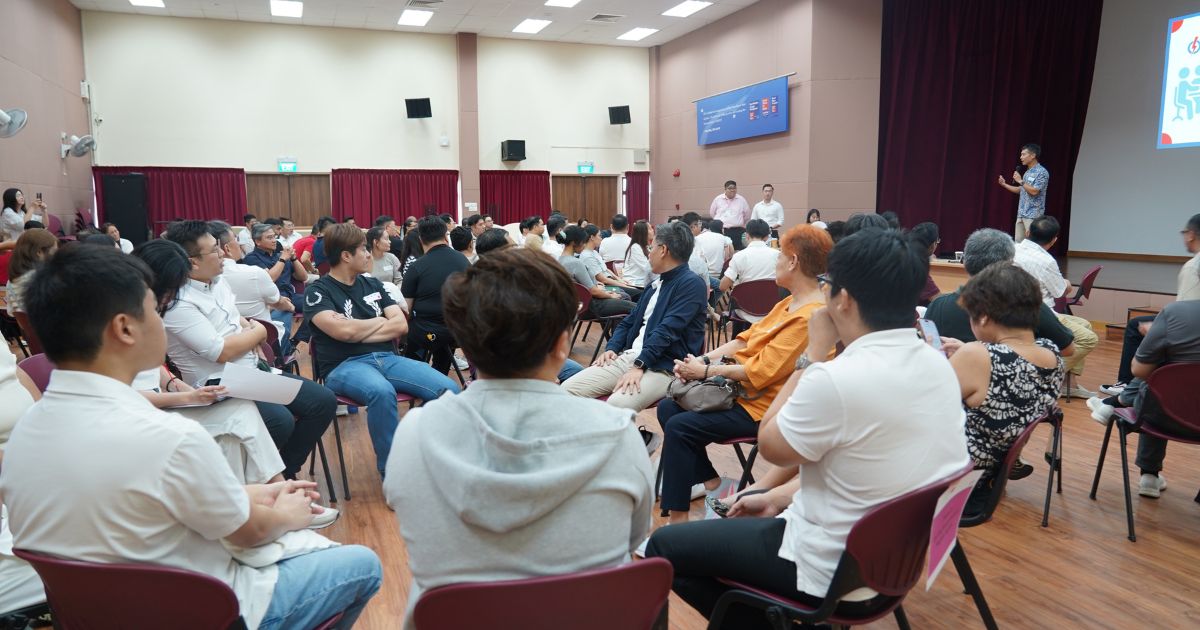
The recommendations followed a focus group discussion hosted by the PPF recently, where over 100 party activists and friends of PAP shared their views and recommendations on key themes for Budget 2026.
Members of the GPC for Finance and Trade and Industry were present to listen to participants’ perspectives and ideas for Budget 2026.
They include Chairperson Saktiandi Supaat, Deputy Chairperson Edward Chia, and members Lee Hong Chuang, Victor Lye, Ng Shi Xuan, Denise Phua, and Shawn Loh, who also serves as Head of Research and Advocacy of the 11th PPF Council.
Mr Loh, who is also MP for Jalan Besar GRC, told Petir this is the first time that the GPC and the PAP Policy Forum are collaborating to organise these focus group discussions.
“The PAP Policy Forum is the platform for activists and our friends to surface ideas and for the PAP MPs to then bring these ideas to the government and into Parliament.”
Mr Saktiandi said that the committee typically engages people after the Budget statement to gather their reactions, but this time, it met more groups—such as trade associations and professional bodies—before the Budget statement is made and would convey their suggestions to the ministries.
“If some of these suggestions are not met by the budget statement, we can raise them during the budget debate,” he added.
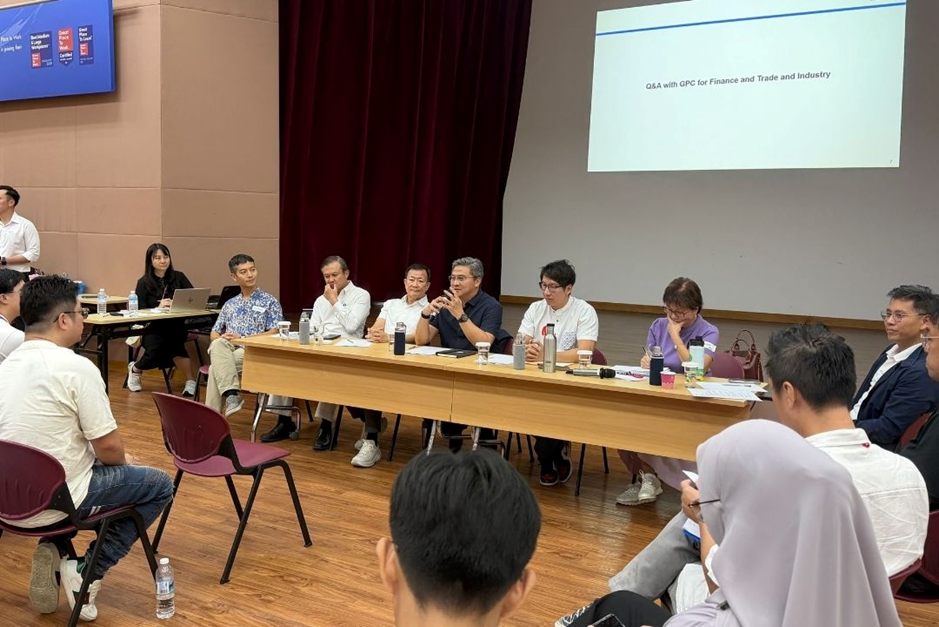
PPF calls for measures to strengthen the viability of SMEs
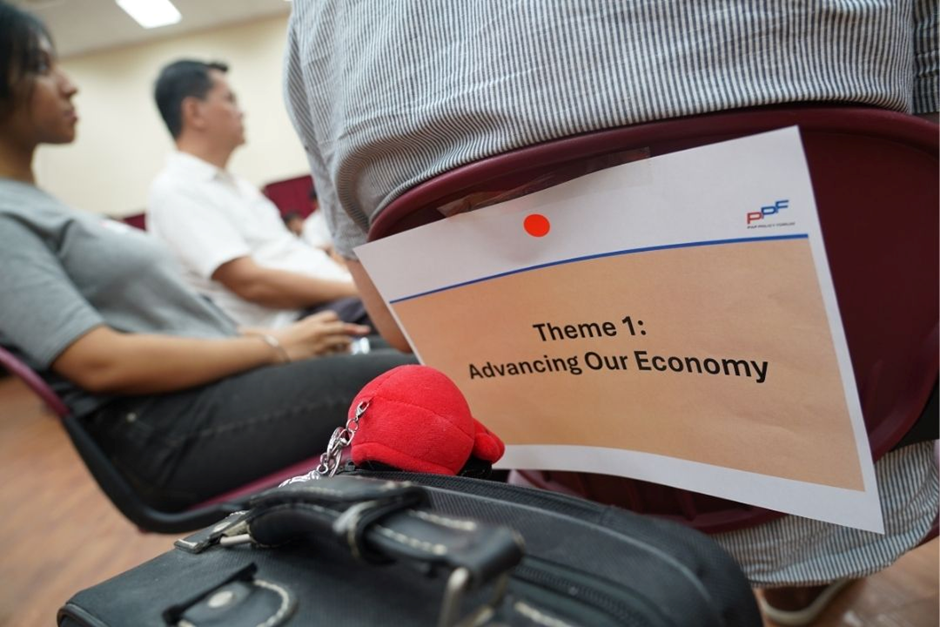
To advance Singapore’s economy, the PAP Policy Forum urged the Government to strengthen small and medium enterprises’ resilience and ensure fair competition.
This can be done by unlocking their access to grants and reducing barriers to scaling.
The group also proposed positioning Singapore for the next frontier of growth, building a strong skills-to-jobs ecosystem, and easing cost pressures on households and seniors. For each policy recommendation, the group outlined specific implementation measures to achieve these targets.
PPF noted that rising business costs, skills mismatches, weak training-to-job connections, and the impact of artificial intelligence are affecting job standards, career advancement, and employee morale.
As solutions, they proposed improving the transition from training to work, supporting mid-career professionals and older workers, providing clearer career pathways, and enhancing job quality by adjusting environment factors. This involves reviewing procurement and tender processes that suppress wages; recognising and rewarding businesses that cultivate strong local teams; and refining wage progression and job redesign strategies to better math skills with outcomes.
The PPF also proposed recommendations to address elder isolation and vulnerability, provide more adaptable support for sandwich families, improve healthcare access and policy awareness, and uphold dignity in education and employment.
An additional key insight from the focus group discussion was the need to align social resilience with economic resilience. The group stressed that policies must not solely drive growth but also convert skills to jobs that align with individuals’ aspirations.
“No group should be left behind as Singapore navigates AI disruption and global uncertainty,” the group said.
Sylvia Soon, a member of the PPF 11th Council, highlighted how participants, many of whom were activists, shared not only personal experiences but also ground observations from their work assisting residents. She facilitated a group discussion on securing good jobs.
“It was exciting to hear not just from employers, but also fresh graduates as well as people who have been in the workforce for a long time. Hearing from different sectors on how the job landscape is evolving helps us consider what more can be done to help Singaporeans to secure good jobs,” she added.