Did you know that Singapore is the world’s largest container transhipment hub? Last year, the Port of Singapore handled 44.5 million TEUs and had connections to 600 ports globally. Meanwhile, Changi Airport has won the accolade of the World’s Best Airport for the second year in a row.
These successes happen not by chance, but through the hard work of Singaporeans, bold vision and long-term planning. Ensuring that Singapore can remain competitive in the long run, and remain a trusted global transport hub will require strategic investment, not just in infrastructure and technology, but more importantly, in people.
Against this backdrop, the Government Parliamentary Committee (GPC) for Transport tabled a motion reinforcing Singapore’s position as a global aviation, maritime, and logistics hub
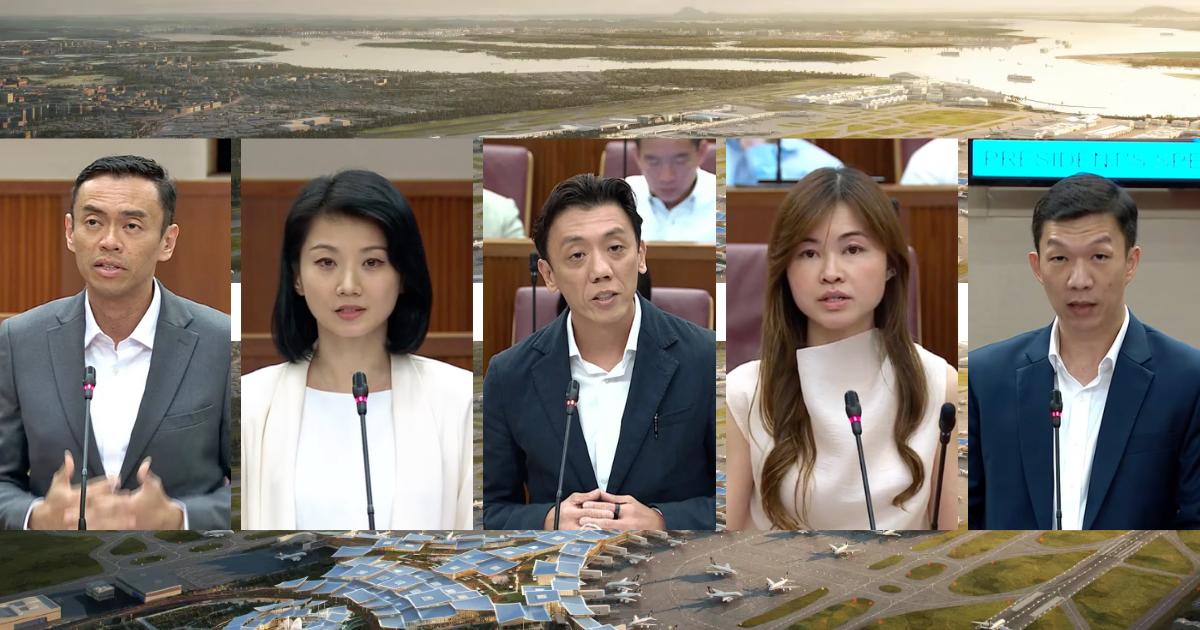
In a 5-hour debate in Parliament on Tuesday (July 7), 15 PAP MPs shared their views on how we can strengthen our transport sector even further to create good jobs for Singaporeans.
“A small country like ours needs to have strong, multiple connections as the foundation of our national resilience. Together, they serve one ultimate goal — generating and anchoring meaningful jobs that Singaporeans can take up and grow in,” said Ms Tin Pei Ling, GPC Chairperson and MP for Marine Parade–Braddell Heights GRC.
Adopting frontier technologies to stay ahead

To ensure Singapore stays ahead of the game, MPs have called for more frontier technologies to be used in the transport sector.
One area is the building of digital twins. The virtual replica of our land, sea and air network will not only help us to manage traffic flows in real time, but also allow disruptions such as storms and cyberattacks to be simulated and rerouted, said Ms Tin.
Jackson Lam, MP for Nee Soon GRC, shared how AI and machine learning can help optimise operations across our ports and airports.
“AI can predict equipment failures and detect supply chain disruptions before they become costly delays. In other words, businesses gain greater visibility, and resources are used more productively,” said Mr Lam.
Ensuring good jobs for Singaporeans in the future

Embracing technology is only one part of the equation. Ensuring that Singaporeans benefit from these new developments is an even greater priority for the PAP.
“When we adopt more automation, robotics and AI in our transport sector, how can these technologies help create better jobs for our seafarers, our technicians, our aviation, logistics and maritime workers?” asked Dr Wan Rizal, MP for Jalan Besar GRC.
To address this, Dr Rizal urged the government to identify at-risk roles early and provide training support. He also called for the development of more comprehensive “school-to-sector” pathways to attract young people into the new roles on offer.
“If we get this right, transformation becomes a story of renewal and growth — not replacement. Because it is our workers — their skills, adaptability and professionalism — that will continue to differentiate Singapore,” said Dr Rizal.
Fellow Labour MP Yeo Wan Ling (Punggol GRC), also spoke out on the need to manage transition wisely and put workers at the heart of the process. This means providing workers with “visible and credible pathways into future jobs”, said Ms Yeo. She cites the launch of the Skills Pathway for EV Technical Specialists as a step in the right direction.
“We may not be able to preserve every job exactly as it exists today, but we must preserve livelihoods and create pathways to the next good job,” added Ms Yeo.
Investing in Singapore and Singaporeans
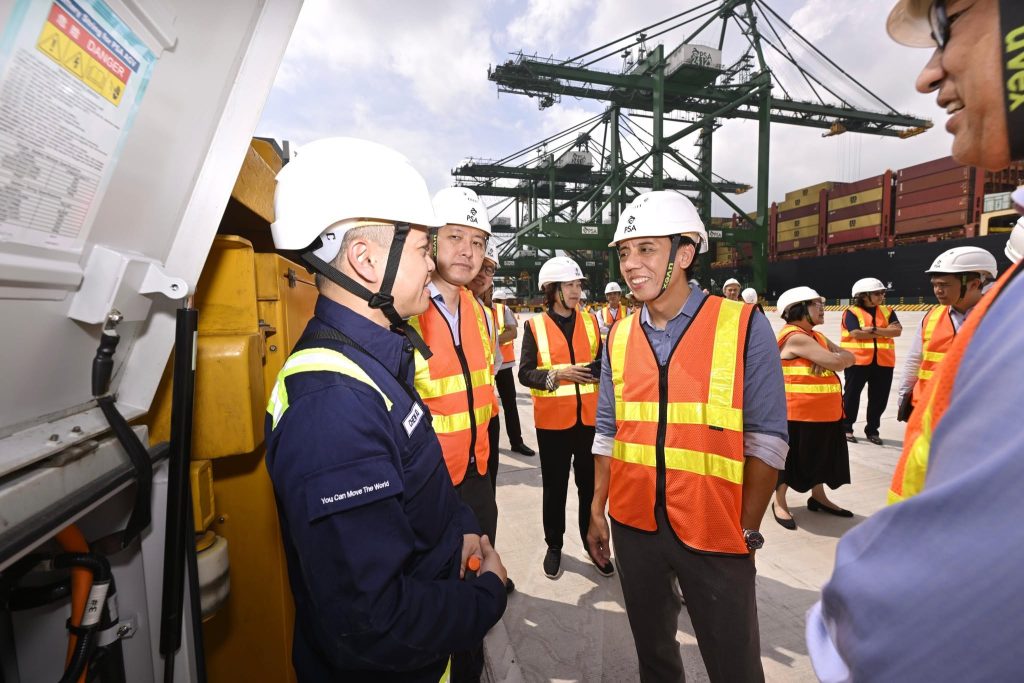
Responding to the motion, Acting Minister for Transport Jeffrey Siow announced an S$800 million investment in transport research and innovation over the next five years.
The funds will be used to support breakthroughs such as fully automated MRT depots and AI-enabled air traffic management, said Minister Siow. However, he also reiterated that technology is only “one ingredient” in Singapore’s “secret sauce”.
“Our approach will not be to adopt AI for its own sake, but we will do so with intention, clarity and on our own terms.”

Senior Minister of State Sun Xueling unveiled a new manpower transition package to empower taxi and private hire car drivers to explore new career options with confidence.
The package includes a new Career Conversion Programme (CCPs) for drivers keen to pivot to the autonomous vehicles sector or other transport-related jobs such as Bus Captains.
There will also be a new training incentive scheme focusing on short-form courses. Under the scheme, drivers will receive an allowance of $20 per hour when they attend any of the 2,000 courses supported by the Skills and Workforce Development Agency (SWDA).
“The government will take a proactive approach to help workers adapt, support job transitions, and equip Singaporeans with the skills and capabilities needed in the age of autonomy and AI.
“We will continue to work closely with the unions and support our workers as jobs evolve,” said SMS Sun.