“When there is a tough fight, and we need a strong candidate… we send in Charles Chong.”
Those words from then-Secretary-General of the People’s Action Party (PAP) Lee Hsien Loong, in 2020 perfectly sum up Charles Chong You Fook’s 32-year political career. As the PAP ultimate “firefighter,” the veteran politician was consistently deployed to steady the ground whenever the party faced a tough electoral battle.
Mr Chong remains the longest-serving backbencher in Singapore’s political history. He anchored seven terms across more than three decades. After first entering Parliament in 1988 as a Member of Parliament (MP) for Sembawang GRC, his career spanned six different constituencies—including Eunos, Pasir Ris, Punggol East, and Joo Chiat —before his retirement in 2020.
Throughout his tenure, he earned a reputation for snatching narrow victories in contested territories. In 2011 General Election, Mr Chong secured Joo Chiat SMC by a razor-thin margin of just 388 votes, capturing a 51.02 per cent vote share.
Four years later, he was sent to Punggol East SMC, where he successfully wrestled the seat back from the Workers’ Party, reversing a PAP by-election loss from two years prior.
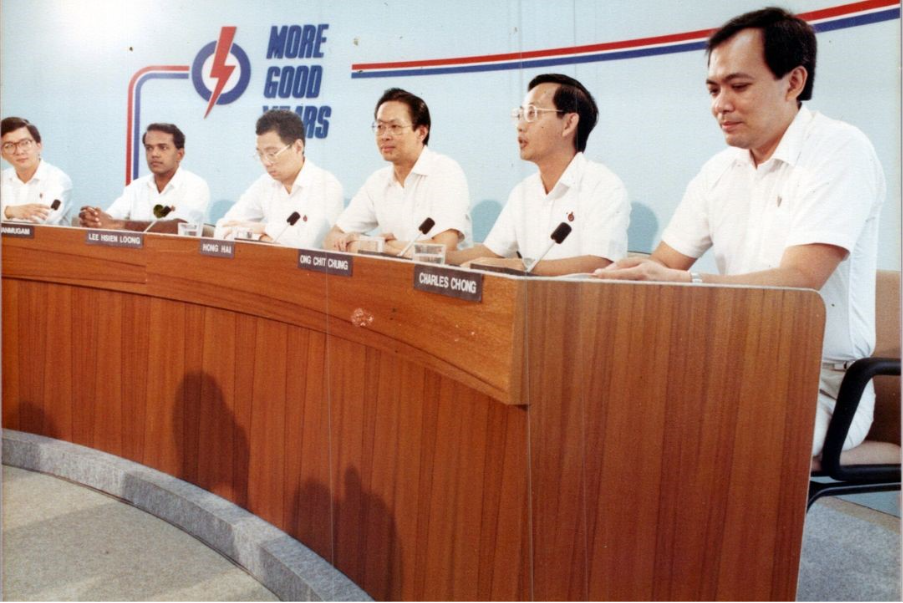
The eleventh-hour campaign
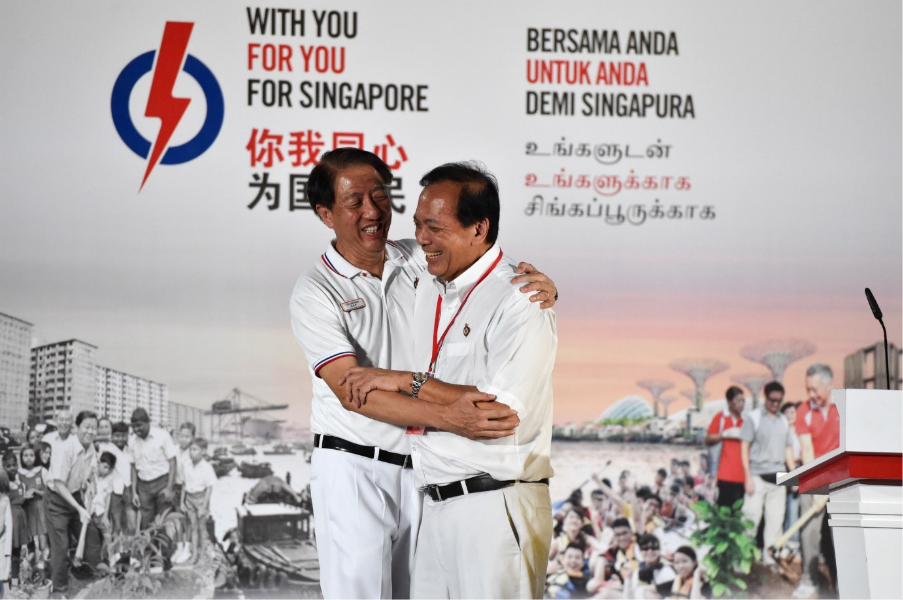
In an interview with Petir, Mr Chong shared that being dropped into new battlegrounds at the eleventh hour became a trademark of his political career, most notably during the 2011 General Election.
Just days before Parliament was dissolved on 19 April 2011, Mr Chong received sudden directives to contest Joo Chiat SMC. The sudden deployment left the campaign team with zero lead time.
“We had to scramble to get our campaign together,” Mr Chong recalled. “It was challenging in the sense that we had to move into a new area, get to know residents, and convince them that we had a better programme than our opponent.”
With no time to overthink, he focused entirely on the groundwork. “I didn’t have much time to think,” he said. “It was just a matter of going in there, trying my best, and meeting as many residents as possible to introduce myself.”
The White Elephants of Buangkok
Reflecting on his most memorable political moment, Mr Chong recalled an incident involving eight cardboard elephants and a police investigation. On August 28, 2005, he and his grassroots leaders placed the cut-outs along a road divider outside the completed but unopened Buangkok MRT station.
Although the North East Line had launched in 2003, transport authorities kept the station closed due to low projected ridership, turning it into a literal “white elephant.”
“The station was within walking distance for residents, but they had to take a bus to another station further away,” Mr Chong recalled. “SBS Transit said it wasn’t viable. Our position was: Are you supposed to provide a public service or just make a profit? After our appeals failed, we took our protest to the streets.”
The silent demonstration coincided with a visit by then-Cabinet Minister Dr Vivian Balakrishnan. While it successfully captured national attention, the unlicensed display triggered a police investigation under the Public Entertainments and Meetings Act.
“We did not realise that putting up animal caricatures without a permit was illegal,” Mr Chong said. “Being questioned by the police was traumatic. Thankfully, they were convinced we were unaware of the law. We got off with a stern warning. We’ve learnt from it. It’s something that will stay in our memory for a very long time.”
Following public feedback and lobbying, the station was officially opened to the public a few months later, on January 15, 2006.
Years later, this brush with the law unexpectedly aided his 2015 General Election campaign in Punggol East, part of which covered his old stamping ground.
“Residents remembered that I would fight for their interests, even if it meant getting into trouble with the police,” Mr Chong said. “When I returned to campaign, I was warmly welcomed by the old residents.”
Life beyond the backbench
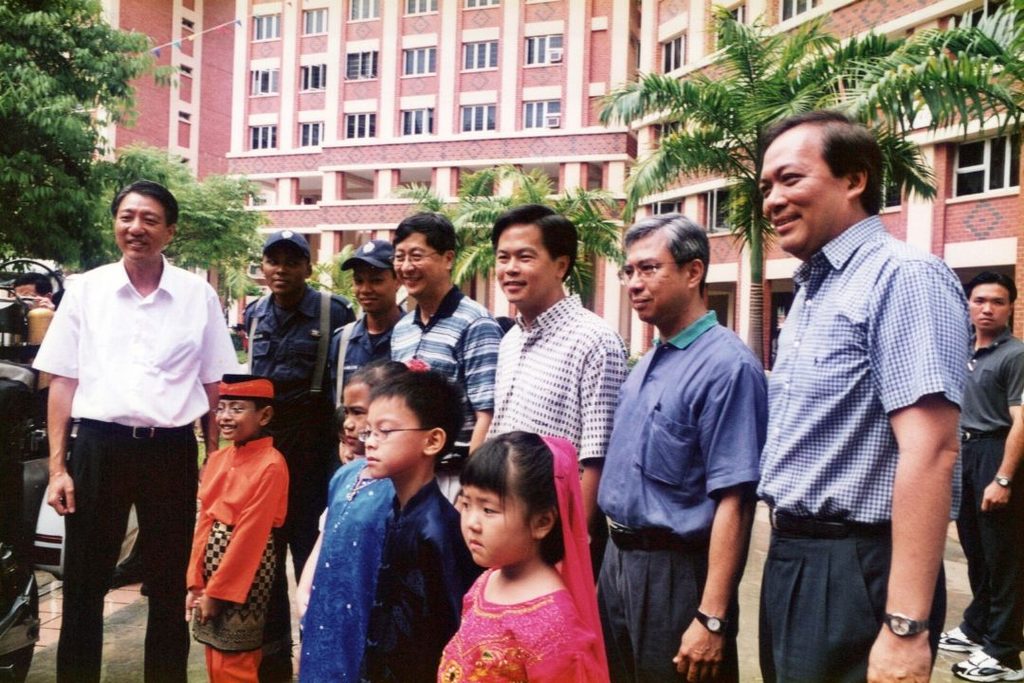
Mr Chong also took on the less visible work of running an estate. As chairman of the Pasir Ris and later Pasir Ris–Punggol Town Councils from 1997 to 2006, he worked to keep the estates clean, well maintained and pleasant for residents. In 2011, Mr Chong became Deputy Speaker of Parliament, a role he held until his retirement.
After stepping down from politics, he continued to contribute to public life. As a board member of ASEAN Parliamentarians for Human Rights, he lends his experience to efforts to strengthen democracy and the rule of law across the region.
He has also stayed close to his labour roots, serving as an adviser to the SIA Engineering Company Engineers and Executives Union, offering guidance to a new generation of union leaders representing aircraft engineers.
Within the Party, Mr Chong continues to serve as a mentor, sharing insights with potential candidates.
“I also serve as my three grandchildren’s Grab driver,” he added warmly.
Passing the torch
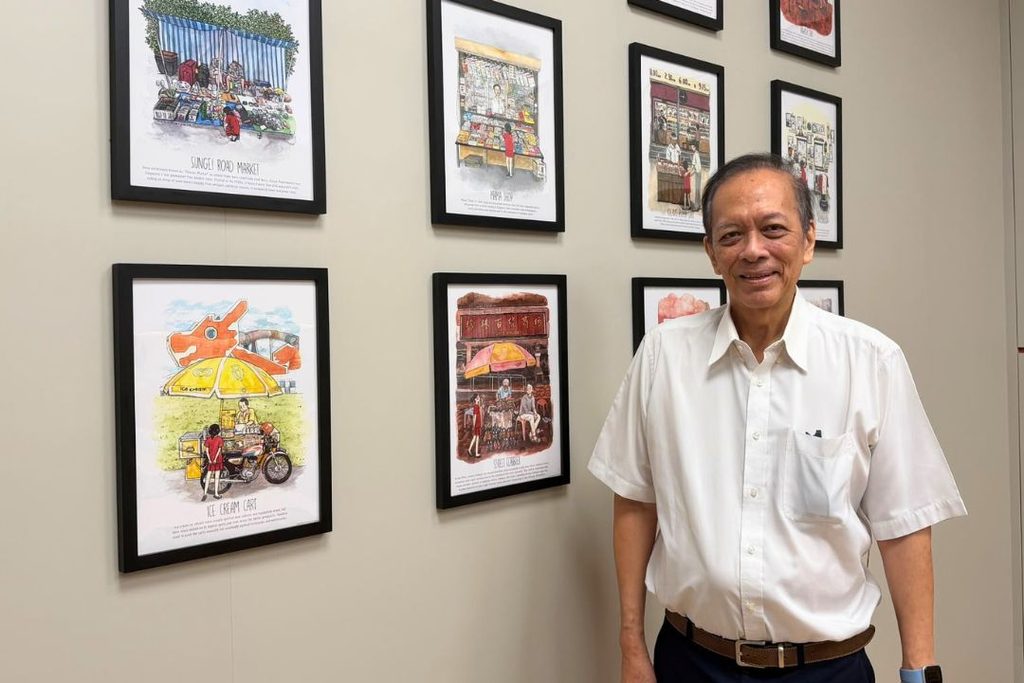
Reflecting on the defining moments of his 32-year political career, the veteran politician conceded that his path was paved with early anxieties.
“You had to sacrifice your career, your family too—and personal time takes a heavy toll,” he recalled. “But at the end of the day, there is immense satisfaction in knowing you played a part in something bigger than just taking care of yourself.”
That deep-seated sense of public duty is what he hopes to pass on to the next generation. When asked for his advice to new MPs, Mr Chong noted Prime Minister Lawrence Wong’s recent remarks regarding the widening difficulty of recruiting talent into political office.
“I can only give them the advice former PM Lee Kuan Yew gave me when I was listing reasons why I didn’t want to enter politics,” he said. “Mr Lee told me, ‘Look, if everybody were to just think of themselves and their families, then Singapore would not be a better place for our children and grandchildren.’”
Decades later, Mr Chong stands firmly by that timeless wisdom. He urged those with the potential to serve to step forward boldly.
“It may not be easy,” he added. “But you will ultimately realise that your contributions benefitted not just yourself and your family, but the whole of Singapore.”
Reminiscing on his days on the ground, he openly acknowledged the frustration and quiet moments where he questioned his purpose. The remedy to that weariness, he revealed, always arrived in small gestures.
“Every now and then, someone would come up to you and say, ‘Your appeal worked. My wife has gotten her PR [permanent residency] now.’ Small things like that make you feel good and inspire you to carry on,” he smiled.
“Not all of us can make big contributions, you contribute in some small ways. When you come across these instances, it makes the entire journey worthwhile.”