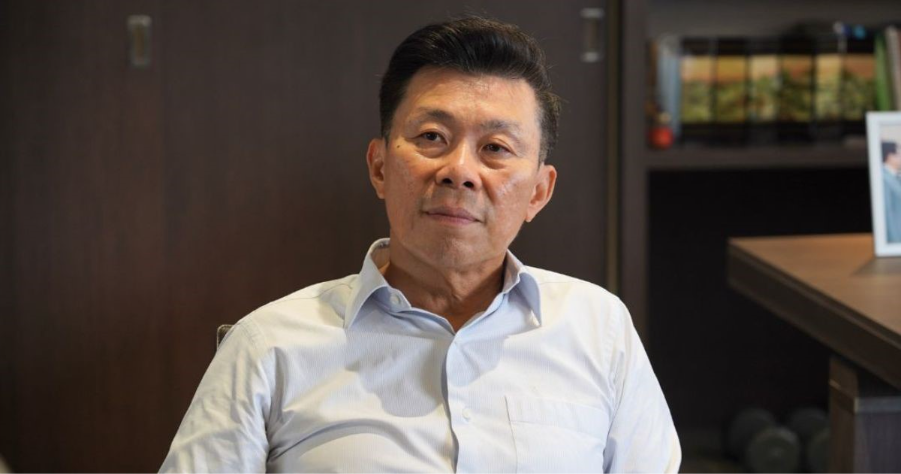

On April 15, Prime Minister Lee Hsien Loong announced that he would hand over the government’s leadership reins to the current Deputy Prime Minister Lawrence Wong on May 15. In the third part of a six-part tribute series honouring PM Lee, Petir spoke to former Cabinet Minister Khaw Boon Wan about his experience working with Mr Lee.
Prime Minister Lee Hsien Loong took a keen interest and even delved into the engineering details of Singapore’s railway network when the country worked to improve the reliability of the Mass Rapid Transit (MRT) system. As a result, former Cabinet Minister Khaw Boon Wan, who was managing the persistent train issues as Transport Minister at the time, gained valuable insight working with the PM and was able to resolve the issues.
Mr Khaw made this point in an email interview with Petir. Mr Khaw who is Chairman of SPH Media Trust, entered politics in 2001 before retiring in 2020. His last portfolios were Coordinating Minister for Infrastructure and Minister for Transport. He earned a reputation as Minister Fix-it due to his knack for solving hot-button issues like housing and transport.
After the 2015 General Election, Mr Khaw volunteered to take on the politically spiky transport portfolio. Back then, there were frequent train breakdowns and the PAP Government’s immediate priority was to improve the reliability of Singapore’s MRT system.
Mr Khaw said when the government was fixing the persistent train issues, Mr Lee took a personal interest down to engineering details.
“He advised me to extract the key metrics from the vast amount of maintenance data and present them graphically. He even designed the graphs for us so that they could show dynamically the impact of our efforts, whether we were making progress or not, week by week, rather than quarterly as in the past,” he said. “This way, we could provide feedback more promptly to the maintenance engineers, thus speeding up our corrective efforts.”
Mr Khaw added that he had a “good lesson” from Mr Lee on applying data analytics and data visualisaton in railway maintenance.
By the time Mr Khaw retired in 2020, the reliability of Singapore’s MRT system has improved significantly. When he took office as Transport Minister in 2015, he set a target of 1 million mean kilometres between failures (MKBF). By the first quarter of 2020, Singapore’s MRT system had surpassed Mr Khaw’s target, hitting 1.4 million MKBF.
Mr Khaw said: “(Dealing with these challenges, I learnt from PM Lee to) focus on the strategic objective, work out options, attend to implementation details, measure progress, track them closely and share the progress openly with Singaporeans.”
PM Lee is kind and compassionate: Khaw
As a former Cabinet Minister who has worked closely with PM, Mr Khaw described Mr Lee as a brilliant, multi-talented leader, with a deep sense of public duty, to keep Singapore exceptional.
“He sets the high standard of integrity, character, and competence, while holding himself to even higher benchmarks,” he said. “Nobody works as hard or sacrifice as much he does. His sense of public duty inspires us to give our very best for Singapore and its people.”
Mr Khaw described Prime Minister Lee as “a very decent human being with kindness and compassion, in addition to his many outstanding qualities”. Mr Lee made a deep impression on Mr Khaw through how he handled the Covid-19 pandemic, prioritising protecting lives and livelihoods.
“He knew the economy would take a beating, but our reserves could help to ease the pain. But lives lost could not be reversed. These include foreigners. While his responsibility covers Singaporeans, he felt responsible for the safety of our foreign workers too,” he explained.
When COVID-19 infections surged at foreign dormitories, PM Lee directed the Ministerial Taskforce for Covid-19 to address deficiencies in the dormitories, according to Mr Khaw.
“The foreign workers knew that they were safer here in Singapore than their families back home,” Mr Khaw said.
PM Lee has transformed Singapore’s economy, keeping it competitive amid rising protectionism and complex geopolitical tensions, Mr Khaw said. PM Lee has also “maximised opportunities” for young Singaporeans to excel in the developed world, he added.
Domestically, Mr Lee has updated social policies comprehensively to ensure effectiveness as the population ages, Mr Khaw noted. Mr Lee expanded pre-school education and helped young parents cope with stress while caring for elderly parents.
“PM makes our society more inclusive and resilient, with opportunities for all regardless of starting point.”
Long-term, Mr Khaw pointed out that Mr Lee launched critical initiatives on existential issues like water, climate change and global warming. Internationally, though Singapore is small, Mr Lee’s views are worth listening to by other leaders.
“In short, he has kept Singapore special, and will be handing over a strong, united and functioning Singapore to the 4G Team. He has discharged his stewardship responsibilities with flying colours.”
PAP emerged stronger under PM Lee’s leadership after the watershed GE2011: Khaw
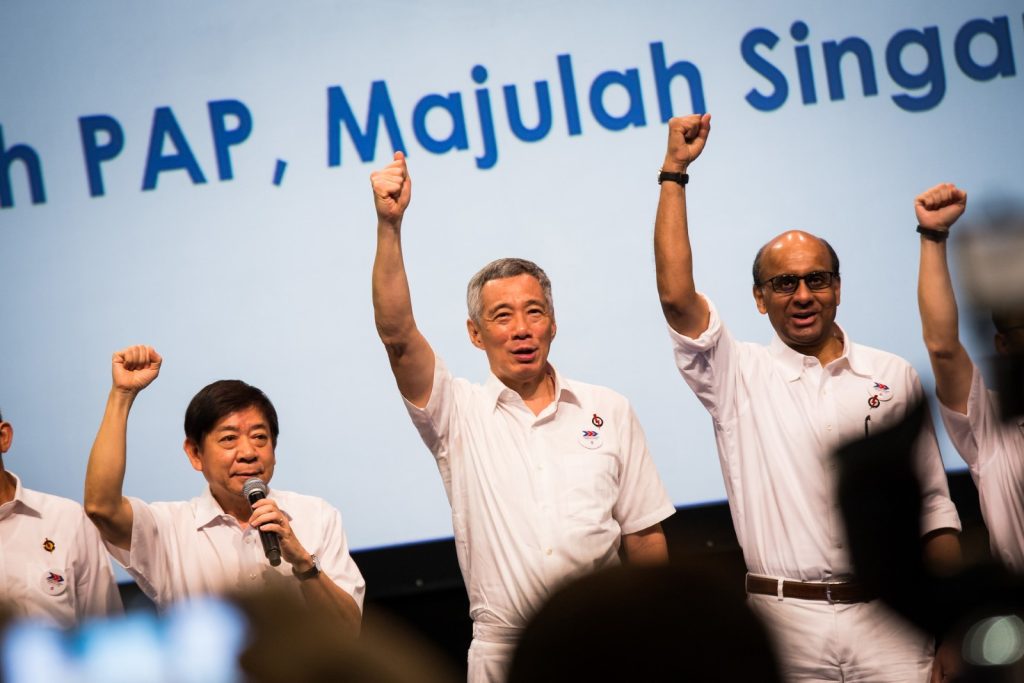
Khaw Boon Wan chaired the People’s Action Party from June 2011 to November 2018. In the 2011 General Election, the PAP lost Aljunied Group Representative Constituency for the first time. As Party Chairman, Khaw led a review to identify where the party fell short and drove reforms from within.
Khaw said the 2011 election was a setback, but the party “rectified its shortcomings and emerged stronger” under PM Lee’s leadership.
He recalled how the party enhanced its headquarters machinery and boosted capabilities. It also increased outreach efforts, recruited more members, especially young ones.
“Internally, we ramped up engagement with activists to forge a stronger common purpose. We updated our online media strategy. We built up new media teams at headquarters and branches to actively engage Singaporeans of all ages. This is an important capability in the new era of election campaigns. ”
He noted the party also accelerated leadership renewal by recruiting and deploying candidates earlier.
However, he stressed the party’s fundamentals have not changed.
“We are a People’s party: we serve Singaporeans’ long-term interests. We are an Action party: we never flinch from hard options and deliver on promises,” he said. “We are a party of strong values: we stand for a fair and just society and fight for our convictions.”
Leaders build institutions designed to last: Khaw
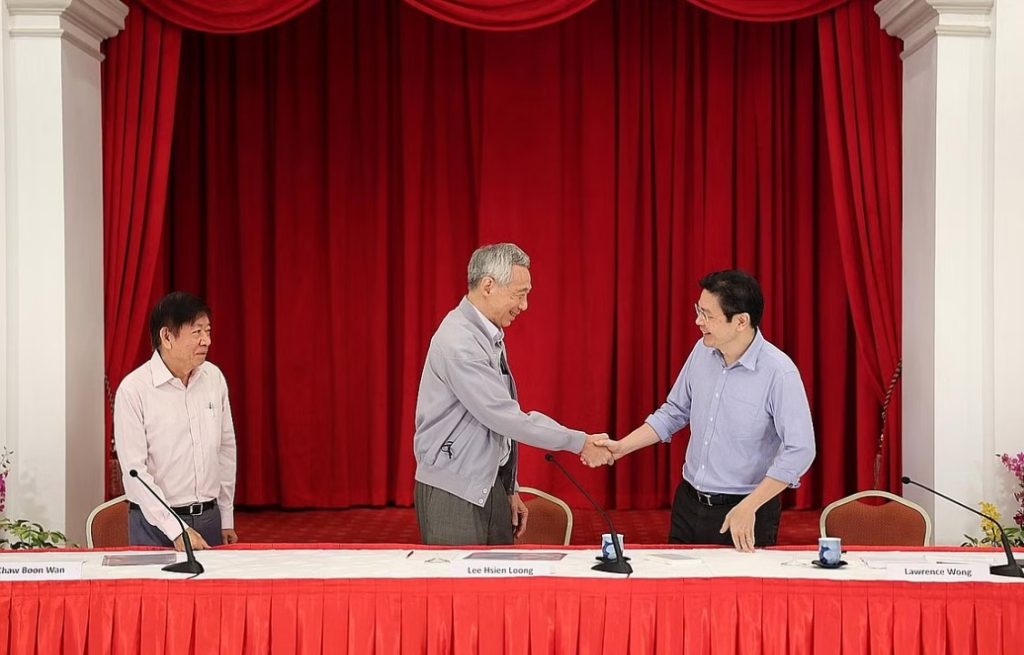
On Singapore’s leadership transition, Mr Khaw said Singapore leaders are nation-builders who build institutions to last for a long time.
“Unlike institutions, leaders have a more limited shelf life. Our best contribution is to be good stewards: do our maximum during our term and help our successors succeed,” he said. “Singapore’s orderly leadership transition is hence a hallmark of the PAP. It is a key success factor in the Singapore Story. PM Lee to PM Lawrence Wong continues this valuable political tradition of Singapore.”
After the handover, Mr Lee will remain Senior Minister in Mr Wong’s new cabinet. Regarding how Mr Lee can continue to contribute within the Party, Mr Khaw said the next Prime Minister will decide, and the party is expected to announce a leadership change at the party conference in November.
“Mr Lee’s many years of experience, expertise, and global network are valuable political assets of Singapore, with many more years of shelf-life.”

Lawrence Wong was endorsed two years ago by his fellow colleagues to lead the PAP fourth generation team. Mr Khaw, who was tasked to gauge the 4G ministers on their choice of a leader, said the 4G team made an excellent choice, just like how the 2G and 3G Ministers did in the past.
Khaw reiterated that strong political leadership is always critical for Singapore.
“Although our society continues to change, our vulnerabilities as a tiny country in a turbulent world remain,” he said. “I am confident that Lawrence Wong as Prime Minister will prove to be a capable, committed and passionate leader: one who can rally Singaporeans to co-create a better Singapore to remain special for years and years to come,” he added.
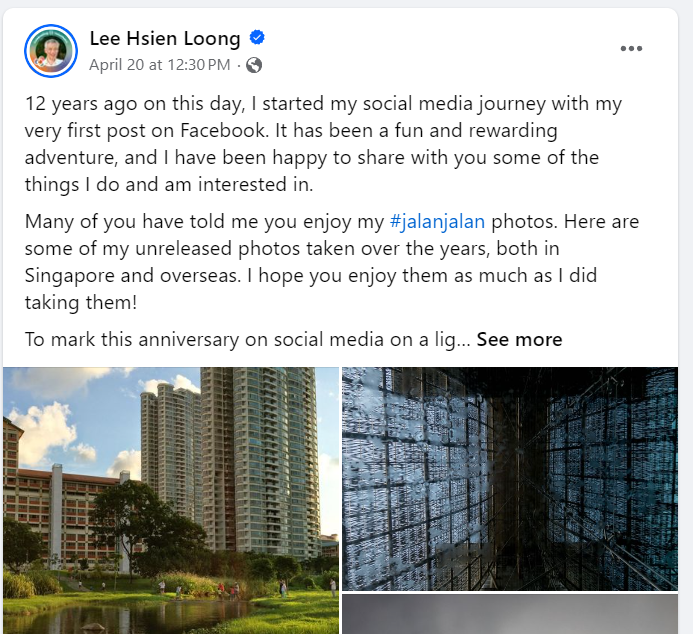
| Our political leaders must use social media to engage Singaporeans: Khaw Prime Minister Lee has been using social media for twelve years, describing the experience as a “fun and rewarding adventure”. Mr Khaw suggested the Prime Minister join social platforms 12 years ago. Mr Khaw said it’s necessary for political leaders to engage the people through social media as more people frequently spend time on it. “They get news and express views there. Thus, our leaders must also be present to engage, inspire, connect, and learn from one another,” he added. Mr Khaw described Prime Minister Lee’s social media venture as a sterling success. “Among Singaporeans, he has the most prominent social media presence. (This has been) good for him and for Singapore,” he said. |
ICYMI, read: