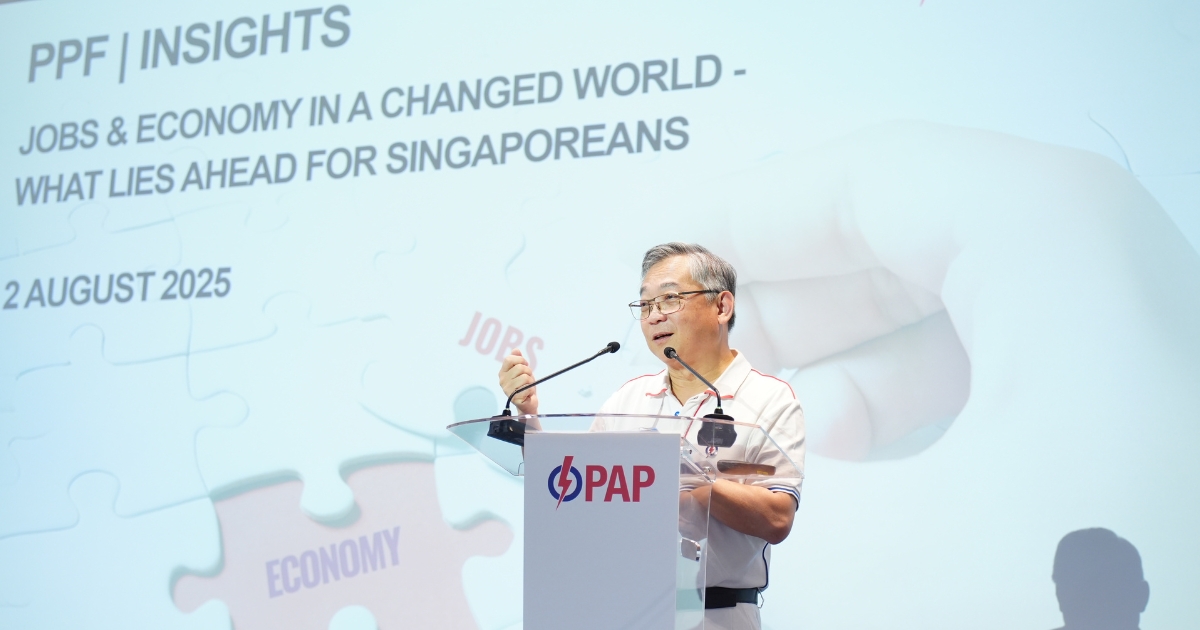
AMERICA’S TARIFFS will impact Singapore’s economy and workers. But Singaporeans need not fear. The PAP government will work with our tripartite partners to steer our country forward and help Singaporeans navigate safely through choppy waters.
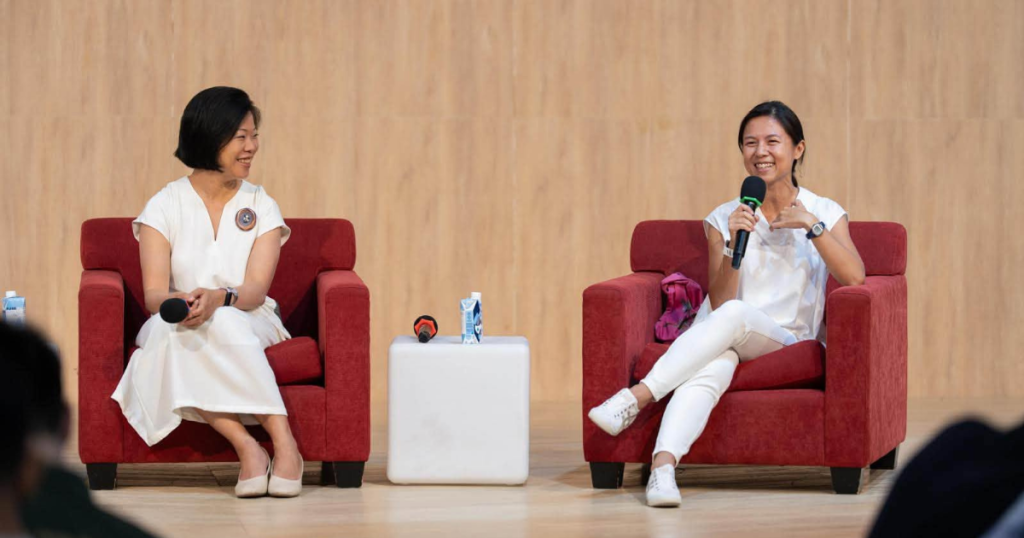
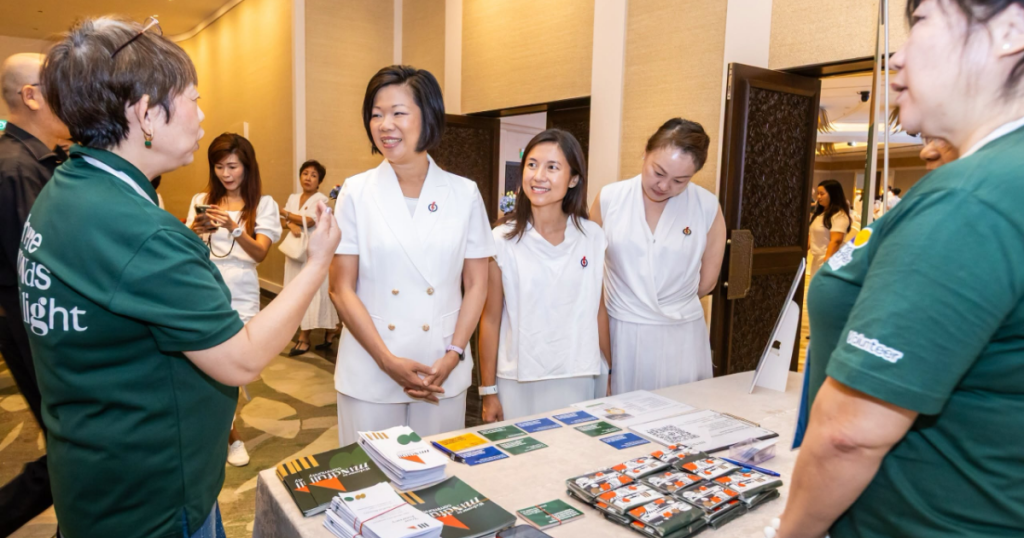
That was DPM Gan Kim Yong’s key message to PAP activists at the PAP Policy Forum Insights dialogue on “Jobs & Economy in a Changed World — What Lies Ahead for Singaporeans” earlier this month (2 Aug).
In a wide-ranging discussion, DPM Gan offered four important takeaways from the current tariff situation. He also rallied the audience with an inspiring call to keep Singapore relevant and competitive in the years to come.
Tariffs are here to stay
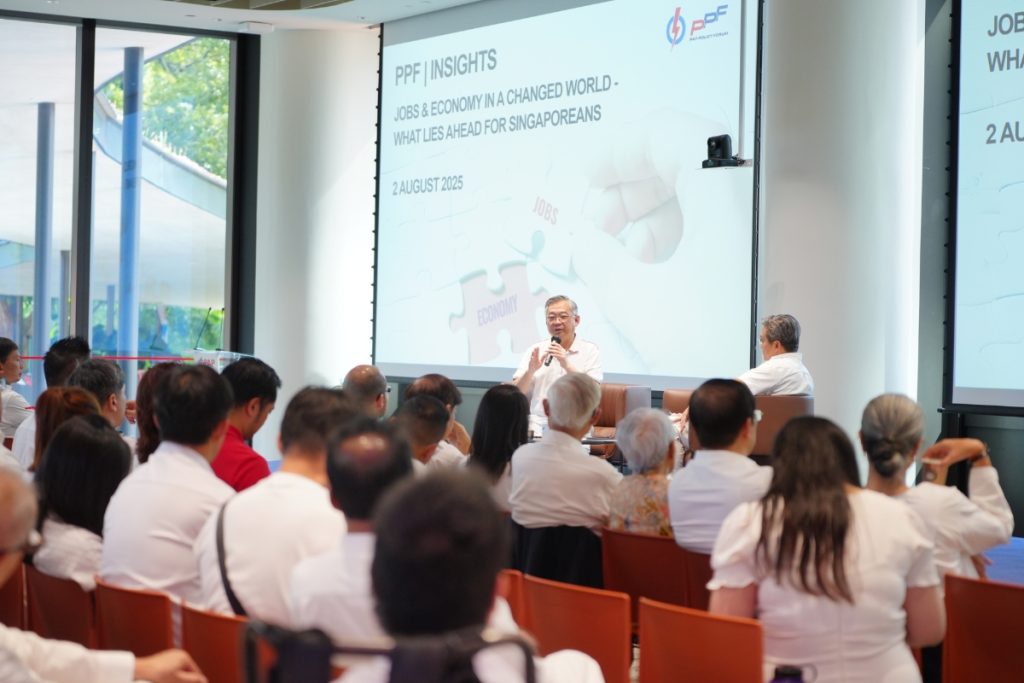
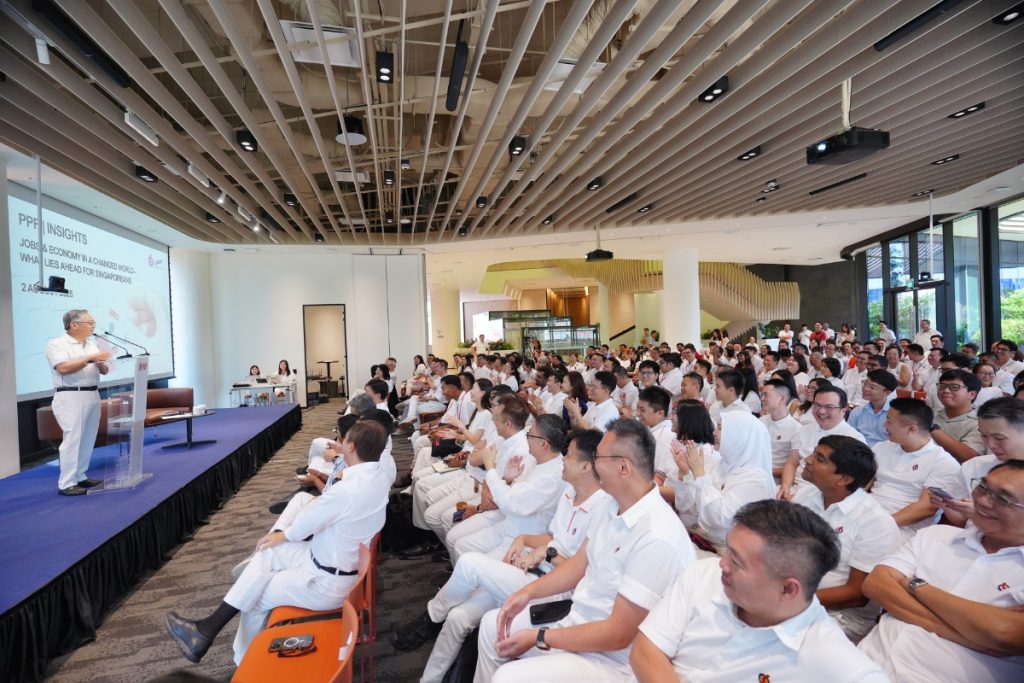
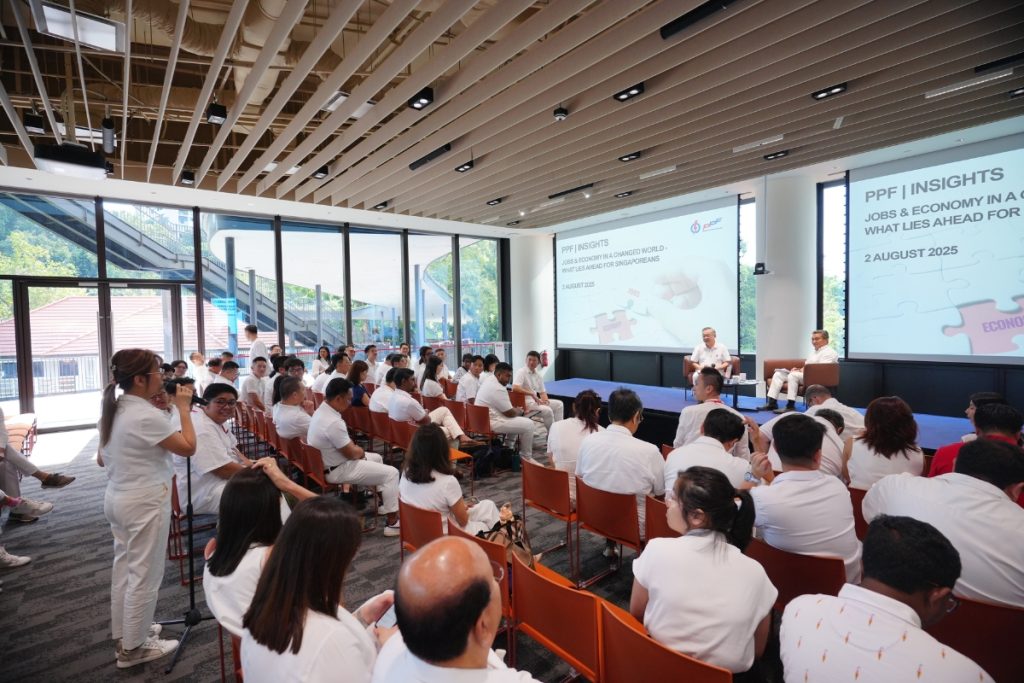
Setting the stage for a candid fireside chat, DPM Gan told an audience of 260 – including party members, friends of the PAP, retired MPs and serving MPs – that tariffs are here to stay. We must therefore prepare ourselves for a changed world, where global trade and supply chains will be reshaped by tariffs for many years ahead.
“Under the One Big Beautiful Bill, the US government has institutionalised tax incentives for companies. This will reinforce the importance of tariffs as one of the key sources of revenue to the US to reduce its fiscal deficit,” said DPM Gan about the US government’s recently passed trade and tax policies.
He cautioned that although the current tariff rate imposed on Singapore is 10 per cent, one of the lowest globally, this is not a reason to celebrate. It was zero before Liberation Day. Furthermore, Singapore may in time to come be affected by sectoral tariffs on pharmaceuticals and semiconductors, both of which are key external-facing sectors of our economy.
He noted that there is also uncertainty about how Singapore’s trading partners will respond to the tariffs, such as purchasing less from Singapore in order to commit to buying more from the US, or reducing investments in Singapore in order to invest more in the US.
DPM Gan also cautioned against being overly optimistic about the recent stronger than expected performance of Singapore’s economy in the first half of 2025, as it is likely due to companies frontloading their exports to the US before tariffs kick in, and the deferment of the reciprocal tariffs.
“If you imagine we have done all we can to export to the US before tariffs kick in, including what they need for the next few months, they’re not likely to buy very much more from us for a while,” he said.
“So therefore, in the next few months, our production is going to slow down, our exports will also slow down,” continued DPM Gan.
The PAP Government is taking action for Singaporean workers
In this changed world, the PAP Government is taking action to safeguard Singapore’s economy by helping our businesses and supporting our workers.
“We are working with the big companies to see whether they can provide more jobs, more internships, more training places, so as to be able to absorb workers if the unemployment rate goes up,” detailed DPM Gan. “We are also working with the IHLs — institutions of higher learning — to advice to our students early and help them secure jobs.”
For older workers, the Government is creating more opportunities to support continued employment, and encouraging employers to adopt more age-friendly practices.
The Government will continue to create employment opportunities in the Public Service. It is also working with NTUC’s Employment and Employability Institute and Workforce Singapore to provide skills upgrading opportunities, and to help Singaporeans find employment through career coaching and job matching services, added DPM Gan.
The Government is also ensuring that foreign companies in Singapore develop local talents. Initiatives like the Global Business Leaders Programme are in place so that Singaporeans can keep being sent to work overseas so that companies can develop a strong bench of Singaporean leaders.
All of these require Singapore to leverage on its three key strengths: a nimble government that can respond swiftly and effectively to challenges; our skilled and constantly improving workforce; and our strong tripartite partnership between government, workers and businesses.
The PAP Government is supporting Singaporean businesses, including SMEs
The Government will introduce a Business Adaptation Grant from October 2025 to help companies adjust to the new tariffs. It will enable them to conduct business feasibility studies, access consulting services and analyse the impact of the tariffs.
Local SMEs can play a vital role in today’s interconnected world by serving as key suppliers to multinational companies (MNCs), said DPM Gan. The Government will continue to support partnerships between MNCs and SMEs, and help our SMEs to grow and thrive.
“We will also support promising [SMEs] industries in Singapore to internationalise, and we hope that they will one day become MNCs themselves,” said DPM Gan.
He noted that for a MNC to expand its operations and enter new markets, it needs a strong network of SME suppliers to grow alongside. “So MNCs have been talking to us to see how they can help our local companies to upgrade themselves and upskill their workers,” he said.
At the same time, the Singapore Economic Resilience Taskforce (SERT) is preparing Singaporean workers and businesses to seize the opportunities over the longer term. One such potential area is Artificial Intelligence (AI).
DPM Gan, who chairs SERT, shared the guiding questions: “What would be the jobs of the future? What would be the economy of the future? And how should Singapore position ourselves for the future, taking advantage of the changes in the world?”
“In a couple of days’ time, we will announce what we want to do …on planning for the longer-term future,” also said DPM Gan.
True to his word, DPM Gan unveiled the Economic Strategy Review (ESR) the following Monday (4 Aug), to chart Singapore’s economic development path forward. The ESR spans five committees focused on Singapore’s global competitiveness, technology and innovation, entrepreneurship, human capital and managing the effect of restructuring.
Singapore’s leaders are in a strong negotiating position internationally
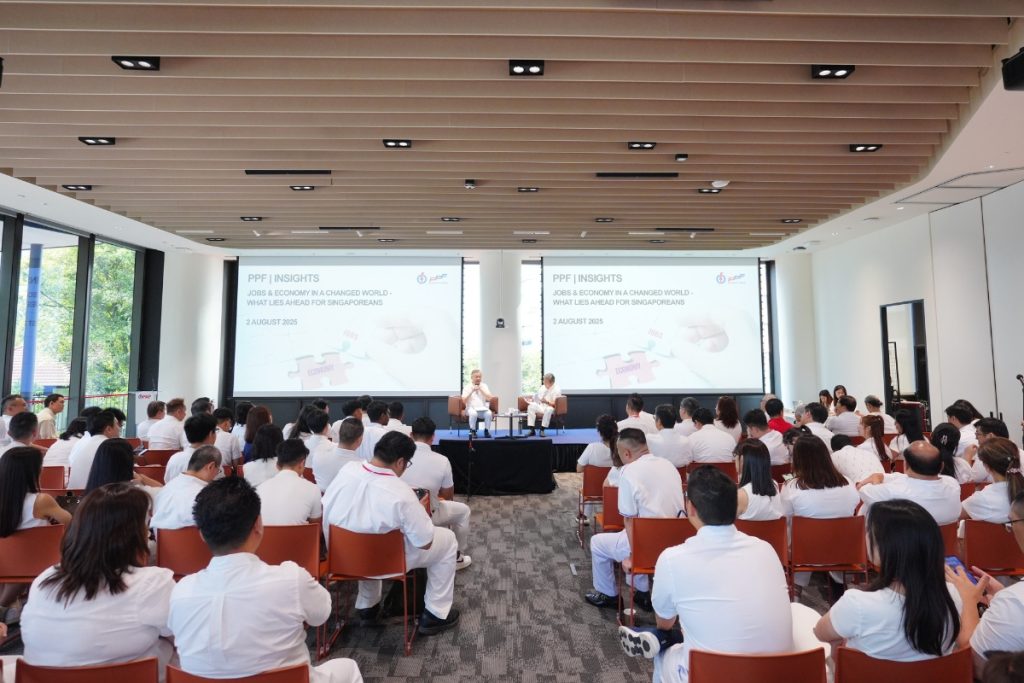
DPM Gan also shared that the strong political support which Singaporeans gave the PAP during the 2025 General Elections is vital during negotiations with other countries.
“Whenever you talk to foreign government leaders, and they know you have an election around the corner, they will be thinking ‘Why not I talk to you after the election?’”, said DPM Gan frankly. “For them to negotiate with you, and then one month later, you’re no longer an MP, no longer a Minister — they will say ‘what’s the point?’”
“Political support is very critical, especially when I negotiate with other countries. They don’t say so, because it’s politically not correct to say so,” he continued about having continuity in government. “But they are quite seriously at the back of their mind looking at you and wanting to see whether you are able to have a strong mandate. If you don’t, they say you’re a pushover.”
On the international front, Singapore’s leaders are opening up opportunities with other countries that will help our companies grow and develop. These include in emerging areas such as the green and digital economy.
Meanwhile, Singapore’s unique tripartite partnership between the labour movement, employers and the government remains a key pillar of our national resilience. It enables us to respond decisively to the challenges of a rapidly changing world.
The PAP Government has consistently taken action to evolve with the times. It will continue to safeguard the interests of Singapore and protect the livelihoods of Singaporeans.
“We must be nimble. Move fast, react fast. And we must not be afraid of transformation or restructuring that will come, because the world is changing very quickly,” said DPM Gan.
“Because of our investments over the years, whether in our people, infrastructure, or our connectivity, we are now in a strong position,” he continued. “We can turn challenges into opportunities, and difficulties into possibilities.”