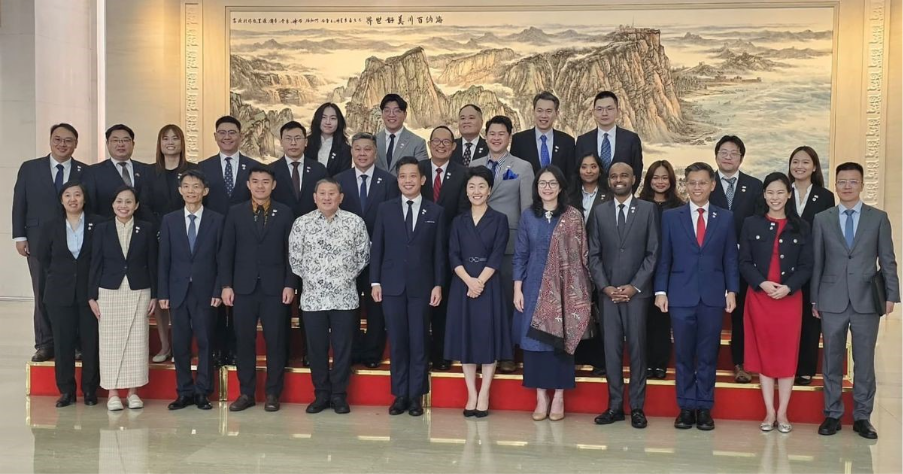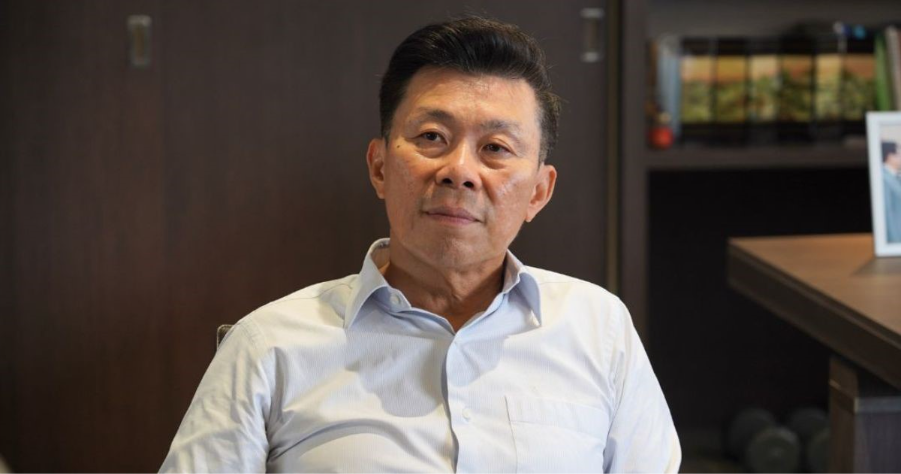
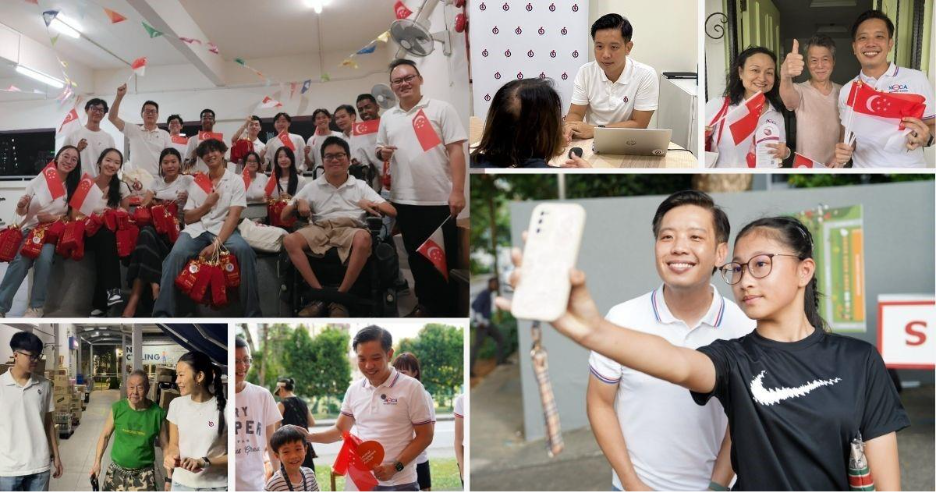
Alvin Tan, MP for Tanjong Pagar GRC, has set up an academy at his PAP Moulmein-Cairnhill (MoCa) branch where experienced volunteers mentor newcomers to better serve the community.
Mr Tan, who serves as Minister of State for National Development, and Trade and Industry, told Petir that the MoCa Academy was established 18 months ago to equip new volunteers with essential community service skills.
“We have very experienced volunteers who know the ground and [understand] policies well,” he said. “But it’s not just policies. It’s [about knowing] how to interact with residents during house visits. How do you spot somebody who’s in need? As we welcome new volunteers into MoCa, it’s important to equip them with skills to work effectively and empathetically.”
Mr Tan’s vision focuses on creating a virtuous cycle where veteran volunteers mentor newcomers to make a meaningful impact. “Through this mentorship approach and by empowering our senior volunteers, we’ve found that we can engage with residents much more effectively.”
“What makes my branch quite special is that our youths and our senior [volunteers] get along really well. The seniors mentor the youth, while the youth support the seniors. This wonderful dynamic is evident in every interaction they have with residents.”
Youth volunteers at MoCa visit elderly residents who stay alone to ensure they do not feel isolated

Mr Tan highlighted the strong and growing youth volunteer base in the MoCa community.
“They come in, they want to do something. They question. They challenge. We have robust debates all the time, and they don’t just engage in the debate, they engage in action.”
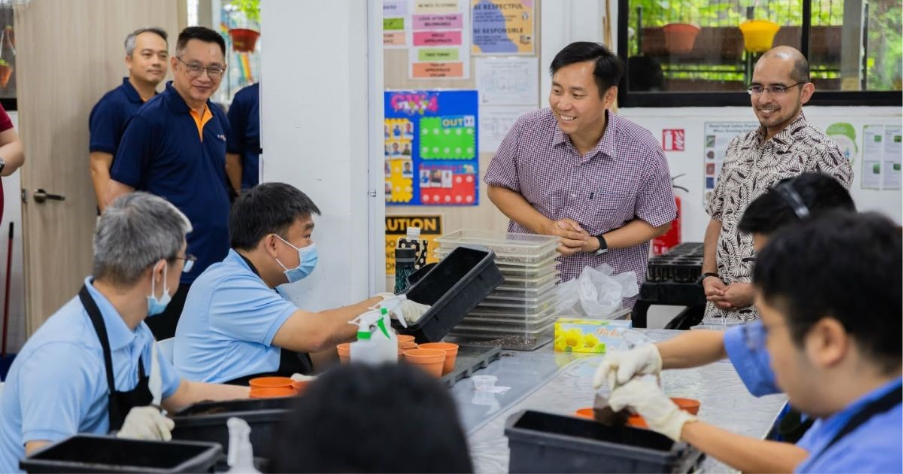
Mr Tan said his youth volunteers not only help at Monday evening Meet the People sessions, but also regularly visit elderly residents who live alone in the constituency to prevent social isolation.
The volunteers have “adopted” several seniors, including Uncle Anthony, who resides by himself in a one-room flat.
“Every single Monday, without fail, my youths are there walking with him,” Mr Tan said. “They ask, ‘Uncle Anthony, do you want to go downstairs? We go for a walk together.’ ‘Have you used your CDC vouchers? Can we go and help you to pick something out and deliver up to your home?”
Mr Tan shared that his team also visits a senior living in a nursing home who has advancing dementia. Though the resident has no family and his condition is deteriorating, Mr Tan said that the senior still recognises and remembers the branch volunteers during their visits.
Mental wellbeing circles provide mental health support for residents

Mental health support for residents is also a key priority since this issue has gained prominence during the Covid-19 pandemic, according to Mr Tan.
During his tenure as Minister of State for Culture, Community and Youth, Mr Tan championed mental wellbeing and helped establish the SG mental wellbeing network.
Building on this experience, he and his team created a well-being circle in the constituency that brings together residents from both private estates and public housing to promote mental health awareness and train peer supporters.
“As a modern society, there are more stressors involved in everyday living. The ability to provide mental wellbeing and mental health support for families, for seniors, for youths, has become incredibly important,” Mr Tan said.
A key focus of the circle is training and mentoring volunteers to create a ripple effect throughout the community. Through regular workshops, these volunteers learn to become peer supporters who can recognise signs of distress in others.
“Different families have different stressors in different seasons. Our volunteers are equipped to help families get through difficult parts of their lives,” he explained. “This peer support has a multiplier effect. You are a supporter of mental wellbeing. You train [new supporters] and then they train others. It helps to have that capability on the ground.”
Alvin Tan and his team work on reviving the rich sporting heritage of Farrer Park
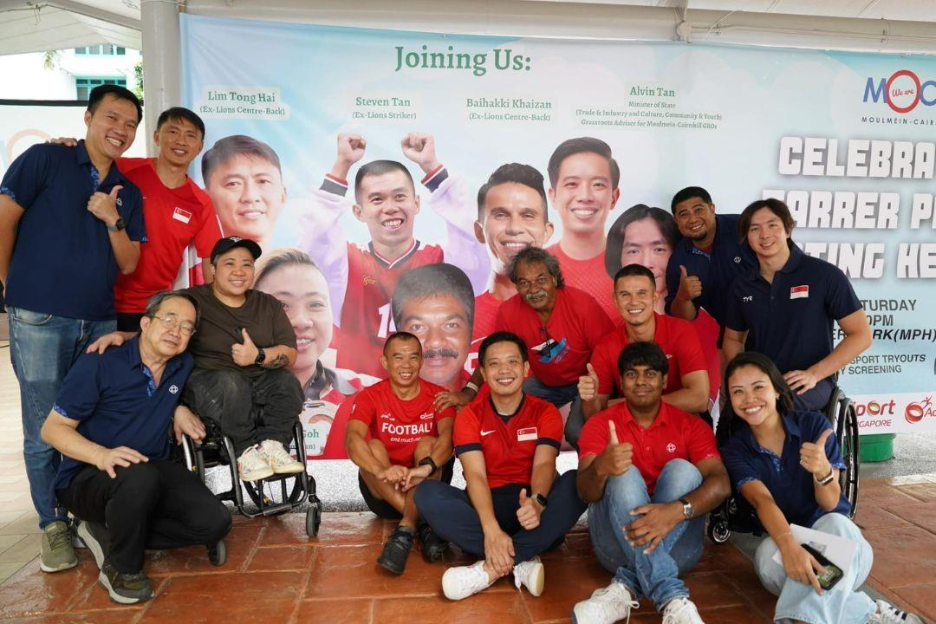
On the infrastructure side, Mr Tan and his team are working to revive Farrer Park’s rich sporting heritage through new infrastructure and organised activities in the constituency.
Having grown up playing tennis competitively at Farrer Park, Mr Tan reminisced about changing from his tennis racket to football boots in the iconic boxing gym. “Many people who live in Farrer Park, including the friends of Farrer Park community, have fond memories of their park.”
In 2022, plans were announced by the Housing & Development Board, Sport Singapore, and the Urban Redevelopment Authority to redevelop the 10-hectare site into a public housing estate with approximately 1,600 flats.
Mr Tan said that his team is working closely with HDB and Sports Singapore to integrate a sports complex into the heart of Farrer Park to preserve the area’s sporting legacy. The complex will feature a new swimming pool, a large multi-purpose active gym, a football field and a multi-purpose sports hall.
Beyond Farrer Park, plans include new pickleball courts near Little India and a rugby and football field near Cambridge, which Mr Tan described as incorporating sports throughout the community.
“Farrer Park isn’t just about its unique heritage and sporting history, where legends like Fandi Ahmad, Samad Alapitchay, Ang Peng Siong, and Toh Wei Soong grew up,” Mr Tan explained. “Sports play a vital role in connecting people across generations and promoting health benefits. I’m very proud that we are revitalising sports through infrastructure in MoCa, particularly in the Farrer Park area, and we plan to expand this initiative across MoCa in the coming years.”
Our Migrant Guests community group helps to build understanding and promote considerate behaviour

When asked about the challenges he faces, Mr Tan noted that his main challenge is engaging with residents, as 92 per cent live in private estates. This means that he must be creative in engaging residents. One way is to connect with young parents, taking advantage of the many schools in the area.
“I take the Education Merit Awards and Edusave Merit Bursary Awards ceremonies very seriously. It’s an opportunity for me to have a carnival. I put in quizzes, and every session is different,” he said. “I come up with a theme. It leads to a very engaging, and productive conversation with parents and youth.”
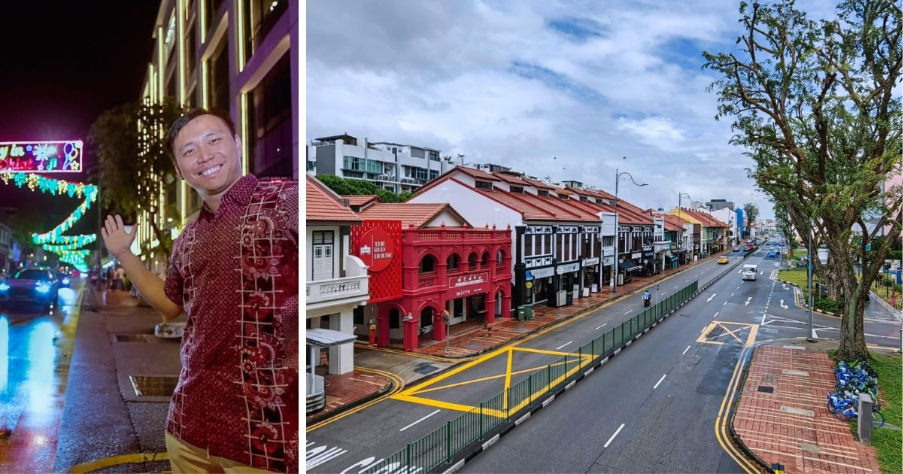
Mr Tan also highlighted the challenge of managing shared public spaces in Little India, which is part of Moulmein-Cairnhill, particularly on Sundays and Public Holidays when migrant workers gather there during their rest days.
His team formed Our Migrant Guests (OMG), a community group led by residents and volunteers to foster understanding between residents and migrant workers. The group regularly engages with the community, especially on Sundays and public holidays, to promote considerate behaviour and mutual understanding.
“Our [OMG members] go around engaging with migrant workers who rest at void decks. We have designated specific resting spots around Little India for them. This approach has helped build better appreciation for migrant workers and reduced friction between residents and our migrant guests, particularly on Sundays.”
Mr Tan’s team also organises appreciation events when new infrastructure projects are completed to recognise migrant workers’ contributions. They invite school children and residents to participate in these events, which celebrate facilities like walkways being built or community clubs, coffeeshops, and hawker centres being renovated.
“We have a banner that says, these are the hands that make this happen. This reminds our residents, especially students, that migrant workers in our community build these infrastructures — the schools, markets, community clubs— for us all to enjoy. It creates a virtuous cycle of gratitude.”