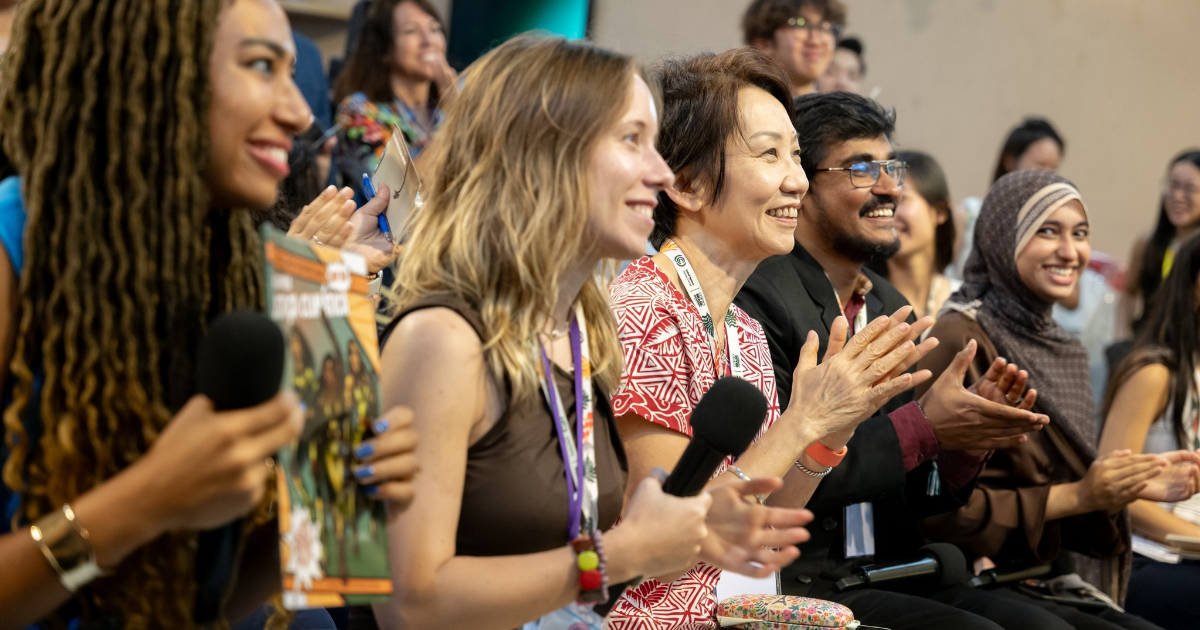
Last month (Nov 10 – 21), nearly 50,000 delegates from around the world gathered at Belém, Brazil for COP30, the annual UN Climate Change Conference.
Minister for Sustainability and the Environment Grace Fu and her team represented Singapore at the event. From the 30-hour journey it took to reach the heart of the Amazon to the many meetings and discussions with global partners, here are some key highlights of Minister Fu’s eventful trip, leading Singapore’s push for climate action on the global stage.
Reaffirming Singapore’s commitment to addressing climate change
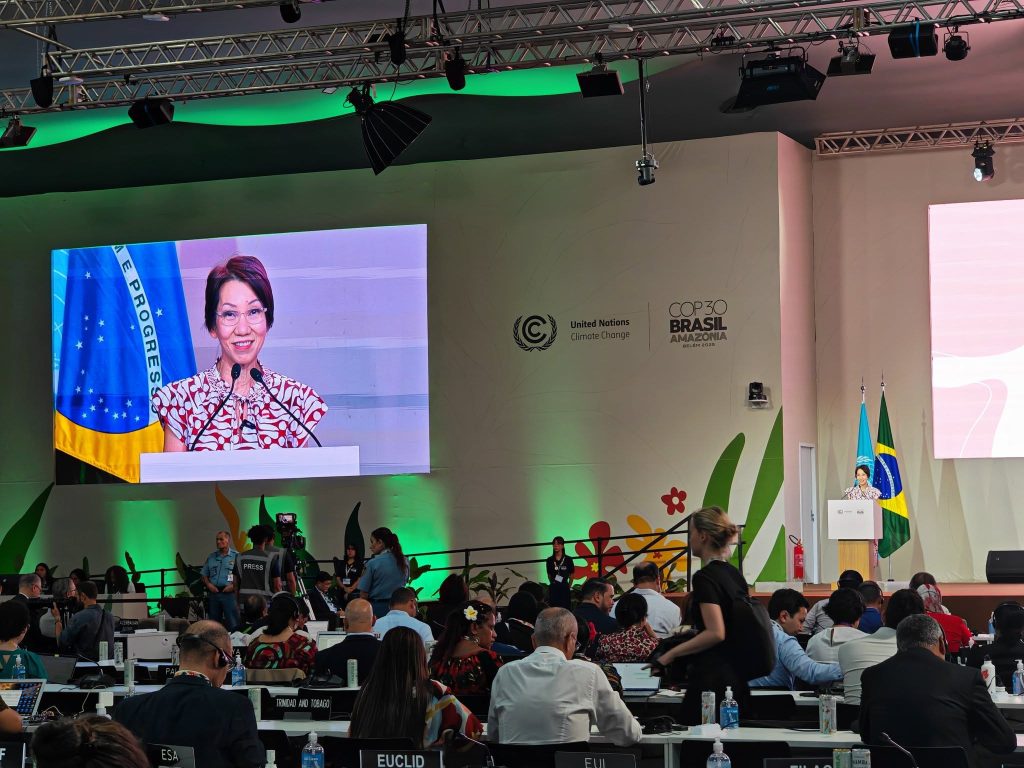
“Singapore reaffirms our commitment to working with the global community to make collective progress towards our shared climate goals,” said Ms Fu as she delivered Singapore’s National Statement.
In her speech, Ms Fu shared how Singapore is working closely with our ASEAN neighbours to build regional resilience against climate change. One such project is the ASEAN Power Grid (APG).
Ms Fu also highlighted how the Financing Asia’s Transition Partnership (FAST-P), a public-private collaboration, has since raised US$510 million to support green projects in Southeast Asia.
“Global emissions continue to rise. The livelihoods of millions of people are being impacted. The window for us, humanity, is rapidly closing. Each year of delayed action makes it harder and more costly to transform and adapt.
“Singapore stands ready to work with all Parties…because climate action is not about what any one country can achieve alone, but what we can achieve together,” added Ms Fu.
Driving solutions to combat urban heat
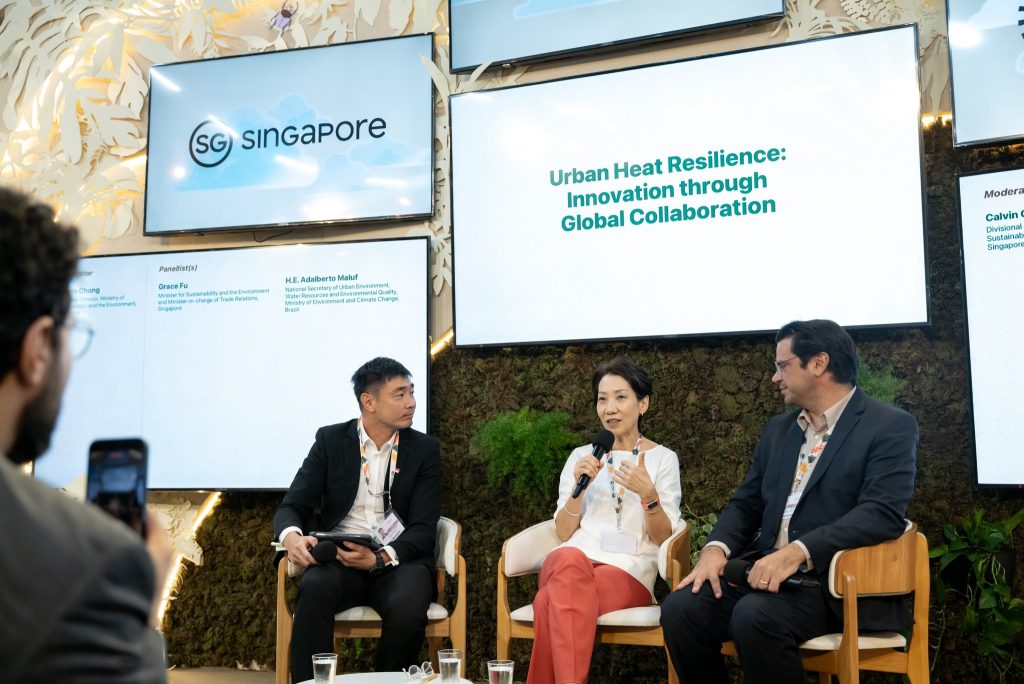
As a tropical country, Singapore is no stranger to heat or to trying to overcome it. During a Ministerial Roundtable, Ms Fu pledged Singapore’s support to the Beat the Heat initiative, which aims to drive solutions to address extreme heat.
Singapore is proud to share our technical expertise in combating urban heat and provide a platform for countries to exchange best practices, said Ms Fu.
One such tool is the Digital Urban Climate Twin (DUCT) that Singapore is developing. Testing ’what-if’ scenarios in a virtual environment, the DUCT can help predict and mitigate urban heat in a data-driven way.
Ms Fu noted that this is how Singapore can advance “practical and inclusive solutions” to build a “cooler, climate-resilient future”.
Building a stronger carbon market
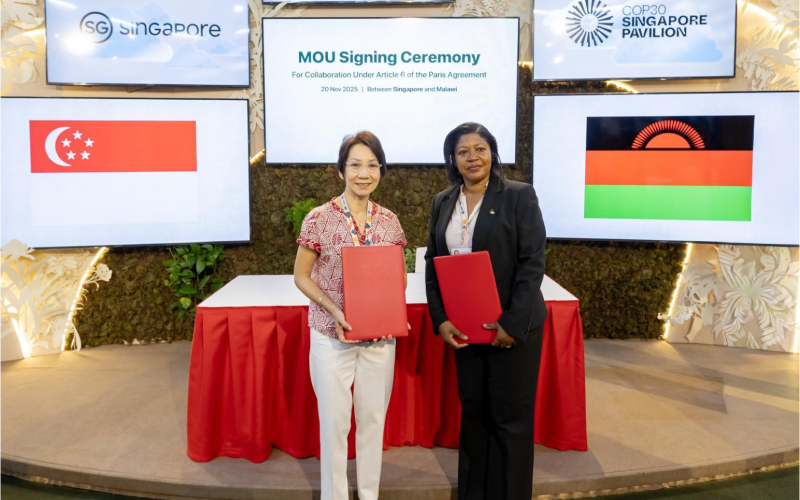
During COP30, Ms Fu and her Malawi counterpart, Ms Jean Mathanga, signed an MOU that will pave the way for Singapore and Malawi to collaborate on carbon credits.
This latest agreement is one of several that Singapore has inked to unlock high-integrity supply in the carbon market.
Strengthening the carbon market is one of the ways Singapore directs financing towards climate action, said Ms Fu.
Robust, trustworthy carbon markets help Singapore to offset unavoidable emissions and hit net-zero targets, while funding environmental projects that have real positive impact on communities.
“Collaboration can turn climate ambition into concrete results. We will continue building strong, credible carbon markets that drive real climate impact,” said Ms Fu.