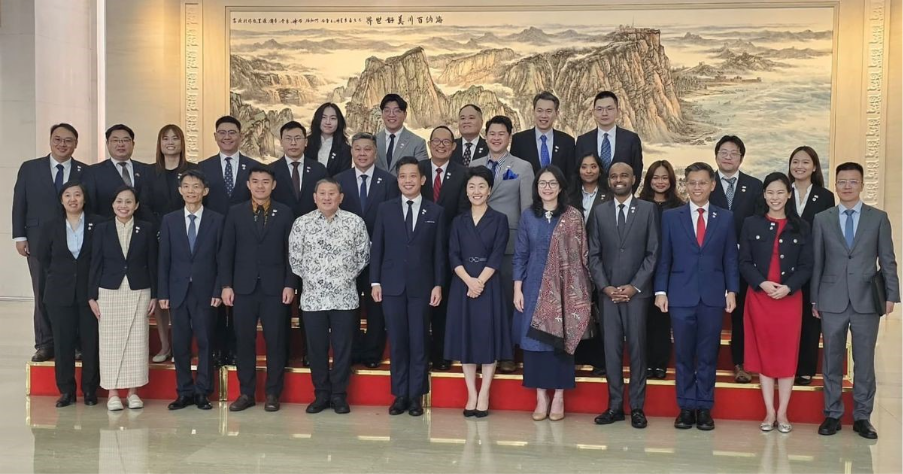
A seven-day study trip to China provided an invaluable platform for activists from the People’s Action Party (PAP) and the Communist Party of China (CPC) to exchange political strategies and leadership insights, according to Young PAP Chairperson Alvin Tan.
Mr Tan led a 26-member party delegation to China from Sept 18 to 24 at the invitation of the CPC.
The visit spanned Henan province and concluded in Beijing. It marked the PAP’s third official trip to China since both parties agreed to conduct regular exchanges in 2024.
Speaking to Petir at the end of the trip, Mr Tan noted that as the YP celebrates its 40th anniversary this year, the visit came at an opportune time to widen youth activists’ exposure beyond Singapore’s shores, especially with the group’s focus on developing youth leaders for the next lap.
“This trip is incredibly important,” he said. “It gives our young activists the opportunity to learn about other systems and exchange views on youth participation, political approaches, and activism.”
Through a week of close interaction with party leaders and grassroots youth activists, the delegation gained deep insights into the Chinese’s leadership approach and how youth participation and recruitment operate in the Chinese context.
“This relationship is important as we learn from one another and to share our unique experiences in our approach towards political activism and political activity.”
In Beijing, Mr Tan met with Sun Haiyan, Vice-Minister of the International Department of the CPC Central Committee. He also held discussions with Xu Xiao, Executive Secretary of the Central Committee of the Communist Youth League of China and Chairman of the All-China Youth Federation, to compare strategies on youth engagement.
The delegation also visited the Central Party School and the Museum of the Communist Party of China.
As part of the study visit, the PAP delegation travelled to Henan province, one of China’s most populous regions with nearly 100 million residents.
Mr Tan observed that while Henan is steeped in deep cultural history rooted in the Central Plains, it is also rapidly transforming into a modern powerhouse for advanced manufacturing, robotics, and finance.
“The rich history and heritage of Henan presents a strong opportunity for our youth to understand Henan and the history of China better,” Mr Tan said. Contrasting this with Singapore’s identity as a young, multi-ethnic immigrant nation, he underscored the value of mutual exchange: “What’s important is for youth in both Henan and Singapore to have more opportunities to interact, fostering a deeper understanding of the history and culture of both places.”
Coexisting in the era of AI and robotics
Reflecting on this intersection of heritage and automation, Mr Tan emphasised that preserving history is vital for the next generation to navigate the future.
“We are now in a new era of AI, robotics, and technology,” he noted. “It is equally important to understand human history as we transition into a stage of embodied AI. Understanding our history will enable us to better train the robots, ensuring that humans and robots can seamlessly coexist and augment one another.”
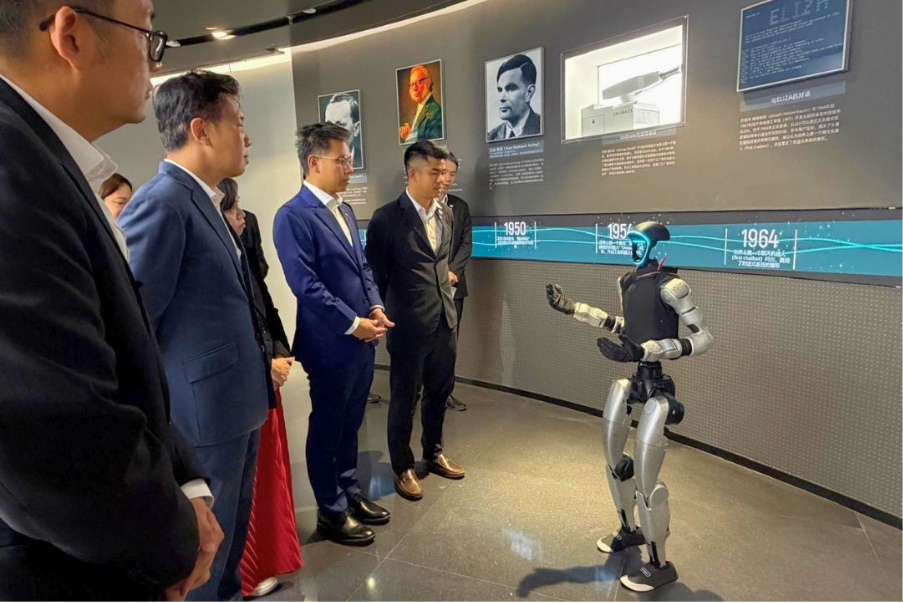
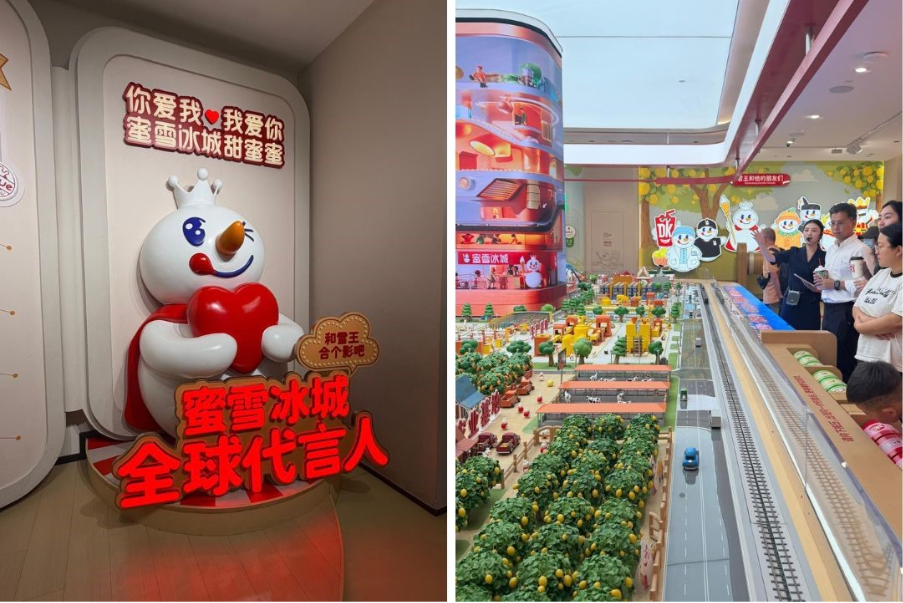
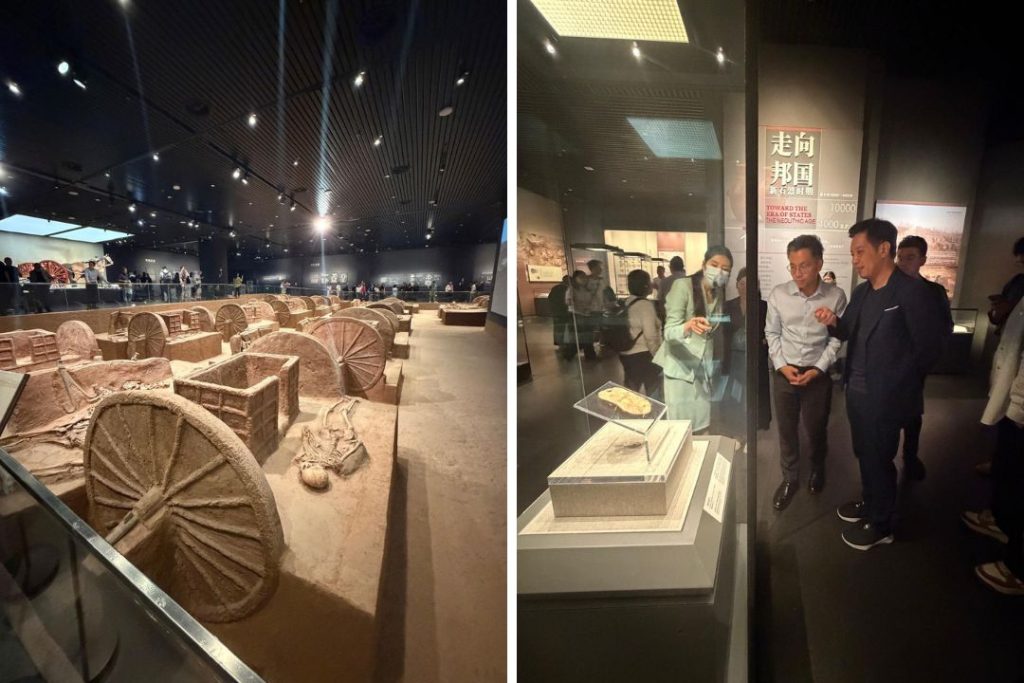
In Zhengzhou, the provincial capital, the delegation toured key enterprises across advanced manufacturing, technology, and aviation. Highlights included site visits to a major BYD factory and racing circuit, the global headquarters of Mixue Ice Cream & Tea, and the Henan Embodied AI’s 3T Centre, where humanoids are trained for diverse industrial scenarios. The delegates also toured Zhengzhou Commodity Exchange, Zhengzhou University, and the Henan Museum.
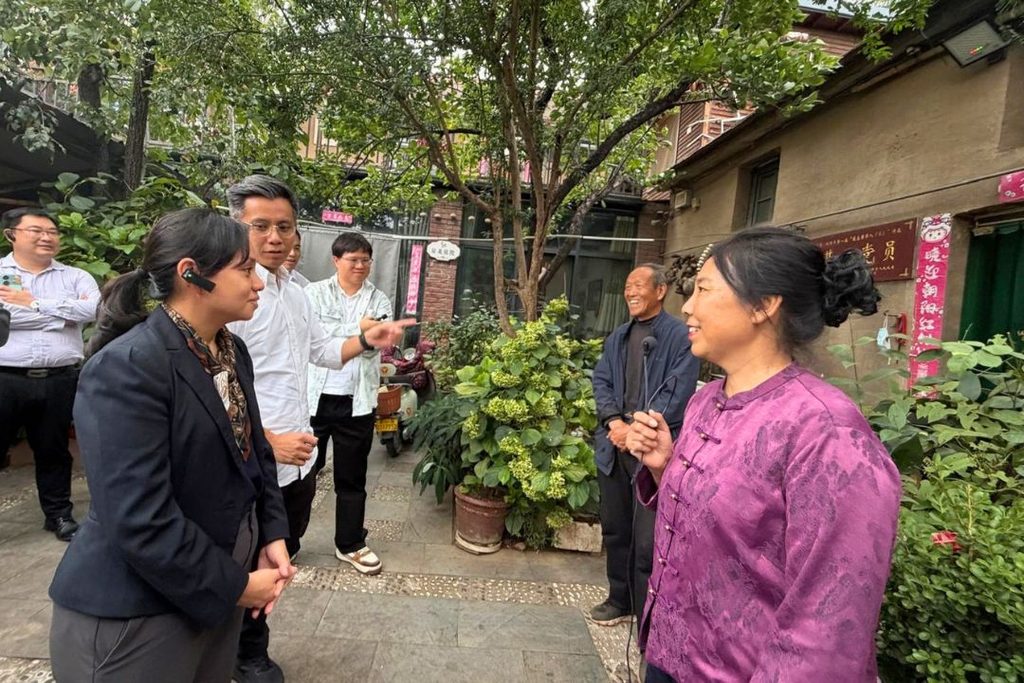
In Linzhou, the delegation toured the Red Flag Canal, a monumental 1,500-kilometre irrigation network meticulously carved into the cliffs of the Taihang Mountains.
The delegates also visited Miaohuang Village and met with local CPC cadres to learn about ongoing rural revitalisation efforts.
At Anyang, the delegation visited the Anyang UAV Industrial Park and the Yinxu Museum, a UNESCO World Heritage site.
The delegation also held high-level meetings with several key provincial and municipal leaders. These included Zhang Wei, Deputy Secretary of the CPC Henan Provincial Committee; Zhuang Jianqiu, Mayor of Zhengzhou; and Ma Hongbin, Standing Committee Member of the CPC Anyang Municipal Committee.
The delegation, one of the party’s biggest to date, included PAP MPs Cai Yinzhou, Dr Hamid Razak, Hazlina Abdul Halim, Elysa Chen Shiyun, Ng Shi Xuan and PAP Sengkang East Branch Chair Bernadette Giam.
The remaining members comprise YP Executive Committee members and district chairs, party cadres, and NTUC Youth representatives.
Ng Shi Xuan described the study trip as a profound “eye-opener”. Reflecting on the delegation’s time in Henan province, Mr Ng noted that he was deeply struck not only by the region’s ancient history but also by its fast-developing industrial transformation.
A particular highlight for him was the delegation’s visit to BYD’s second-largest manufacturing plant in China, where they observed cutting-edge advancements in fast-charging technology and the automaker’s signature Blade Battery system.
In Beijing, the counterparts provided valuable insights into how China actively engages its population, specifically the youth, Mr Ng told Petir.
As a past beneficiary of bilateral youth exchange programmes between Singapore and China, Mr Ng shared that the experience previously opened his eyes to a side of China he had never known before.
He strongly urged other young Singaporeans to step out of their comfort zones and embrace similar opportunities.
“I encourage all youth to take this opportunity to come and learn about China,” Mr Ng emphasised. “It is crucial for us to stay plugged in, understand Chinese corporate culture, and appreciate the rich history they possess.”
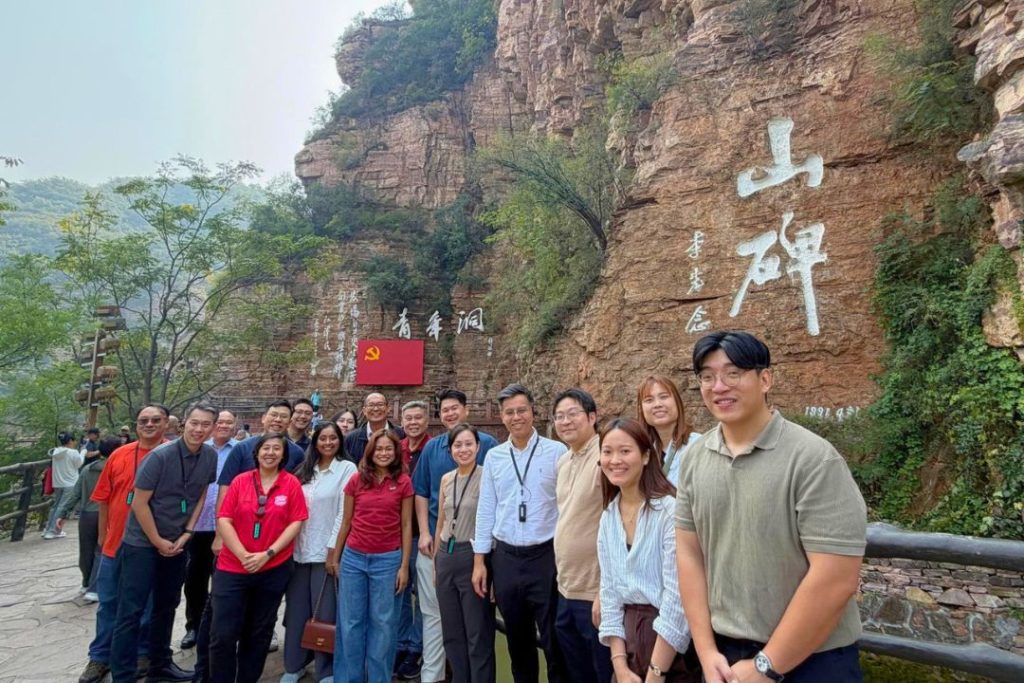
For Nur Wildani Bte Juraimi, a YP executive committee member, her biggest takeaway from this trip was learning about the strong history of China. She noted that despite the geographic and cultural differences, youth from both nations navigate similar hurdles.
“It is heartwarming to see that the challenges faced by youth in both China and Singapore are very similar,” Ms Wildani shared. “We are all focusing on core issues like employment, career readiness, and adapting to the rise of artificial intelligence.”
A standout moment for her was a site visit to the historic Red Flag Canal.
“Walking along and viewing the Red Flag Canal, knowing that it was primarily built by the youth of that era,” she reflected. “I could truly feel their resilience and grit. It is inspiring to see how the young people of that time rallied together to help their province.”