
The late pioneering minister S. Rajaratnam once noted how easy it was to win public attention simply by disagreeing with the government. Instead of opposing for the sake of opposition, he urged Singaporeans to actively focus on solving problems and developing solutions for a better Singapore.
Prime Minister Lawrence Wong said this philosophy of “democracy of deeds’, which Mr Rajaratnam articulated in 1971, has guided him throughout his time in public office.
“In every role I have undertaken, I have made it a point to engage and listen, and to create platforms for closer partnerships with stakeholders in the private and people sectors, so that they can be empowered to take actions and solve real issues on the ground,” PM Wong said at the launch of the second volume of Mr Rajaratnam’s biography titled The Lion’s Roar held at the National Library Building on July 22.
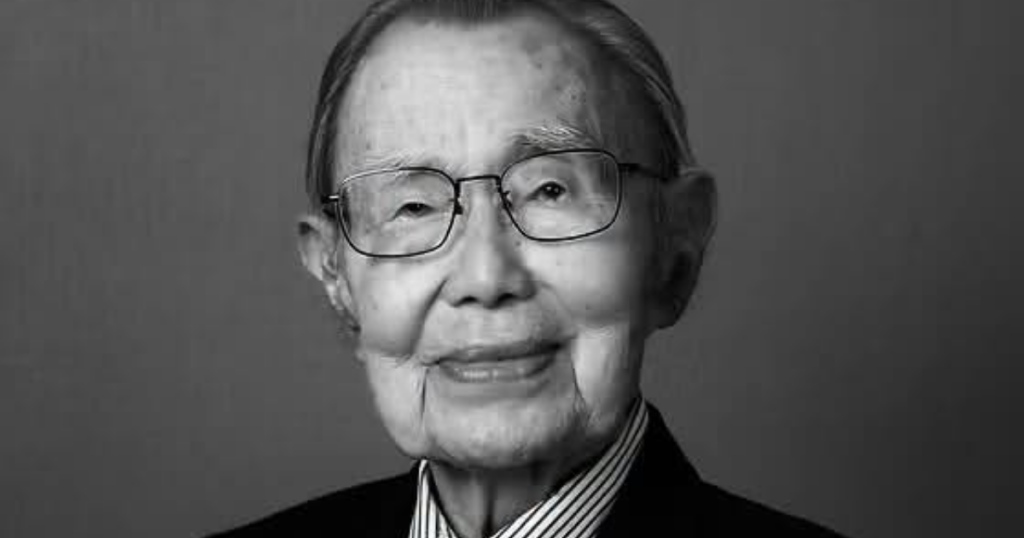
Mr Rajaratnam, who passed away in 2006, was one of Singapore’s founding fathers. He served as Minister for Culture in the first PAP government. Most notably, he was Singapore’s first and longest-serving Foreign Minister. He also served as Singapore’s second Deputy Prime Minister between 1980 and 1985.
Reflecting on the life and legacy of Mr Rajaratnam, PM Wong said Mr Rajaratnam believed a sense of community and solidarity explains the rise and fall of societies.
When a community first forms, everyone is prepared for austerity, discipline and self-sacrifice, and society prospers. However, solidarity weakens over time as life becomes more comfortable, he said. People lose their social anchors and seek to advance their own individual interests, eroding this sense of community and common purpose.
There are powerful forces at play that test Singapore’s solidarity pulling it in different directions, PM said, citing race and religion.
The internet amplifies more extreme voices and views, pulling people apart, he noted.
“We already see this dynamic at work in many countries around the world. Echo chambers form online. People gather around their own tribes,” he said.
PM Wong said this makes it harder to form consensus on national issues. Extreme views gain ground and societies eventually become deeply divided, making it impossible to govern.
“This is why we work so hard to keep Singapore society together: Not by suppressing any particular racial, religious or linguistic identity but by expanding the common spaces linking our multiplicities. This is why whenever we confront any controversial issue – be it 377A or conflict in the Middle East – our instinct is not to underline or accentuate the differences, but to seek a consensus that unites as many as possible.”
This starts with making genuine attempts to engage and listen, and to bridge the gap between those with different views, he added.
On the agency to determine the future, PM Wong said Singaporeans are fortunate that our founding leaders, supported by the pioneer generation of Singaporeans, did not give up, but worked hard to succeed against the odds.
He noted the Singapore of 2024 is in a stronger position than in 1965 though it faces new and daunting challenges.
“Now, like then, there will be cynics and sceptics who say that we can’t make it. But Raja reminds us: “A nation creates its own future – every time and all the time. Nothing is predestined,” he added.
While Mr Rajaratnam once noted that historically, successful societies have typically gone into decline, he stressed that trend is not destiny, PM Wong said.
Mr Rajaratnam had said in times of prosperity, there will be a proliferation of leaders who promise a better life for less or even no effort, PM Wong noted.
Time and again, such ‘bread and circus’ leaderships have won the hearts of people, said PM Wong. But the people discover too late that there is no bread or circus, and they are in an arena confronting hungry lions.
“To be clear: I offer no bread or circus; no quick or easy solutions. But I know that, working together, we have the means to go against the trend, and keep Singapore exceptional,” said PM Wong.
“Importantly, we have the will to build on what we have today and to take Singapore onwards and upwards.”
The 776-page book published by the ISEAS – Yusof Ishak Institute and written by former Member of Parliament and journalist Irene Ng, traces Mr Rajaratnam’s life and career from 1963 until his death in 2006. The book follows the release of the first volume, titled The Singapore Lion, in 2010.