The National Council of Social Service (NCSS) was formed in 1992. In the 34 years since, social needs in Singapore have only become more complex, and cover more areas of care.
Parliament has thus passed amendments to the NCSS Bill to ensure that the NCSS is fit for purpose, and can effectively carry out its role as an umbrella body for hundreds of social agencies.
These include strengthening the statutory board’s status as a sector developer, streamlining its membership and ensuring greater representation and effective governance.
This will lead to better outcomes and improve quality of life for Singaporeans who rely on these social services.
As a statutory board under the Ministry of Social and Family Development, NCSS has had a leading role in the tremendous expansion of government funding for the social service sector.
MSF’s funding for social service programmes doubled in the last decade, from $172 million in 2014 to $346 million in 2024.
The NCSS has taken a larger role in leading the industry, making sure help reaches people faster and more effectively, helping charities upgrade themselves, providing continuing education and training to social service personnel, and connecting government, businesses, and volunteers so everyone works better together.
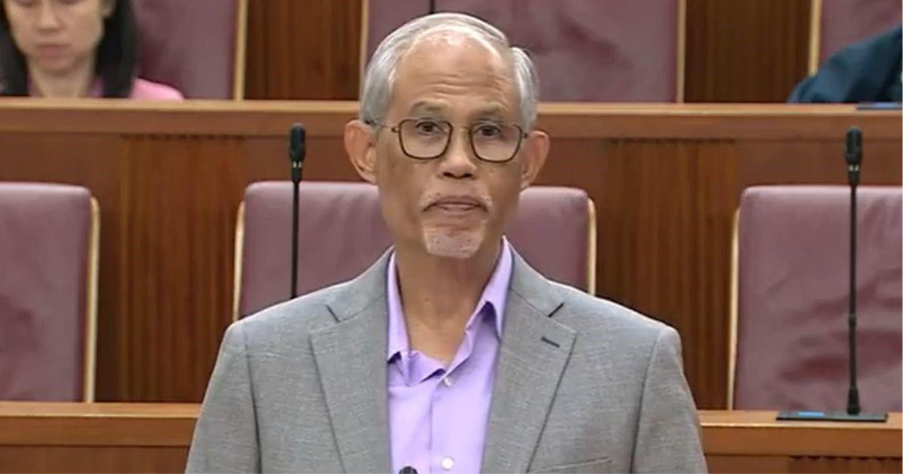
“Given the significant shifts in our social service landscape, MSF and NCSS reviewed how NCSS should be best positioned to continue serving the sector effectively,” said Masagos Zulkifli, Minister for Social and Family Development.
“This bill is the result of that review and reflects both NCSS and the sector’s proposals to shape this bill.”
The proposed changes will reflect NCSS expanded role to develop the social service sector. It will do so by strengthening social service delivery, building stakeholder capabilities, and developing the broader social service ecosystem.
Additionally, membership in the NCSS will be streamlined, from a three-tier membership setup to a single membership tier.
Members must now be organisations whose primary function is to provide a social service in Singapore or to directly support the provision of a social service in Singapore.
The majority of NCSS’s membership today will continue under the new membership framework.
To increase representation, an appointed council will replace the NCSS’ 23-member board. Under the new amendments, at least half of the Council will be chosen from nominations by members.
During the debate on the bill, 11 PAP Members of Parliament spoke on the amendments.
Mr Xie Yao Quan (Jurong Central SMC), Chairperson of the Social and Family Development GPC, said that the NCSS’s decision to expand the council, after consultation with the sector and stakeholders, has demonstrated the spirit of collaboration and partnership with the sector.
Ms Elysa Chen (Bishan-Toa Payoh GRC), Mr David Hoe (Jurong East-Bukit Batok GRC), Ms Lee Hui Ying (Nee Soon GRC), and Mr Yip Hon Weng (Yio Chu Kang SMC) also asked how the government will ensure diverse representation in an appointed council.
Mr Masagos said the new approach will help form a council with diverse backgrounds. This includes nominees from big or small organisations, each bringing a unique set of skills and expertise.
“Based on our experience with the NCSS Board, the results of elections are dependent on who chooses to run at the Annual General Meeting, how well-known the candidates are amongst those voting, and sometimes, how influential the nominating organisation is,” said Mr Masagos.
“The shift to a fully appointed Council allows for the composition of the Council to be considered as a whole, so that it better represents the sector and has the necessary mix of skills and perspectives.”
Mr Hoe, Ms Denise Phua (Jalan Besar GRC), and Dr Hamid Razak (West Coast-Jurong West GRC) highlighted the burden on smaller organisations, asking that these organisations be given sufficient time and support to adapt to new standards.
Ms Phua, Dr Hamid and Ms Chen also underscored the importance of supporting social workers, and making sure their voices are heard.
In response, Mr Masagos assured them that MSF and NCSS will continue to support social service professionals and their well-being. The consultation process that MSF and NCSS have been carrying out since 2024 will continue.
“By formalising NCSS’ expanded role as sector developer, NCSS is better able to consult more widely, identify ground needs, and closely partner and coordinate among stakeholders to develop the social service sector,” said Mr Masagos.
“With this Bill, NCSS will be well positioned to lead the sector to achieve better outcomes and improve the quality of life of users of our social services.”