PAP MPs pushed back against WP’s characterisation of our economic strategy in Parliament yesterday (5 Aug), and warned that turning inward risks isolating Singapore from the global market.
PAP MPs and Government ministers also reminded Parliament that the Economic Strategic Review had taken the opinion of thousands of Singaporeans and was a true collaborative approach.
“The ESR was one of the most extensive reviews in recent years. Five ESR committees engaged more than 7700 people over nine months,” said Minister Jeffrey Siow.
“The ESR was a collective endeavour by all these Singaporeans, and this is how we were able to produce a comprehensive blueprint grounded in experience and reality.”
Those consulted included executives of companies, trade associations, unionists, workers, and many others directly on the economic frontline.
Last year alone, Singapore’s exports of goods and services amounted to approximately 178% of GDP. This trade flow has been crucial in providing Singaporeans with good jobs and our SMEs with opportunities.
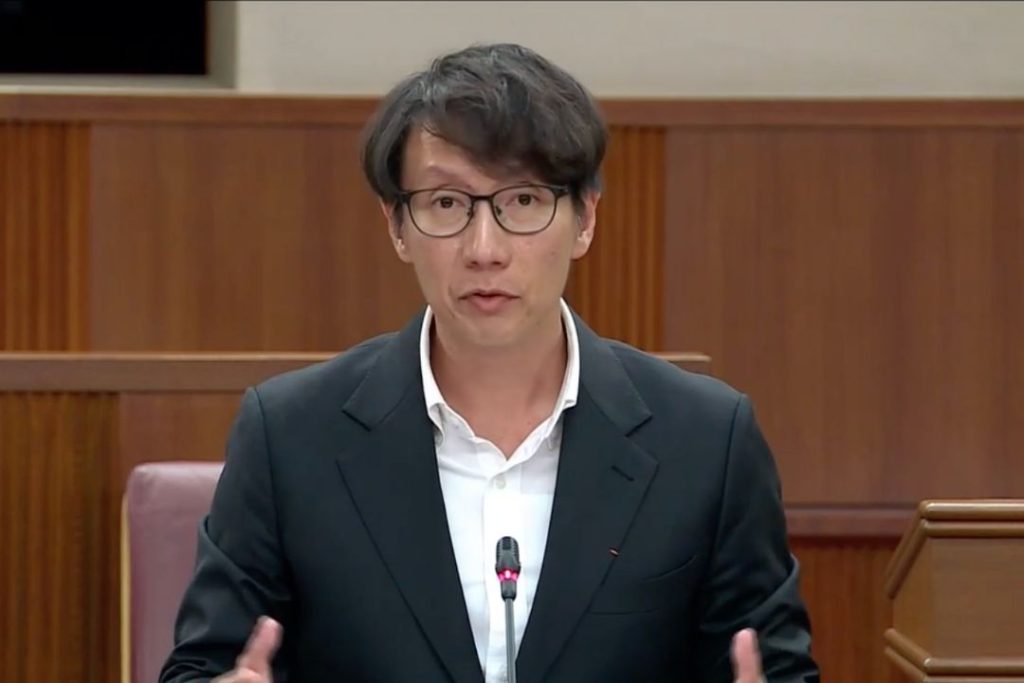
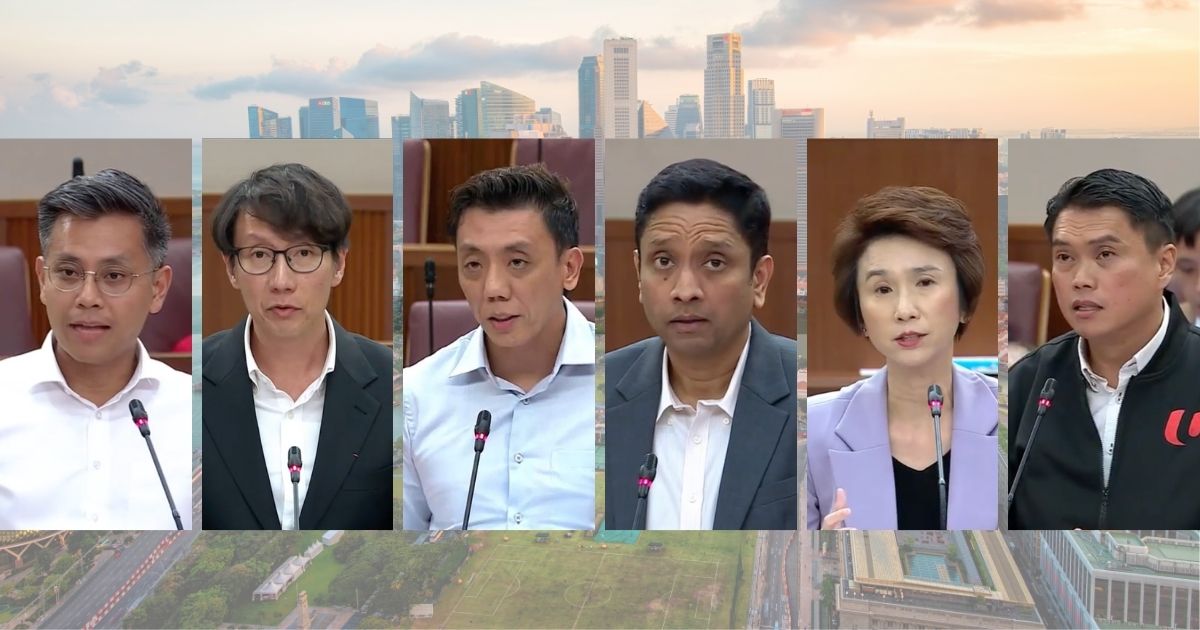
To strengthen the motion, Edward Chia, Deputy Chairperson of the Government Parliamentary Committee for Finance and Trade and Industry and MP for Holland-Bukit Timah GRC sought several amendments.
The amended motion makes clear that the aspirations in the motion (namely inclusion, entrepreneurship and good jobs) are aligned with the Economic Strategy Review (ESR).
| “That this House,in line with the suggestions in the Economic Strategy Review on the future Singapore economy, believes (a) in a more equal and inclusive economy, with opportunities for entrepreneurs to experiment, households and businesses to succeed, workers to thrive, and ideas and innovation to flourish; and (b)in an economy powered by dynamic local companies, global enterprises, healthy domestic and external demand, and Singaporeans and Singaporean capital venturing abroad.” |
These changes (in bold) acknowledge that Singapore, as a small, open economy, must remain competitive and outward-looking. It is also important to note that growth and inclusivity are not mutually exclusive and is not a zero-sum game.
“We should not frame local companies and global enterprises as competing choices. Singapore’s success has never been built on such a false choice,” said Mr Chia.
“Without growth, there will be fewer good jobs. Without investment, there will be fewer opportunities. (And) without fiscal resources, we cannot fund education, healthcare, housing, social support and skills upgrading,” said Mr Chia.
PAP MPs caution the house against false choices
Rising to support the amended motion, PAP MPs also cautioned against the characterisation of our economic strategy by WP MPs. Pitting SMEs against global enterprises as one or the other is essentially a false choice.
“Domestic demand and external demand are not competing choices. Local businesses cannot grow well, and grow fast, on the domestic market alone. We need both engines working together,” said Patrick Tay, MP for Pioneer SMC.
He cited the example of how many local firms have scaled up their operations, first by becoming trusted partners to global MNCs based in Singapore and using that credibility to venture into overseas markets. They have succeeded because of their relationships with MNCs, not in spite of them.
Ng Shi Xuan, MP for Sembawang GRC, echoed a similar point.
“Singapore companies do not grow in isolation. The objective should not be to shelter our companies from competition. It is to ensure that they are sufficiently connected, informed and capable to compete,” said Mr Ng.
That is because leading global companies do not just create jobs. They also help local enterprises to access new technologies, expose them to international standards and connect them to the global supply chain, added Mr Ng.
“Healthy domestic demand can strengthen our resilience. But we should be cautious about suggesting that it can substitute for the scale and opportunities provided by our global economic connections,” said GPC Chairperson for Finance and Trade and Industry Saktiandi Supaat, who is also MP for Bishan-Toa Payoh GRC.
Economic Strategy Review – a solid roadmap to support workers and SMEs
Responding to the motion, Minister of State for Manpower Dinesh Vasu Dash pointed to the ESR as an actionable blueprint. One that not only puts workers at the heart of its strategies but also turns Singaporean’s aspirations into practical action.
“We are navigating a structural transition. Workers expect more churn and disruption,” said Mr Dinesh. He rejected the assertion that these changes meant that Singapore’s economic model has failed.
Instead, the ESR seeks to overcome these challenges by supporting displaced workers, improving progression in pay and careers, and strengthening pathways for young people entering the workforce.
In line with ESR’s recommendations, Mr Dinesh shared that the government is looking into enhancing the SkillsFuture Jobseeker Support scheme (JSS) to cover more PMEs. It will also broaden work-study pathways to help young Singaporeans get a head start in gaining industry experience.
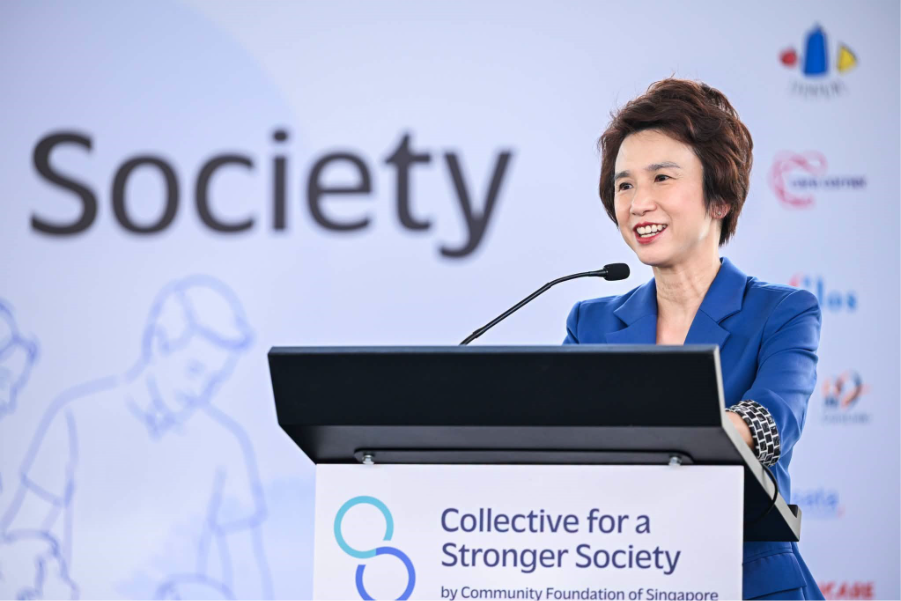
Addressing how the ESR will support local enterprises, Senior Minister of State for Trade and Industry Low Yen Ling shared that Singapore’s economic strategy has always been designed to help businesses adapt and grow.
“Through EnterpriseSG, businesses can access a wide range of government support to build capabilities and transform their operations…whether it is adopting AI, improving productivity or expanding into new markets,” said Ms Low.
Examples include EnterpriseSG’s Scale-Up programme, which helps businesses build capabilities and springboard overseas. To date, the scheme has helped 80 companies generate a combined S$2.5bn in revenue within three years of joining the programme.
To help F&B businesses thrive, an F&B Process Optimisation Programme helps lower costs through sharing manufacturing and food preparation facilities.
Heartland merchants are not forgotten either. The government has increased support to the Heartland Enterprise Placemaking Grant to help neighbourhood shops refresh their concepts, improve their storefronts and attract more footfall.
“These efforts strengthen Singapore’s enterprise ecosystem, which in turn, underpin the success of our enterprises,” said Ms Low.
Considering how SMEs make up 99 per cent of all enterprises and employ more than 70 per cent of our workforce, helping them to not just weather the new storm, but scale and grow will always be a priority for the PAP Government.
After a 9-hour debate, parliament passed the amended motion, with the exception of WP MPs, who voted against the motion they originally brought to Parliament.
With the firm backing of Parliament, we can thus carry out the recommendations of the Economic Strategy Review, and continue building an economy that truly works for all Singaporeans.