For nine months, Young PAP (YP) activists worked with the Association of Small and Medium Enterprises (ASME) to figure out how to make AI work for Singaporeans and Singaporean companies.
These included lessons learned from running the AI Centre of Excellence, SME@AiTE and speaking to the owners and employees from some 300 SMEs.
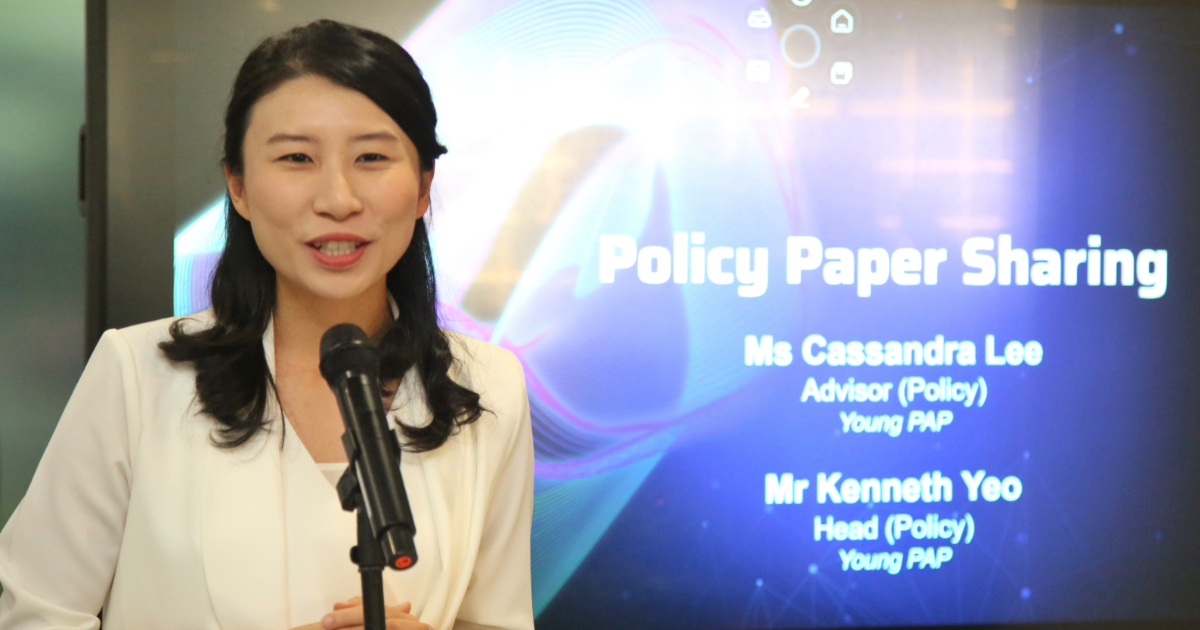
The result is a joint policy paper titled “AI, Jobs, and the Two-speed SME Economy,” presented this week at AI Festival Asia 2026.
The paper warns of a widening gap between a “first speed” economy of large, AI-ready firms and a “second speed” economy of micro and small domestic firms, such as those in F&B and retail, who lack the resources to adapt.
“When micro and small firms are supported to pilot AI, redesign workflows, and host meaningful AI-related roles, well-trained youths gain the environments they need to learn, contribute, and grow,” shared YP Advisor (Policy) Cassandra Lee
“This is why the next phase of AI policy must move beyond a worker-only lens to a dual focus on people and enterprises, especially smaller firms,” said Ms Lee, who is also MP for West Coast-Jurong West GRC.

The paper makes several policy recommendations to ensure AI becomes a “multiplier” rather than a disruptor.
Tiered, Risk-Shared AI Adoption Packages: Recognizing that micro-firms cannot afford the large scale transformation projects that MNCs and larger enterprises undertake, the paper recommends a three-tiered package that will help cover most SMEs and startups.
This includes helping to support projects in the $15,000-$30,000 range, scaling up proven projects, and small grants or credits for micro enterprises that want to adopt specific AI tools.
National AI Apprenticeship Guideline for SMEs: Educational institutes should work with government agencies and trade associations to come up with a guideline for AI internships, covering scope of work, mentorship expectations, and learning outcomes.
National AI Sandboxes: The SME@AITE example could be expanded to more centers, where SMEs can see AI use cases working in context, test workflows and tools with guidance, and to get help with their first AI project. These centers can also act as “matching hubs,” connecting SMEs with AI-trained interns from the Polytechnics and ITE.
“The ideas in this policy paper did not come from a seminar room,” said YP activist Pulse Tan, who edited the paper. “They came from nine months of running SME@AITE, talking to almost 300 SMEs, and seeing what actually works on the ground.”
SMEs employ 70% of Singapore’s workforce, but often lack the cashflow needed to adopt AI solutions. The YP paper also highlighted that SMEs wanting to adopt AI can face uncertainty over the return on investment and a lack of inhouse manpower expertise.
“As a technology lawyer, I am conscious that AI adoption is not just technical […] human judgment remains central,” said Advisor Lee. “I see strong value in helping young people learn in context, through engagement with practitioners and real use cases.”
“Micro and small enterprises face structurally different constraints,” said Advisor Lee. “Policies should reflect that reality.”
YP leaders speak up for SME owners and ITE students
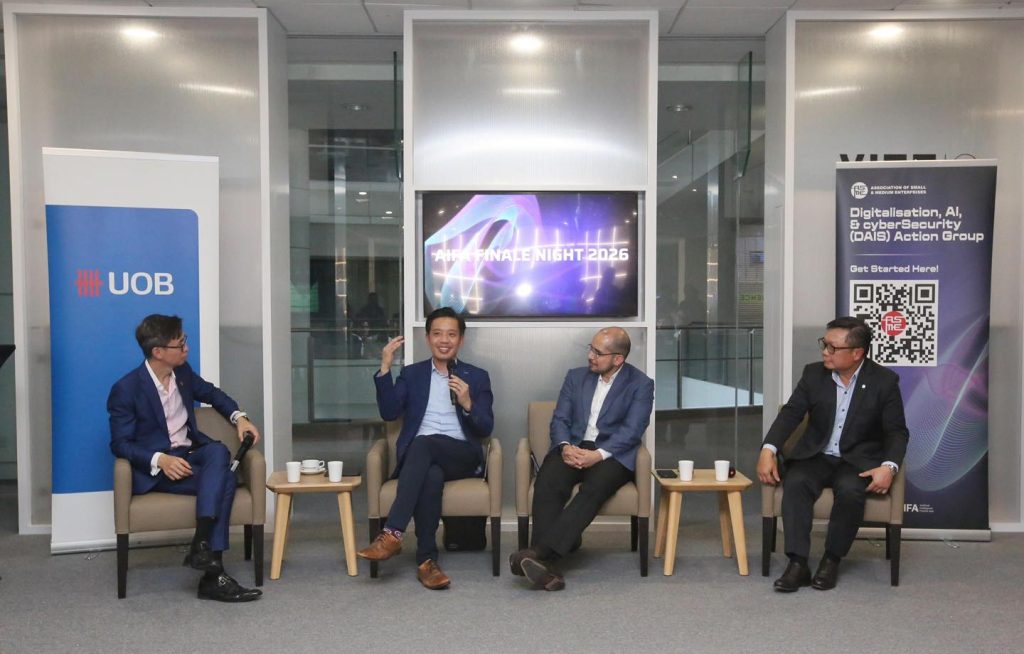
The launch event also included a fireside chat between YP Chairperson Alvin Tan and Deputy Chairperson Syed Harun Alhabsyi.
Together with Mr Paul Kan, Country Head of SME Banking (Emerging Enterprise) at United Overseas Bank and Mr Ang Yuit, President of ASME, they discussed issues regarding the two-speed economy.
“To our SME owners: We know your pain points — the wasted time, the feeling of being stretched too thin. Take heed — AI is your multiplier,” said Chairperson Tan, who is also Minister of State for Trade and Industry. “It is here to take the ‘robotic’ and mundane parts of your job out – the scheduling, the data entry, the manual inspections — and give them to the actual robots. This allows all of you, all of us, in fact, to focus on what only a human can do: build relationships, dream up new products, and lead your teams.”
Chairperson Tan also spoke up on the worth of employing ITE students.
“If you look [at] our very talented and hardworking ITE students, through SME@AITE, these ‘digital natives’ act as interns for F&B and retail SMEs,” he said. “They handle the data setup and the dashboards, while you provide the operations experience.”
“It is a win-win solution that has already led to full-time job offers for many students.”
For more about how the Young PAP is making AI work for students and SMEs, click here.