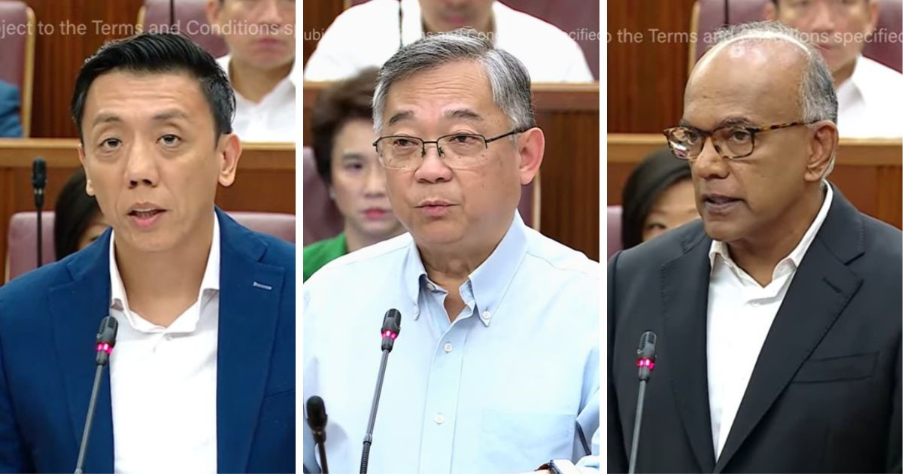
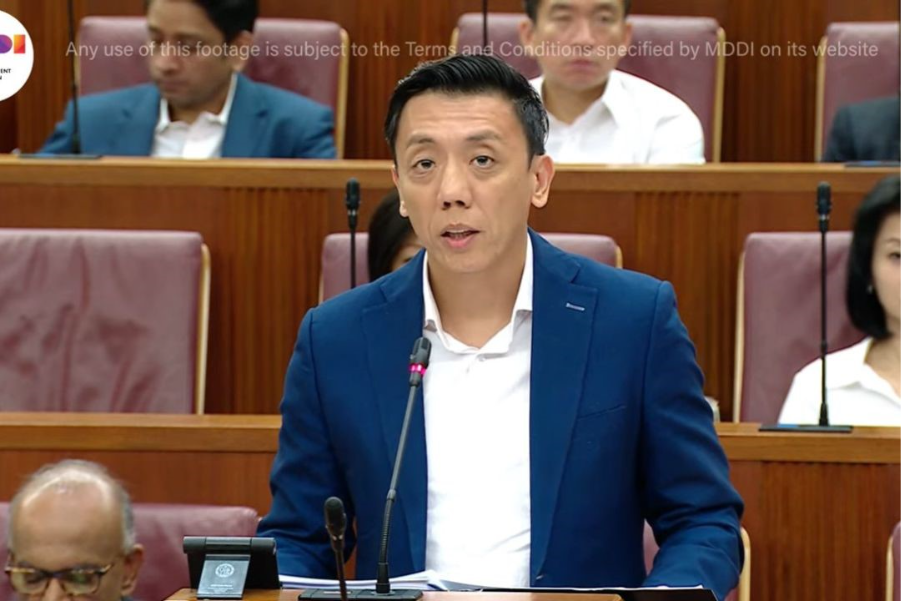
Senior Minister of State for Finance Jeffrey Siow announced nearly $1 billion in additional support measures to help Singaporeans and local companies mitigate the impact of Middle East conflict.
Singaporeans will receive $500 in CDC vouchers six months early in June, instead of January 2027. This will help manage expected cost increases from the Middle East conflict.
The cost-of-living special payment will increase by $200 for all eligible Singaporeans.
About 2.4 million Singaporeans will receive between $400 and $600 in cash in September.
Speaking in Parliament on April 7, Mr Siow, who is also Acting Transport Minister, noted that petrol and diesel prices have risen sharply due to soaring global oil prices and will likely remain elevated for some time.
He added that Singapore must also prepare for the full impact of the Middle East conflict on the prices of electricity and food.
“We cannot predict how exactly events will unfold, or when the conflict will end,” he said. “What we do know is that Singaporeans are already feeling some of the effects on the ground…The Government is not waiting to act.”
Mr Siow said the Government will provide targeted support to those directly affected by price increases and broader support for households and businesses.
As part of support measures, active platform workers, private hire car drivers, and taxi drivers will receive $200 in cash from the end of April to help offset earnings losses caused by rising fuel prices.
The Government will also temporarily co-fund cost increases for essential transport services to ensure they continue operating without disruption. These services include transportation for school students, seniors, and persons with disabilities.
Mr Siow acknowledged calls from some MPs to reduce fuel or diesel duties across the board but said this would be “too blunt an approach” and could be regressive.
He added that the Government wants to preserve price signals that encourage consumers to use energy more efficiently.“As an open economy, we must allow fuel prices to reflect market realities.”
The additional support comes on top of the $155 billion previously committed in Budget 2026. The new funding exceeds the government’s immediate response in 2022, when the war in Ukraine began and caused a similar surge in oil and gas prices.
On support for businesses, the 40 per cent corporate income tax rebate announced at Budget 2026 will be increased to 50 per cent.
Company benefits will also be enhanced. The minimum benefit that a company with at least one local employee will receive will be raised from $1,500 to $2,000. The total benefits cap per company will increase from $30,000 to $40,000. Eligible companies will receive this enhanced support from end-April.
The basic tier for the Energy Efficiency Grant, which supports businesses in six sectors by co-funding investments in energy-efficient equipment, will be expanded to all sectors and extended to March 31 in 2028.
Separately, the Government will share cost increases directly arising from fuel price increases for critical Government contracts, where delays or stoppages would significantly harm the public interest.
These includes major government infrastructure projects, such as the Cross Island MRT Line, or new HDB Build-To-Order projects.
Mr Siow said the Government has assembled a “substantial first response” to the energy crisis caused by the conflict.
“We have drawer plans, and as events develop, we can put them into action and do more if the situation calls for it,” he said.
The Government will fund the measures within the amount approved in last month’s Supply Act and seek Parliament’s approval for the supplementary budget later, he added.
“What Singaporeans can count on is a government that is well-prepared, builds sufficient buffers, anticipates problems and thus is ready and able to respond swiftly with solutions,” he said.
“We will always make sure that no Singaporean is left to bear his or her burden alone.”
Singapore faces risk of slower growth: DPM Gan
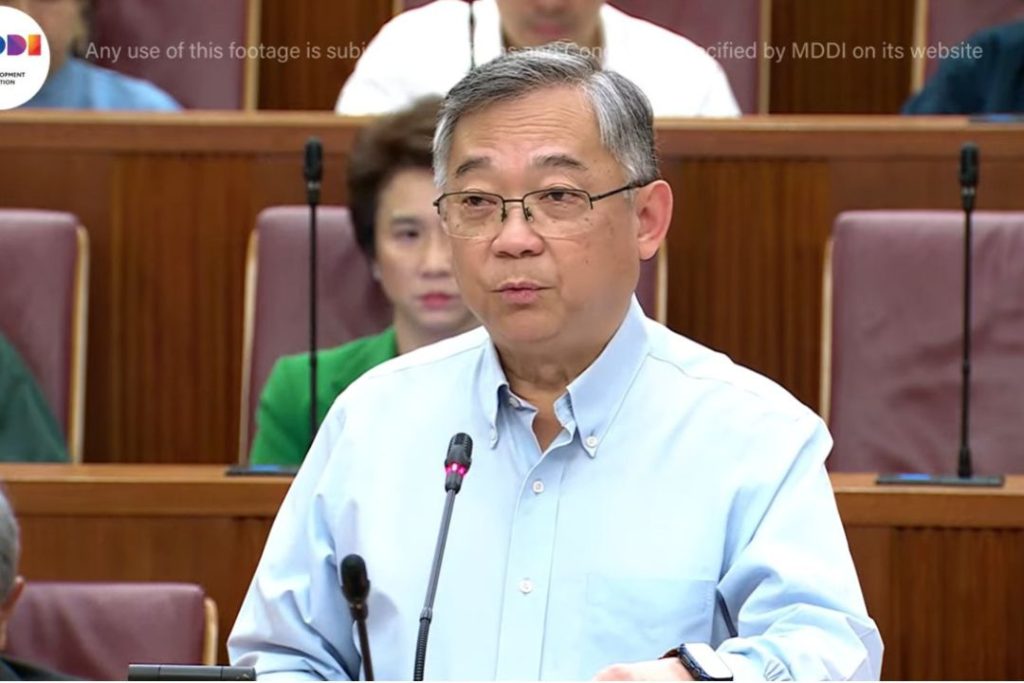
In his ministerial statement, Deputy Prime Minister Gan Kim Yong said that Singapore’s economic growth in the coming quarters is likely to be affected by the ongoing conflict. He cautioned that inflation is expected to be higher than earlier projected.
Mr Gan, who is also Minister for Trade and Industry, explained that supply disruptions and higher global energy and raw material prices are “cascading through the global economy”. These disruptions are pushing up business costs, transport costs, and consumer prices, which will in turn dampen demand and slow down economic growth worldwide.
Mr Gan warned Parliament that Singaporeans should prepare for higher food prices as the nation imports most of its food supplies.
“If the conflict is protracted, higher inflation in our source markets could also lead to further increases in import prices,” he said.
“Over time, these pressures will be felt by households in more expensive electricity, transport and daily necessities. Lower income households will be more affected as a larger share of their spending goes towards essentials.”
DPM Gan explained that as a small and highly open economy, Singapore will not be able to “insulate ourselves completely from this crisis”, and it must respond with a “coordinated, multi-agency effort to cushion the impact on our people and our economy”.
The government recently formed the Homefront Crisis Ministerial Committee to address these challenges. Coordinating Minister for National Security K Shanmugam chairs the committee, which includes several Ministers.
The committee will secure supplies of essential fuels—liquefied natural gas (LNG) and diesel for power generation, as well as jet fuel and petrol, Mr Gan said.
It will also strengthen economic resilience by helping businesses preserve their productive capacity and capability while facilitating necessary transformation.
The committee will provide targeted help for those most affected by the crisis: businesses in the energy and chemicals cluster, platform workers, and low-income families.
Workers will receive training and employment support, while households will get help addressing cost-of-living concerns.
S’pore has not tapped on fuel reserves or implement fuel rationing: Shanmugam
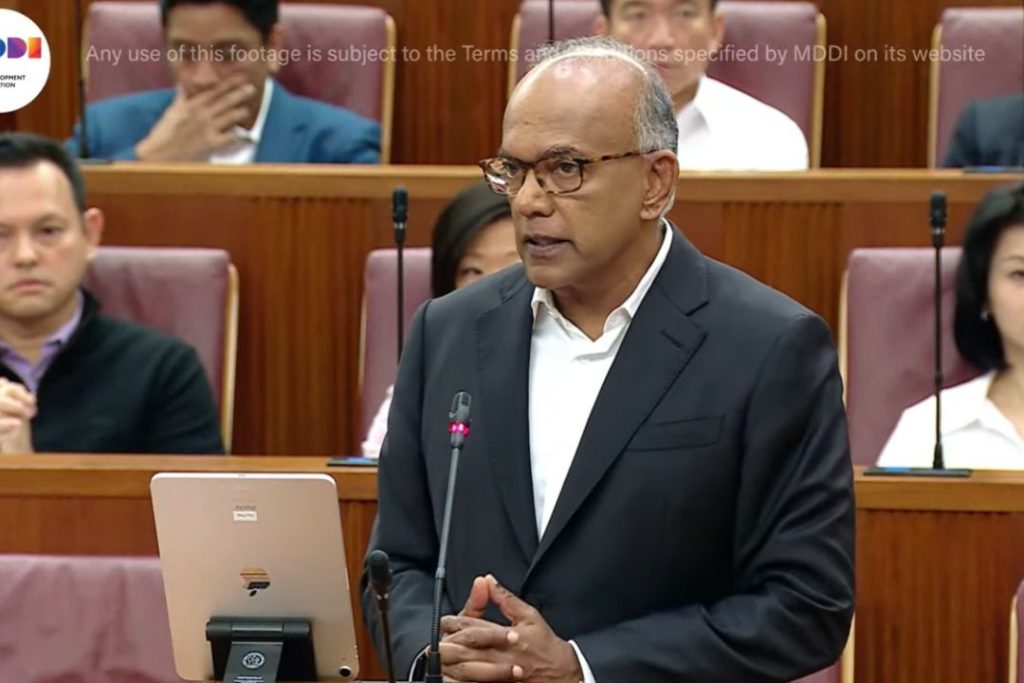
In his ministerial statement, Coordinating Mr Shanmugam said that Singapore plans to increase the size of its fuel reserves.
The nation’s fuel reserves consist of a mix of natural gas and diesel, with some owned by the Government and others by power generation companies.
“It will be costly, but we think it necessary,” he said. “We have so far not tapped on our fuel reserves, nor have we implemented fuel rationing.”
Mr Shanmugam also shared that Singapore continues to access crude oil and has secured supplies from alternative sources. However, Singaporeans must pay prevailing prices, which are much higher than before.
He noted that Singapore has remained relatively stable due to measures taken even before the crisis, including diversifying supply sources and investing in energy resilience infrastructure.
“Nevertheless, if supply disruptions increase, and if more suppliers are unable to provide fuel or gas, then potential disruptions to domestic energy and electricity supply cannot be ruled out.”
On the issue of food security, Mr Shanmugam said that Singapore maintains strategic food stockpiles, which will help to mitigate the impact of any unforeseen supply disruptions.
The government is relooking at the country’s supply chains with a view towards strengthening them, he added.
“We are only able to maintain stockpiles of essential food types,” he said.
“Singaporeans should be prepared for supplies of some foods from some countries to be unavailable and will have to exercise flexibility in choosing alternatives.”