By Winston Ng
On 1 May 2026, about 1,600 union leaders, tripartite partners and guests gathered at the NTUC May Day Rally to hear a message that was equal parts honest and hopeful: the road ahead is harder, but Singapore will face it together.
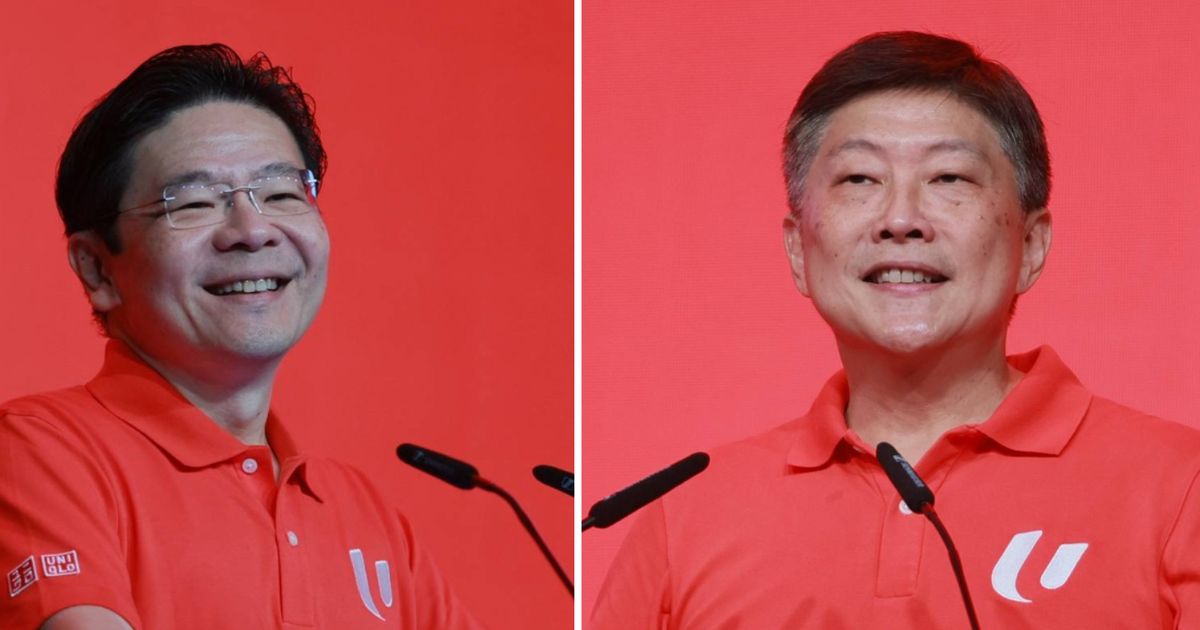
Prime Minister Lawrence Wong and NTUC Secretary-General Ng Chee Meng took turns addressing the Labour Movement, and between them, they painted a clear picture of where Singapore stands, and where it must go.
A Movement That Has Delivered
Before turning to the challenges ahead, SG Ng paused to mark how far the Labour Movement has come.
At the 2019 National Delegates’ Conference, NTUC set an ambitious direction under the banner of Dream, Dare, Do. The goals were concrete: grow membership from 960,000 to 1.5 million by 2030, and transform the union model, membership model and training model from the ground up. Then COVID-19 hit. It would have been easy to shelve those ambitions. Instead, the movement pressed on.
Membership has since grown to about 1.4 million, well on track for the 2030 target. The union model has expanded to embrace platform workers and deliver new value to PMEs through mentorship and career guidance. The NTUC Job Security Council, formed during the pandemic, has placed more than 145,000 locals into jobs since 2020.
The training model has been transformed through Company Training Committees (CTCs). From the first CTC in 2019, there are now more than 3,800 across Singapore, benefiting over 300,000 workers through skills training, wage increases, job redesign and structured career pathways.
“Behind every number I just shared, it is our people, you, who made it happen,” SG Ng lauded union leaders and NTUC staff. “We have Dreamt, Dared, Done. And if I may say so: You have Delivered.”
A New and More Severe Storm
Last year, PM Wong warned of a gathering storm. This year, he said a second storm has arrived, and it is worse.
The ongoing conflict in the Middle East has led Iran to close the Strait of Hormuz for more than two months. The effects are being felt far beyond the region. Airlines have cut flights. Factories are reporting delays. Fuel and fertiliser supplies are tightening. Singapore, like much of Asia, is directly exposed.
“We should not expect this crisis to be over anytime soon,” PM Wong said, warning that supply disruptions could persist and worsen in the months ahead, pushing inflation higher and slowing economic growth. He drew a sobering comparison to the stagflation of the 1970s, noting that the International Energy Agency has warned the current crisis could be even more severe.
And yet, Singapore is not without resources. Decades of deliberate investment in energy infrastructure, from Jurong Island to the Jurong Rock Caverns underground storage, mean the country is better positioned than most. PM Wong was quick to credit the workers behind that resilience, giving a special shout-out to those in the refineries, power plants and the broader energy sector who work round-the-clock to keep Singapore running.
The PAP Government has already moved. An early support package includes enhanced U-Save rebates, cash payouts, and CDC Vouchers brought forward from January 2027. PM Wong assured Singaporeans there is more to come if conditions worsen. “You make the effort, and we will be there for you, every step of the way,” he said.
AI: The Deeper Disruption
Beyond the energy crisis lies a structural shift that neither storm nor ceasefire will resolve: the rise of Artificial Intelligence.
PM Wong was direct about the scale of change underway. Just four years ago, ChatGPT did not exist. Today, Google reports that 75 per cent of its new code is written with AI assistance. AI agents can now plan and execute complex tasks that once required entire teams.
SG Ng Chee Meng, speaking earlier at the rally, noted that AI disruption will reshape jobs across every sector, including professionals like doctors, lawyers and accountants. What concerns him most is the risk of hollowing out the first rung of the career ladder, stripping away the entry-level opportunities that allow younger workers to build foundational skills.
But both leaders were clear: this is not a reason to despair. “In the Chinese language, the word for crisis is 危机, incorporating the idea of Danger and Opportunity,” SG Ng reminded workers. The disruption of the AI age, like the National Computerisation Plan of the 1980s and the COVID-19 pandemic, is also a door being pushed open. Each time, tripartism held. Each time, workers came through.
The AI era, he said, demands the same response. If not stronger.
PM Wong put it simply: “We may not be able to protect every job. But we will protect every worker. Because in Singapore, every worker matters.”
Real Stories of Transformation
The speeches were grounded in concrete examples of what AI transformation looks like when it works well.
At Tan Tock Seng Hospital, senior nurses used to spend over an hour planning duty rosters, balancing hospital policies, staff experience, individual requests and fairness in shift allocation. Through the Company Training Committee (CTC) model, the Healthcare Services Employees’ Union partnered with the nursing team and IT experts to develop an AI-powered rostering tool. The task now takes 15 minutes and gives nurses with family commitments more flexibility in managing their schedules.
At SMRT’s Bishan Depot, what was once physically demanding manual work has been transformed through automation, robotics and AI-assisted maintenance scheduling. Technician Yahya Kharthi, 62 and with more than 30 years at SMRT, used to do work that wore down the body. His family worried he should retire soon. Today, with a safer and better-designed work environment, he is ready and eager to keep going. This year, SMRT is giving every employee a special “Kaizen Bonus” of $1,600 on top of their regular bonus.
At DBS, Ali Jinah Mohamed Yusuf joined the bank 26 years ago as a Customer Service Officer after graduating from Singapore Poly. He kept learning across different roles. When AI created new opportunities, he stepped up, picked up new skills and learned to apply AI in his work. He now leads a 20-person team driving AI projects in DBS’s Customer Centre.
These are not outliers. They are the model Singapore is trying to scale.
Key Announcements
Several concrete commitments were made at the rally.
Both PM Wong and SG Ng spoke on the Tripartite Jobs Council which brings together the Government, employers and the Labour Movement under one roof to coordinate efforts across skills, jobs and AI transformation. SG Ng called it “Singapore’s way” of making a strong statement of commitment to workers of all collars.
SkillsFuture Singapore (SSG) and Workforce Singapore (WSG) will be merged into a new Skills and Workforce Development Agency (SWDA), jointly overseen by MOM and MOE, with the goal of tightening the links between skills training and job placement.
Starting from 1 May 2026, NTUC union members will receive funding support for AI tool subscriptions, so they can experiment with, learn and apply AI at work. Workers who sign up for courses on the redesigned SkillsFuture portal will also get access to premium AI tools free for six months.
NTUC’s CTC network has grown to more than 3,800 committees, benefiting over 300,000 workers. The movement is now expanding CTCs into new areas, including partnering GP Plus Co-operative to help GP doctors and clinic staff navigate AI adoption, and working with accounting firms like SIN Assurance to use AI tools to reduce manual work and free staff for higher-value tasks.
To drive deeper AI transformation, NTUC is rolling out AI Transformation Blueprints developed with AI Singapore, helping companies assess their readiness, identify gaps and implement solutions. AWS and Huawei have come on board as Lead Multipliers within the CTC framework. Six Cluster CTCs formed last year are also taking an ecosystem approach, using larger Queen Bee companies to trigger transformation across networks of SMEs and the workers they employ. Together, these partnerships have the potential to benefit workers in more than 600 SMEs.
On community support, NTUC and FairPrice Group are delivering $5 million in savings on essentials this May Day, with additional in-app deals for union members. The Labour Movement has committed around $37 million in 2026 to provide workers and families with practical everyday support. The newly launched NTUC Community Fund aims to raise $500 million over five years to support children and seniors.
The Promise That Holds
Behind all the policy announcements and economic analysis, both leaders returned to a simpler and more personal note.
PM Wong shared the account of Nishar Keshvani, a Singaporean evacuated from Riyadh during the Middle East crisis aboard an SAF aircraft. As the plane lifted off, passengers began singing Majulah Singapura. Nishar wrote that the words “Welcome home,” spoken by a serviceman at the boarding gate, felt like a promise: that wherever Singaporeans may be, their country will come for them.
“Whether it is an energy crisis, or the AI revolution, we will look after our own,” PM Wong said. “No Singaporean will be left behind.”
“Let us Dream, Dare, Do, and Deliver once again,” SG Ng echoed that spirit, “so that we will be able to celebrate May Day each year knowing that we have bettered lives and livelihoods.”
For workers across every collar, in every sector, that is both a challenge and a commitment. And on this May Day, Singapore’s tripartite partners made clear they intend to meet it.