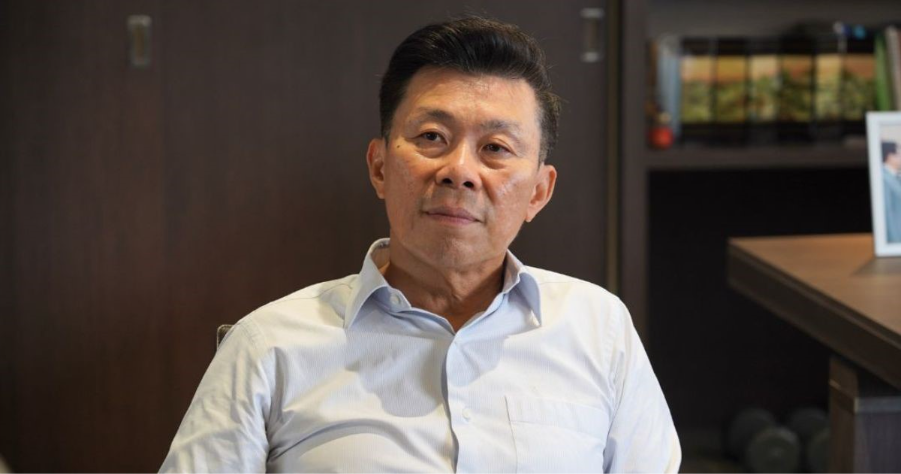
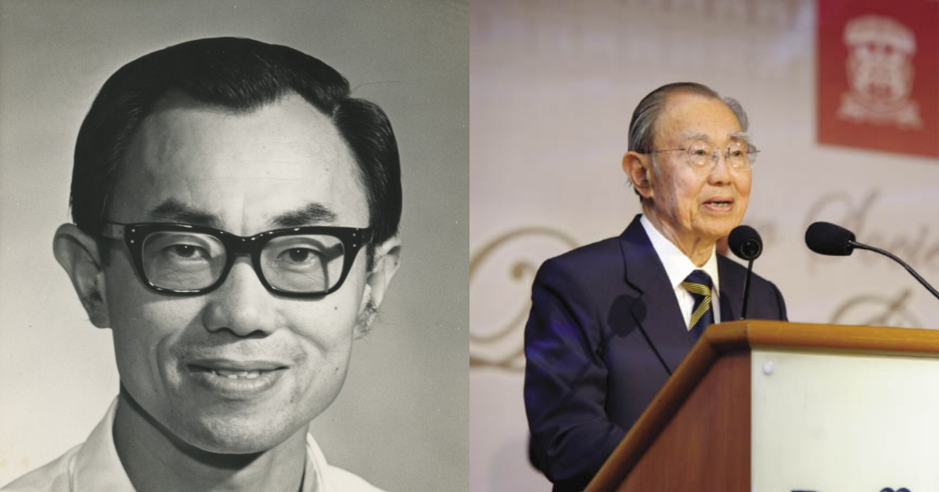
Comrade Tang See Chim passed away on 15 August 2026 at the age of 94.
A lawyer by profession, Comrade Tang stood up for Singaporeans when he was called to serve.
He entered politics in 1966, winning a by-election in Chua Chu Kang triggered by the Barisan Sosialis boycott of Parliament. He went on to represent the constituency for 22 years, until his retirement from politics in 1988.
Throughout his political career, Comrade Tang held multiple roles.
In 1968, he was appointed Parliamentary Secretary to the Minister for Finance. Between 1970 and 1972, Comrade Tang served as Minister of State for Finance, where he addressed Parliament on various concerns. They range from bread-and-butter issues such as rising prices of daily necessities to the effects of the US import surcharge on local industries. He was also Deputy Speaker of Parliament from 1972 to 1981.
Comrade Tang served as Acting Organising Secretary of the PAP from 1967 to 1977. He was also a member of our party’s CEC from 1976 to 1980.
A champion for displaced farmer
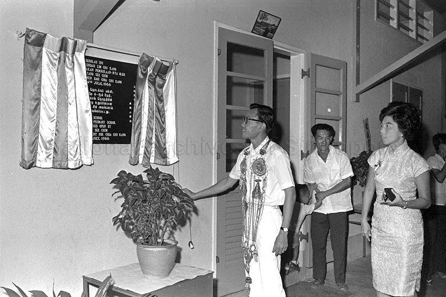
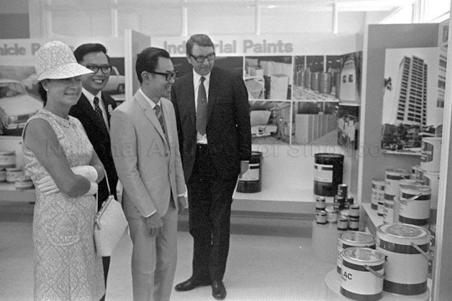
Comrade Tang’s legacy is most keenly felt in Chua Chu Kang, where he served for decades. To the pig farmers in the largely rural constituency, Comrade Tang was the man who fought for their voice in Parliament.
As MP for a rural ward, the welfare of farmers had always been a priority. Not long after entering Parliament in 1966, Comrade Tang raised questions over the fragmentation of farmlands. He also pressed the Government to help subsidise swine fever vaccinations for at-risk pigs.
By the 1980s, pig farming, which had been deemed a highly polluting activity, was being phased out. This became a problem for the residents of Chua Chu Kang, where pig farming was a main source of livelihood.
Comrade Tang got down to work, sending a petition directly to the Prime Minister’s Office. The move bought the farmers an additional three to five years before the resettlement plan took effect.
For Comrade Tang, the displacement of pig farmers was not simply an inevitable consequence of economic development. It was a human problem that demanded a human response.
“Resettlement, as you know, presents a traumatic experience for those who are affected. It uproots their way of life and for the farmers in Chua Chu Kang it also takes away their means of livelihood,” said Comrade Tang to Parliament in July 1986.
“In the circumstances, the least the Government can do is to ensure that resettlement is achieved with as little difficulty as possible for those who are affected.”
Here, Comrade Tang fought to hold the Government accountable; that the resettled farmers have prompt and adequate compensation, that the flats allocated for them did not come too late and that they were not resettled too early.
“They just want to know when and for how long they can carry on pig farming,” said Comrade Tang during the Budget debate in 1985. “They also want the Ministry to monitor very closely the position so that farmers who are under resettlement will not be exploited by the middlemen.”
He also pressed the Ministry of Environment for exact plans for the farmers’ future. “What sort of compensation will you pay them? How about those old farmers who cannot change trade? What about their livelihood? You must announce all these plans!” emphasised Comrade Tang.
As the resettlement exercise drew to a close in 1988, Comrade Tang continued to speak up for the farmers of Chua Chu Kang. In one of his last speeches in parliament, he called for the Resettlement Department to be prompt and efficient in crediting compensation so that the farmers could pay for the new flats allocated to them.
“Let us be compassionate,” said Comrade Tang, pointing out that these farmers were not simply numbers in a spreadsheet.
“Let us look at the matter carefully and treat the resettlement problem with compassion and not just purely on economic theory.”
Speaking at a National Day dinner in Chua Chu Kang that same year, then-Deputy Prime Minister Goh Chok Tong shared how Comrade Tang was offered the option to move to another constituency in 1976—something he had refused.
“He felt he should shoulder the difficult task of helping thousands of farmers and other residents to find their new homes and alternative ways of making a living.”
And that was exactly what Comrade Tang did, standing in solidarity with his residents to the very end.
After the 1988 elections, Comrade Tang left politics, but not public life.
He returned to legal practice and served as Chairman of the Law Society’s Disciplinary Committee from 1993 to 2004.
During the May Day Awards 1993, Comrade Tang was awarded the Meritorious Service Award for his work as Chairman of the Board of Trustees for NTUC Denticare (1972 – 1991).
In 2011, the Law Society awarded him their highest honour, the CC Tan Award, for his “honesty, fair play and personal integrity …a fine model for younger lawyers to aspire to.”
His wake will be held at 23 Victoria Park Road from 17 to 20 August 2026.