
Four members of the PAP Government Parliamentary Committee (GPC) for Sustainability and the Environment have filed a private member’s motion on food resilience for Parliament next week. The motion urges the Government to work with partners to enhance food resilience, reduce food waste, and ensure Singaporeans have access to affordable food despite geopolitical uncertainties and climate risks.
Parliament sits on September 8. The MPs behind the motion comprise Chairperson of the committee Poh Li San (Sembawang West), Deputy-Chairperson Nadia Ahmad Samdin (Ang Mo Kio GRC), Valerie Lee (Pasir Ris-Changi GRC) and Ng Shi Xuan (Sembawang GRC).
At a Sept 2 media briefing on the motion, the MPs said they will raise ideas to improve food waste management and to strengthen supply chain resilience. They will also discuss ways to support the alternative protein industry and create opportunities for young Singaporeans in food technology and production.
MPs put forth the motion to understand how the government can better enhance Singapore’s food security, Ms Poh explained. Middle East conflicts and extreme weather conditions from the El Niño effect have driven up food prices, prompting these concerns.
Singapore safeguards its food security through several key measures. They include diversifying imports from multiple sources, stockpiling essential items, producing certain foods locally such as vegetables and seafood, and securing international partnerships to maintain food supply flows during crises.
The motion follows Singapore’s launch of a refreshed food security plan entitled the Singapore Food Story 2 (SFS2), which charts Singapore’s next chapter in food resilience.
Ms Poh said the committee views this as a timely opportunity to examine how the new strategy will affect local farmers and food production, and how the government can help the industry remain viable and build capabilities to achieve these outcomes.
The government recently announced it is reviewing its 2030 Zero Waste Masterplan. Ms Poh said the growing food waste problem remains a concern, despite the 2024 Good Samaritan Food Donation Act, which protects individuals and businesses from legal liability when they donate safe food.
Ms Poh said it is ironic that Singapore produces less than 10 per cent of its food while importing the rest, yet generated some 800,000 tonnes of food waste in 2025.
“We should take a deeper look at how to better coordinate our food import policy and the overall food redistribution ecosystem,” Ms Poh said. “With better coordination, more groundwork initiatives can address food waste and help more Singaporeans—especially vulnerable groups—access affordable food options.”
Ms Nadia will raise the issue of how the Government can help local farmers remain resilient amid climate uncertainty. She identified diversification as a key priority for Food Story 2.0 and proposed incorporating adaptability and flexibility into the local pillar.
“Can we think about our farms as a portfolio of capabilities? When we consider resilience, if 10 of our farms rely on the same 10 input and electricity costs rise, do we have true resilience?” she asked.
She is also interested in how the government can further support local farmers to improve global resilience. Ms Nadia said that Singapore’s upcoming ASEAN chairmanship next year offers an “opportune time” to prioritise food resilience and climate knowledge sharing, as food security matters to the entire community.
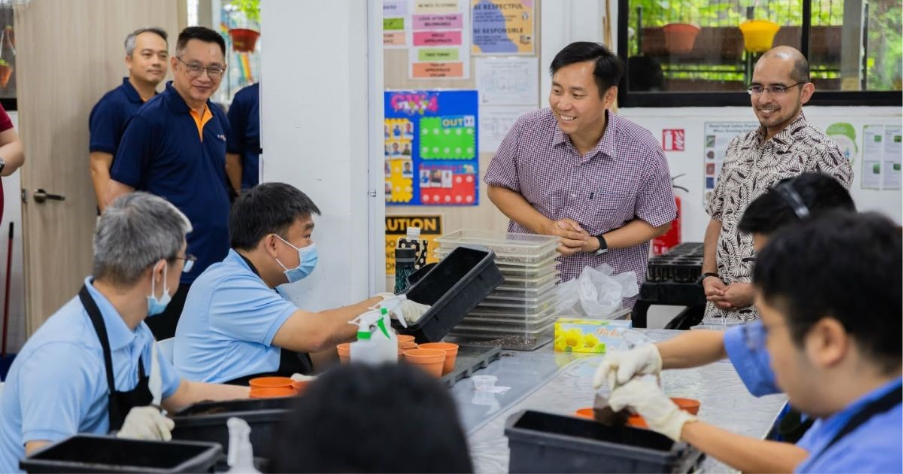
She also highlighted the importance of childrean maintaining a tangible connection with where food comes from, to understand what they waste. She cited a Malay saying: “If you don’t know it, then you can’t love it”.
She shared a telling anecdote: “One of my volunteers told me he had asked his granddaughter, ‘Where does chicken come from?’ She innocently replied, ‘The supermarket’—which is not untrue.”
“I worry that as generations pass, we lose our connection with food and our understanding of what goes into producing it,” she said.
“Whether it’s aquaculture or growing vegetables, it takes years of research and months of hard work to produce the pest-free, healthy food that ends up on our table. Yet it disappears so quickly once it’s in front of us. That’s why I think retaining our connection to food is important.”
The motion draws on feedback gathered by the PAP Climate Action Group in May and July from more than 130 people, including community gardeners, academics, and those from food rescue organisations.