
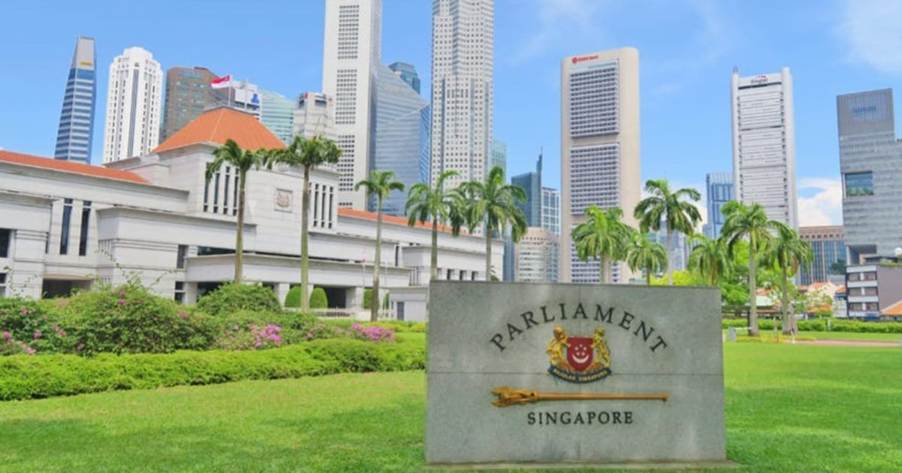
Parliament passed laws to secure and green Singapore’s digital infrastructure, putting in place the foundations for the next phase of our digital economy. Members of Parliament (MPs) from the People’s Action Party (PAP) pushed for greater protection of our environment, and to make sure that operators, and not Singaporeans, foot the bill for heavier energy usage.
The Digital Infrastructure Bill, passed in Parliament on Oct 7, requires the major digital infrastructure providers and commercial-scale data centres (DC) covered by the Act to be licensed and to meet a common baseline of standards.
During the five-hour debate on the new Bill, 14 PAP MPs raised concerns about cost, implementation and competitiveness while seeking clarifications.

MPs highlighted a key concern: data centres consume substantial land, power, and water, raising the question of what Singapore and its citizens get in return.
Sharael Taha (Pasir Ris-Changi GRC), Chairperson of the Government Parliamentary Committee for Digital Development and Information, emphasised that every megawatt must count. Shawn Loh (Jalan Besar GRC) put it another way, stating that Singapore should not pursue the greatest possible volume of digital infrastructure, but rather the greatest value from it. Victor Lye (Ang Mo Kio GRC) further noted that compute should be measured not by the value promised per megawatt, but value actually realised per megawatt.
In response, Senior Minister of State for Digital Development and Information Tan Kiat How noted that data centres underpin many important sectors, including financial services, digital payments, healthcare systems, logistics platforms, and government services. They also serve as important connectivity nodes linking domestic, regional, and international networks. The digital economy that runs on this infrastructure contributed about 20 per cent of Singapore’s GDP in 2025, he added.
“The value is not in the data centre itself; it is what the data centre enables,” Mr Tan said. “We should be clear that infrastructure is the input, not the outcome… Our ambition should not simply be to host the infrastructure of the AI economy, but to help Singapore enterprises create value on top of it, and that informs our allocation of scarce data centre capacity.”
Henry Kwek (Kebun Baru), Deputy-Chairperson of the GPC for Digital Development and Information, along with Mr Sharael, inquired about the specific types of workloads Singapore should position itself to attract.
Mr Tan explained that Singapore wants to anchor high-value workloads where trust, security, and continuity matter most.
He categorised these into two groups: workloads that must sit close to enterprise systems and users where speed is critical, such as banking and artificial intelligence.
The other is workloads handling sensitive information that must comply with trusted data protection. These include digital identity and healthcare applications.
“For these workloads, Singapore’s position at the centre of regional, financial, and enterprise infrastructure, and the trust in our institutions are a real advantage,” he explained.

During the debate, MPs pressed for details on how local workers will be equipped to seize these opportunities. Lee Hui Ying (Nee Soon GRC) questioned how Singaporeans would be upskilled to meet the sector’s rapidly evolving needs.
Expanding on this, Ng Shi Xuan (Sembawang GRC) urged the Government to help citizens secure long-term roles. These include positions required to run, secure, and maintain data infrastructure, as well as downstream roles created when businesses use this computing power to deploy AI.
“These jobs can give Singaporeans long careers, useful skills, and a path to better pay,” Mr Ng noted. “I ask MDDI [Ministry of Digital Development and Information] to work with MTI [Ministry of Trade and Industry] and our workforce agencies on a jobs and business roadmap for this sector… The roadmap should set out clear paths for workers with related skills.”
In response, Mr Tan noted that many sectors, including financial services, healthcare, manufacturing, logistics, software, and AI, depend on data infrastructure. The direct roles within data centres themselves are becoming increasingly specialised.
“These are good jobs with good prospects,” Mr Tan affirmed. “We are building this pipeline together with the industry and our institutions.”
Mr Tan highlighted that data centre operators have already partnered with the Institute of Technical Education (ITE) and the Singapore Institute of Technology (SIT). These work-study programmes are designed to offer clear pathways to diplomas and specialised degrees focused specifically on green data centres.

Mr Loh and Nadia Ahmad Samdin (Ang Mo Kio GRC) raised concerns that domestic households could end up subsidising the massive power demands and grid infrastructure upgrades required by data centres.
Acknowledging this as a pressing global issue, Mr Tan noted that while many jurisdictions worldwide are actively grappling with these cost pressures, the regulatory framework in Singapore protects households from bearing this burden.
Like other large industrial consumers, data centres operators buy electricity from retailers at commercial rates or source it directly from the wholesale electricity market. Furthermore, data centres are required to fully fund their own dedicated grid connections.
“The household tariff is driven mainly by fuel and electricity generation costs, and the growth of data centres is not expected to raise this cost,” Mr Tan explained.
Focus on outcomes, not megawatts
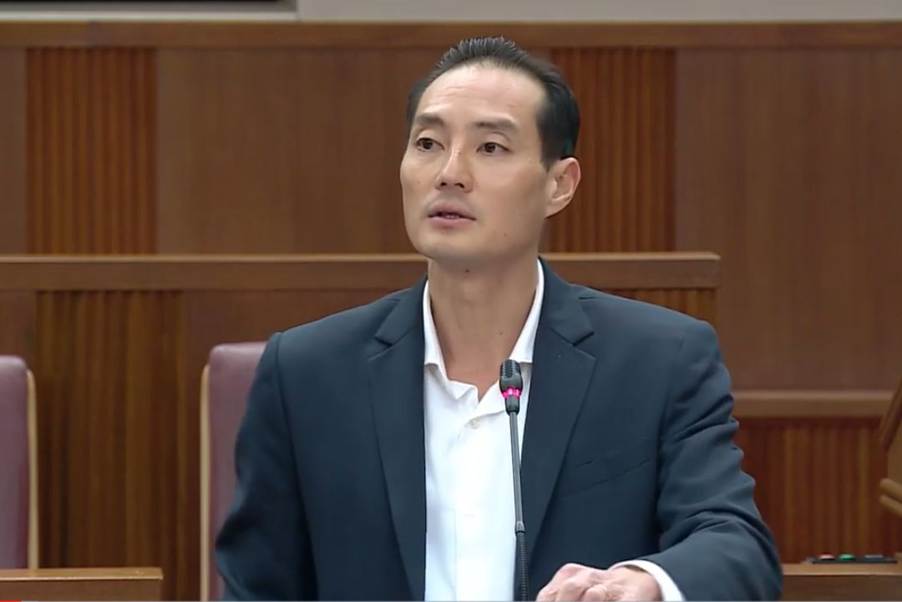
Concluding the debate, Mr Tan emphasised that the Government’s core responsibility is to strike a balance among cost, implementation, and competitiveness, raise security and sustainability standards while supporting growth and keeping Singapore competitive. The government will proactively plan to prevent infrastructure challenges from escalating into crises.
Mr Tan highlighted that future growth would depend strictly on the tangible benefits digital infrastructure brings to the country, rather than just the physical footprint of the facilities.
“We will grow digital infrastructure selectively, making scarce resources work harder for Singapore and Singaporeans,” Mr Tan said.
“We will focus on outcomes—not simply megawatts allocated, but value realised; not simply buildings and servers, but capabilities, businesses, and services enabled; not simply resilience on paper, but resilience in practice.”
He also reaffirmed that Singapore’s long-term digital strategy is built fundamentally on trust and resource efficiency rather than volume.
“Our ambition is not maximum compute in megawatts. It is maximum value from these capabilities that we host,” he said. “That is what this Bill is designed to secure: digital infrastructure that is reliable where we need it, sustainable over time, and worthy of Singapore’s trust.”