Is a government matchmaking service the answer to modern-day dating? What about a singles village to give young people the chance to mingle?
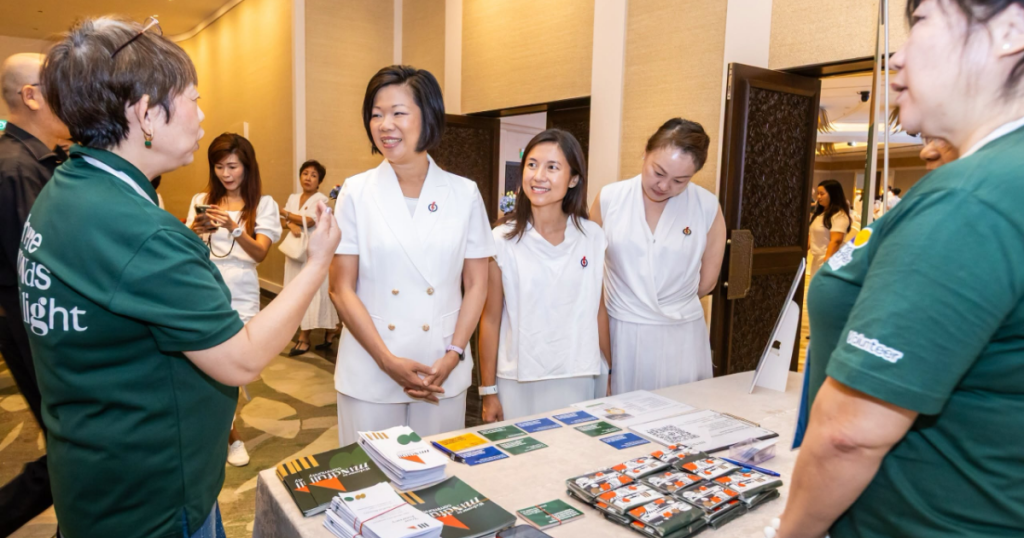
These (and more) were some of the possibilities raised at a PAP Women’s Wing (WW) listening session last month (Sept 6) on how Singapore can better support singles in their journey towards marriage and parenthood.
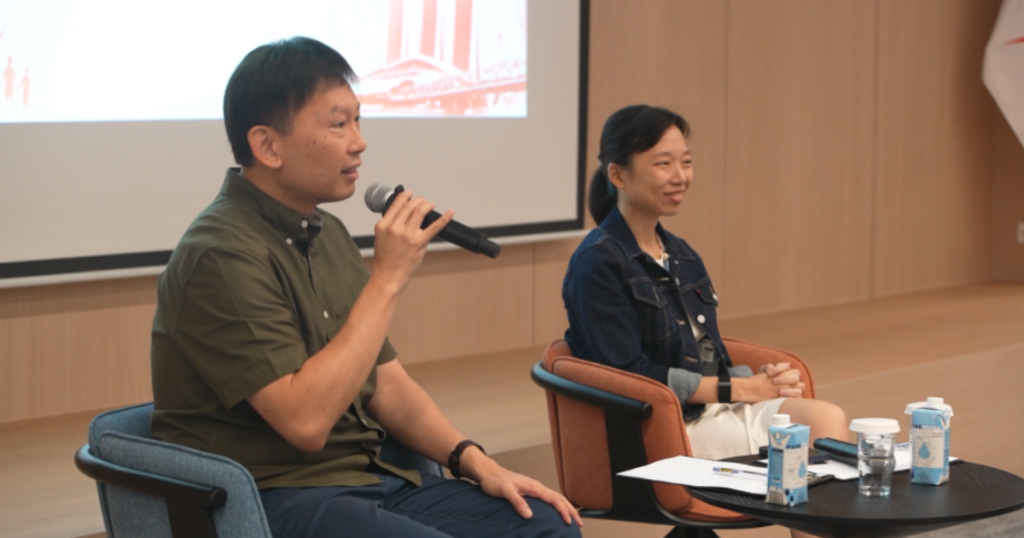
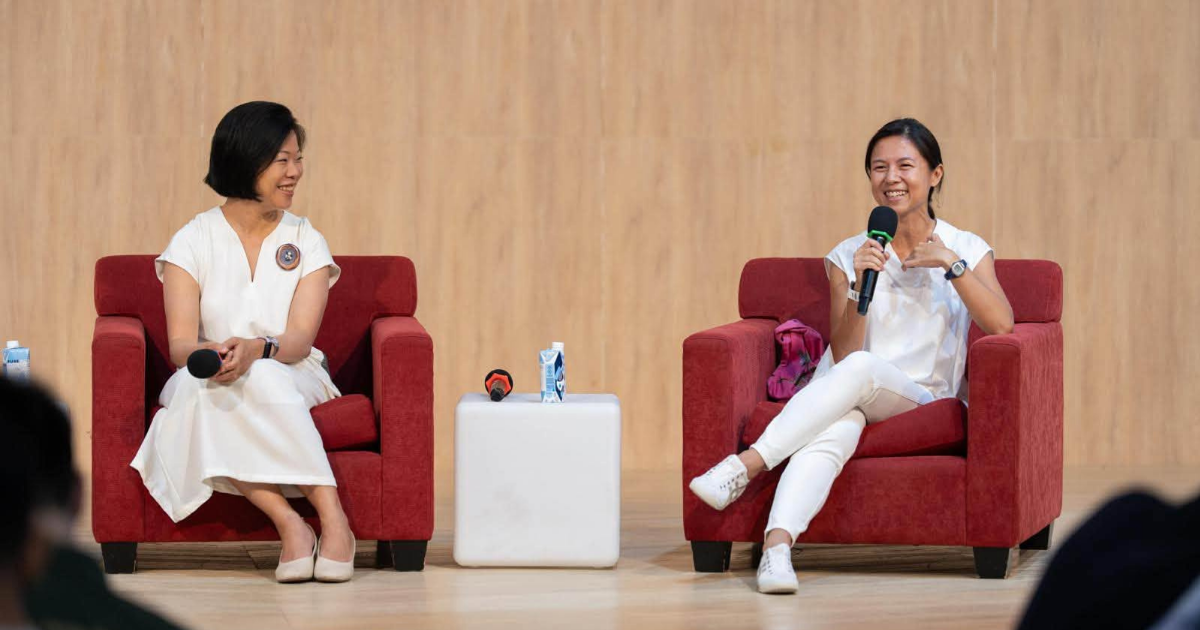
At the dialogue, Singaporeans traded stories about the trials and tribulations of dating with WW Chairperson Sim Ann, as well as Nee Soon MPs Goh Hanyan and Lee Huiying, and how policies could help with the process.
“For people who do picture themselves as being part of a family, I think we have to look at how to remove those obstacles (and) make it easier for people to fulfil their life goals,” said Ms Sim.
How to meet more people…IRL?
In an increasingly atomised world, it is no surprise that one of the biggest obstacles to starting a family begins with finding a partner. Dating apps, which exploded in popularity in the mid-2010s, have only made things harder for singles. What was meant to offer wider choices and lower barriers to meeting new people has resulted in even more fleeting connections.
“I get a very mixed review about online dating. Some tell me that they don’t want to try it anymore,” shared Ms Sim.
This difficulty in meeting people in real life is perhaps why there have been calls to revive the Social Development Unit (SDU). The government matchmaking agency, which began in 1984, would organise dinners, outings, and even overseas trips. It was eventually phased out in 2009.
“I do hear some people say, hey, you had a government matchmaking agency, why not bring it back?” said Ms Sim.
“Perhaps in this current day and age, there might be a renewed attraction in a refreshed version.” One that could offer an “open, welcoming and affordable” alternative to commercial dating services, Ms Sim added.
To get a sense of how receptive people are to the idea, moderator and WW North West District Adviser Lee Hui Ying, who is also MP for Nee Soon GRC, asked if participants would support the concept. Slightly more than half raised their hands.
For Ms Sim, this was an encouraging sign.
“If you let me know that you are prepared to give the activities at least one try,” said Ms Sim, “then we will give it a very strong push in terms of our recommendations (to the Marriage and Parenthood Workgroup).”
What about a ‘singles village’?
Housing is another topic that often comes up in discussions on marriage and parenthood. Even for singles, living with parents and siblings could be a killjoy in dating.
To address this, one activist suggested more co-living spaces with organised activities so that singles can find like-minded friends.
Another suggested clustering flats into a “singles village”. One where singles could live nearby, look out for one another and meet others at a similar stage of life.
While the idea prompted jokes about whether residents would have to move out once they coupled up – and whether they could return after a breakup, Ms Sim took the proposal seriously.
“I do think that there’s something in it,” she said, while acknowledging the difficulties of fitting such a concept into existing housing policies.
Navigating friendship and heartbreak
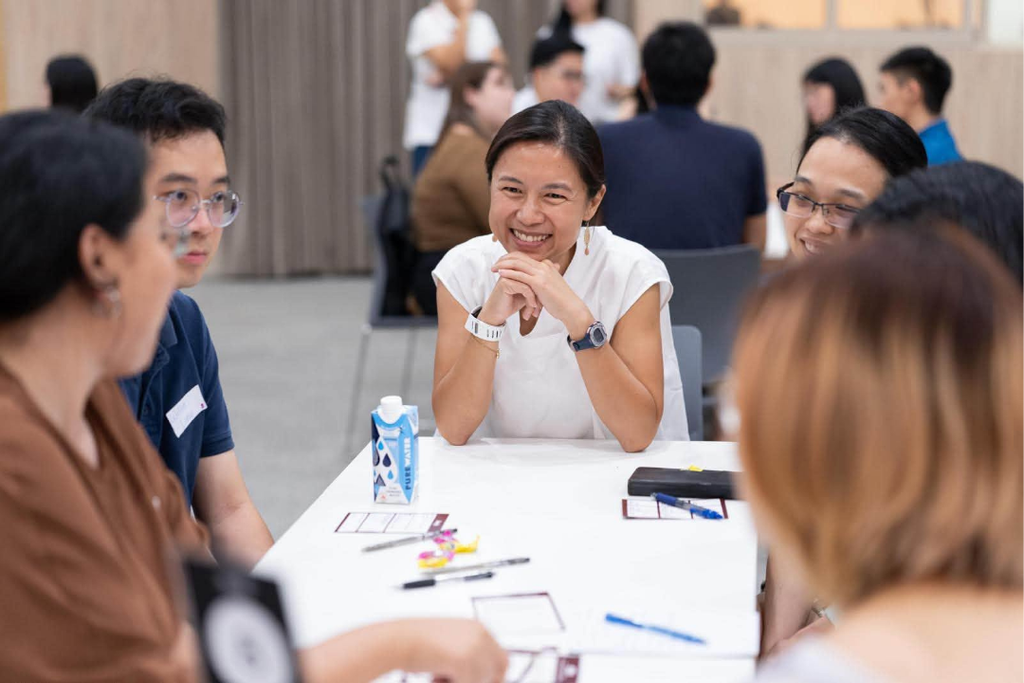
Besides creating opportunities for singles to meet, the dating process presents another hurdle. In a word cloud created by participants to describe their feelings about this social ritual, “confusing,” “tiring,” and “scary” were among the most cited terms.
Acknowledging the trepidation involved, Ms Goh shared that one of the best ways to approach dating is to use friendship as a baseline.
“Let’s just find friends because it’s too high of a bar to be looking out for that one person. It’s very stressful,” she said.
“That’s exactly what we’re trying to do as part of WW (and) as part of the Youth Plan launched last month. It is to give people the space to make friends and gain confidence in themselves.”
Addressing what is perhaps the “scariest” aspect of dating, which is that a successful relationship is never guaranteed, Ms Goh remained sanguine.
Sharing her personal experience, she reminded participants that even failed relationships could have value.
“Each time you go through a heartbreak, there’s still something to learn from it,” said Ms Goh. “You learn what you don’t want. You learn what the traits that you can and cannot live with.”
Supporting singles in their aspirations
Concluding the listening session, Ms Sim shared that she is cognisant about coming across as urging people to settle down and have a family, especially if that’s not what they want.
“As the WW, we promote women having a full range of options in their lives. It is (therefore) difficult to try and convince people that ‘you must do this’ or ‘you should do that’”
However, for those looking to start a family but finding it difficult, it is only right that we adjust our policies to help them fulfil their aspirations, said Ms Sim.
In the end, while no government can manufacture chemistry or guarantee that two strangers will fall in love, it may be able to make meeting one another a little easier.
That is what this listening session is all about—hearing what Singaporeans need and sharing the feedback with policymakers. All in the hopes of creating a Singapore where everybody could thrive, in dating, marriage and everything else.