During the spirited debate, Yip Hon Weng, MP for Yio Chu Kang SMC, believed that an expanded Changi Airport could become the gateway for the wider Johor–Singapore–Riau region. Poh Li San, MP for Sembawang West SMC, charted a vision for Changi to become a leader in “green aviation”. Dr Choo Pei Ling, MP for Choa Chu Kang GRC, went even further, arguing that T5 is not simply an “investment in capacity” but an “investment in Singapore’s relevance for the next generation”.
Despite the consensus that T5 will create new opportunities, there was also scepticism on whether Singapore should continue to risk building ahead of demand.
Interestingly, such doubts are hardly new. In fact, it is a question that has defined Changi from the very beginning.
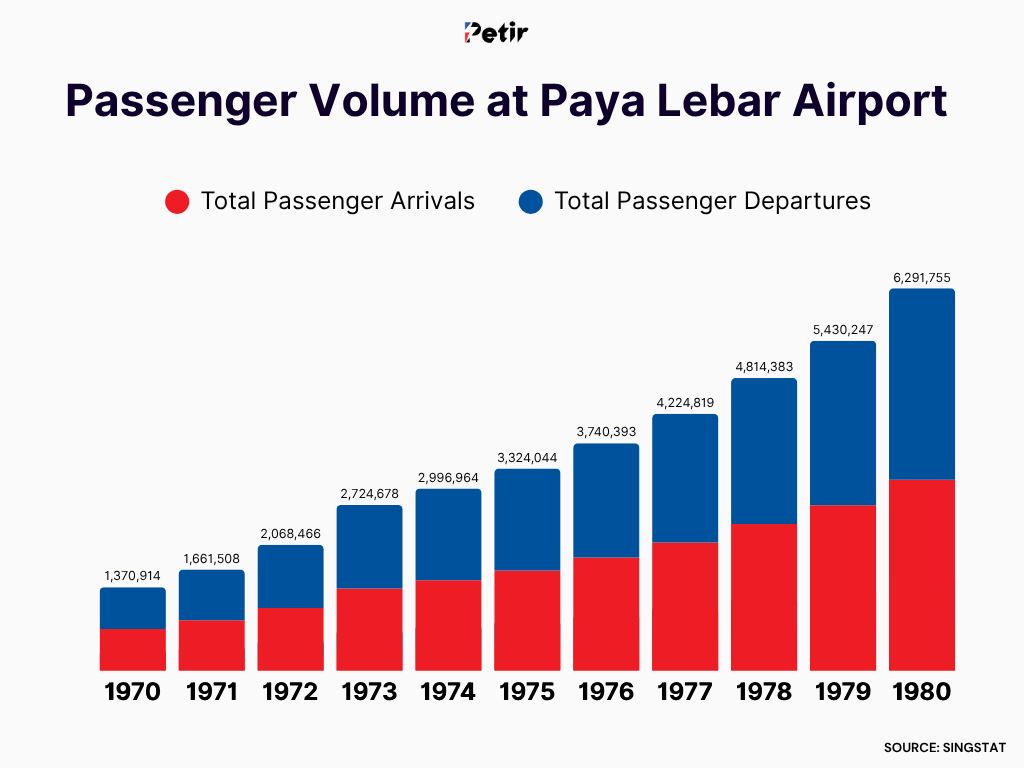
Buoyed by a rise in the number of faster jet-powered aircraft, Paya Lebar Airport, built by the colonial government in 1955, found itself reaching capacity. By 1970, it was handling over a million passengers a year. A number that was to increase year on year.
This became a major headache for a young nation still finding its feet. Extensions to the existing terminal helped to ease congestion. However, they were inadequate for the long run. A viewing gallery had to be closed, and a restaurant in the terminal building could not be provided due to space constraints.
It could expand the current airport by building a second runway or find another site to build a new one. Each had its pros and cons, and both were championed forcefully by strong-willed PAP Ministers, who had contrasting approaches to the same problem. This is not an uncommon occurrence in PAP governments.
Contrary to the lazy assumption that groupthink or yes-men abound in these circumstances, history has shown that when you have immensely talented politicians of integrity and intellect, there are bound to be strong disagreements on policy and direction.
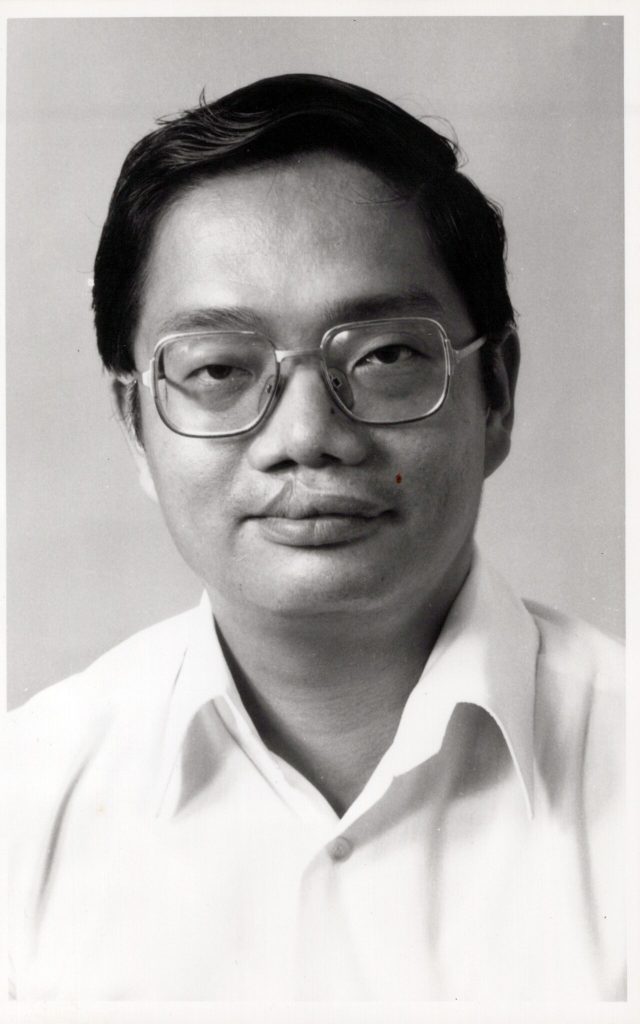
Former MP Bernard Chen, who was a Director at the Ministry of Finance in the 70s, recalled the two opposing camps that emerged during that time.
"I think PM (Lee Kuan Yew) was kind of caught between two worlds. The Communication Ministry was pushing for Changi…But then Mr Hon (Sui Sen) was fighting tooth and nail for Paya Lebar. The Finance Ministry was thinking that ‘look, we only got that much money in those days, so we need to be cost-effective’. The airport is already built. You don’t have to build again."
Bernard Chen
For those in favour of Changi, however, the constraints facing Paya Lebar were real and insurmountable.
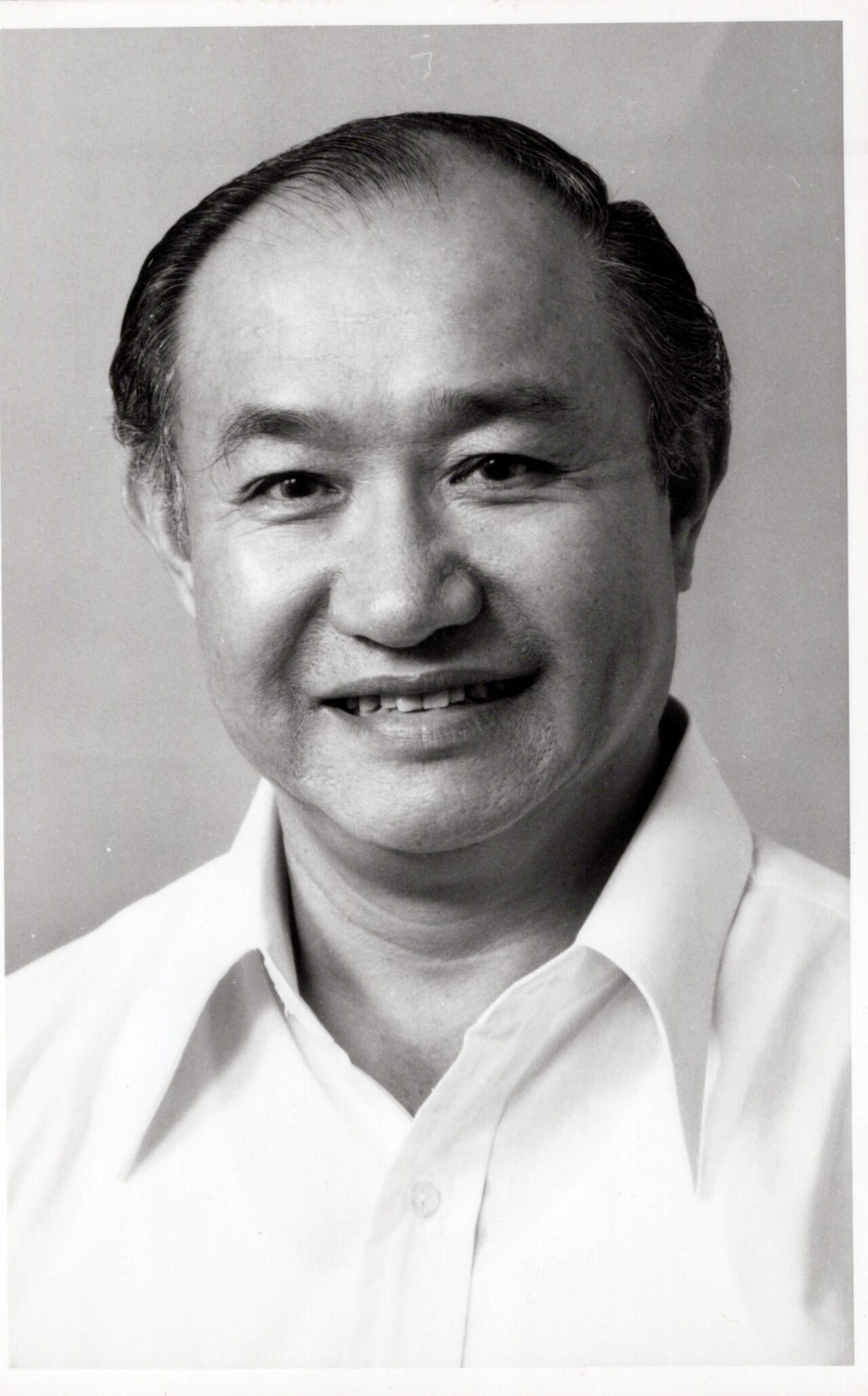
“Land clearance, resettlement, air and noise pollution were only some of the complicated and messy problems,” shared former Minister Howe Yoon Chong. As Chairman of the Port of Singapore Authority (PSA) in 1974, he had been part of a special committee on airport development (SCAD) tasked to look into the feasibility of Changi.
“Even with the second runway and the planned extensions, Paya Lebar would be far from ideal. By 1984, aircraft and passenger traffic could have increased to levels beyond what these additions and extensions would accommodate. Further expansion would be almost impossible. We would be accumulating problems for the future and in the long run.”
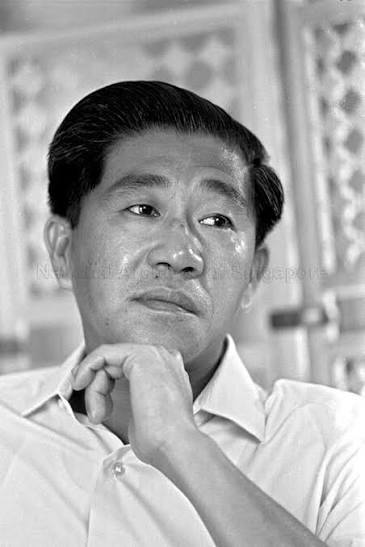
Howe Yoon Chong
Then-PM Lee had long been inclined towards Changi. In the end, it was a flight over Boston’s Logan Airport that helped to tip the scales in Changi’s favour.
During the flight, Mr Lee observed that an airport built right by the sea offered many possibilities. Not only would it free up the surrounding land in Paya Lebar for high-rise development, but it would also address noise pollution. More importantly, the ability to reclaim land from the sea would make it easier for Changi to expand in the future.
Looking back, Mr Lee described the move to Changi as “the boldest decision the government made”.
“North Vietnamese had captured Saigon in April 1975. The future was beset with uncertainties. In the midst of gloom, we decided to invest S$1.5 billion in Changi.”
Lee Kuan Yew
For a developing nation, Changi was indeed a gamble. In addition to what was needed to develop Changi, the government had to spend another S$400m to upgrade Paya Lebar during the interim period from 1975 to 1981. This was on top of the S$800m of “sunk costs” spent building the latter, which had to be written off when the airbase was handed to the RAF.
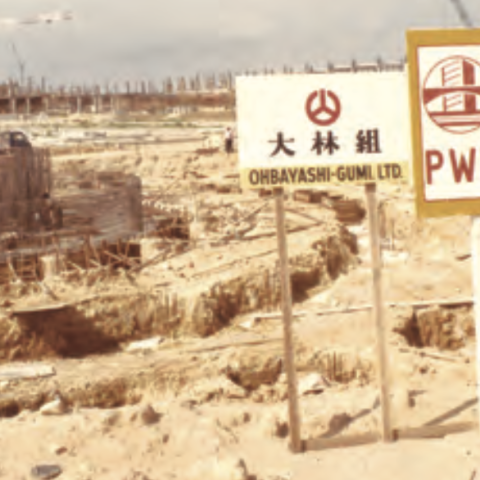
Up until then, Singapore had “inherited” its airports rather than built them itself. Did the Public Works Department (PWD) have the technical competence to do so when their only experience so far came from constructing drains, roads, bus stops and schools?
In the end, rather than hire external consultants, government agencies were tasked with managing the engineering, design and construction of the airport from start to finish. It was a steep learning curve for Singapore’s fledgling civil service, but a lesson that put us in good stead in the years ahead.
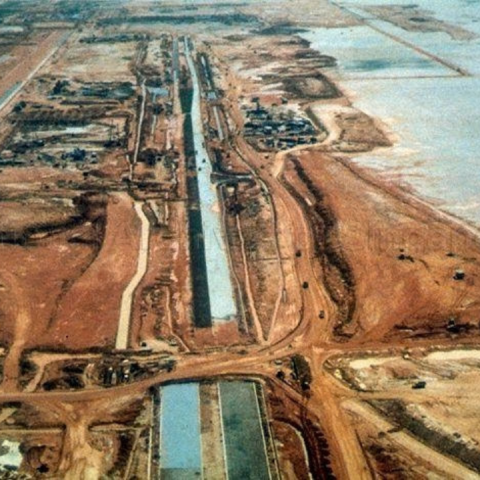
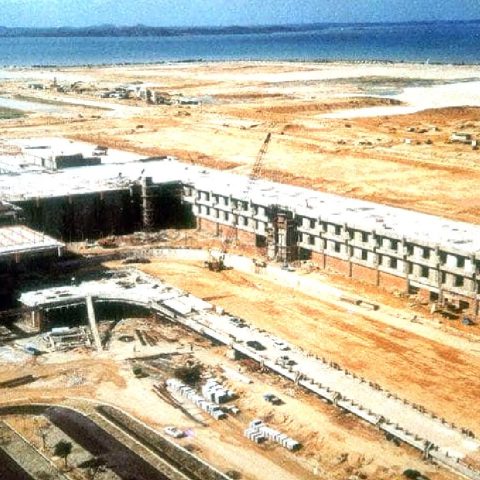
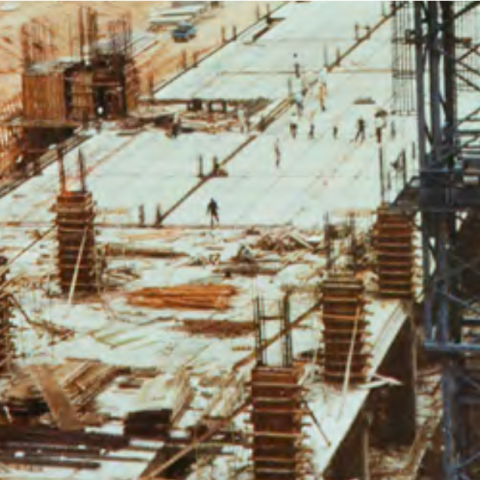
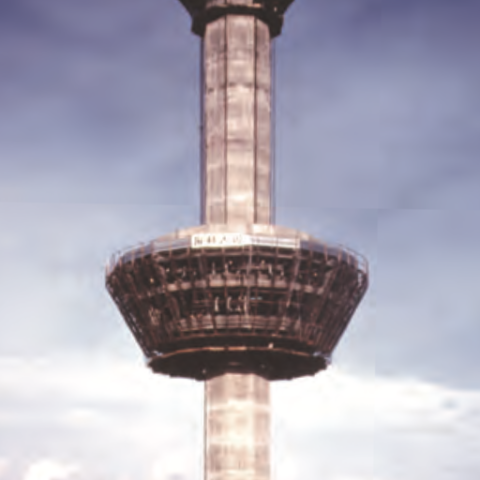
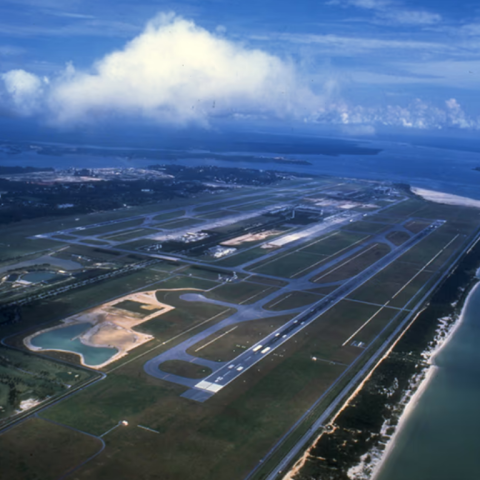
Site preparations in Changi began in June 1975. With Paya Lebar Airport bursting at its seams, Changi had to be built under an extremely tight timeline. It soon became a race against time, money and even nature.
Some 53 million cubic metres of earth were needed for the land reclamation.
The scale of the construction made Changi Singapore’s largest public infrastructure project of its time. As one contractor recalled, “We had to plan where to deliver the materials. If you deliver them at one end of the building, it could be a one kilometre walk to the other end.”
Along the way, there were also challenges that nobody could have anticipated.
Midway through the project, commodity prices rose by 300%, driven by regional demand and the 1979 oil crisis. Tropical downpours also caused delays, leading to floods in the basement that ruined expensive machinery and days when workers failed to show up.


Coordination between officials and contractors, and even among different government departments, also proved tricky.
“I had to argue, beg and cajole the Parks and Recreation Department to give us big trees instead of small trees,” shared Mr Pek Hock Thiam, a civil servant in the Ministry of Communications.
As comical as it sounds, greenery would be an integral part of Changi’s design. Mr Lee Kuan Yew reportedly wanted to see “a jungle” when driving towards the airport. Officials recalled having to count and send regular updates on the number of casuarinas and rain trees they had planted.
Sim Kee Boon, who was the Chairman of the Executive Committee of Airport Development (ECAD), faced similar difficulties.
There was a tendency among engineers (from the PWD) to adopt a hands-off approach to the problems faced by contractors, Mr Sim shared in an interview.
"For them, the time factor is not critical. But for us, it was. So very early on, we impressed on all the officers that the contractors’ problems were their problems, and in the end, my problems, because I’m in charge."
Sim Kee Boon
According to Mr Sim, injecting this sense of accountability was crucial to completing the construction on time.
Once we had a system whereby all the engineers were told to double-check whatever the contractor and sub-contractor told them, we discovered quite a number of things that did not add up and needed to be fixed, said Mr Sim.
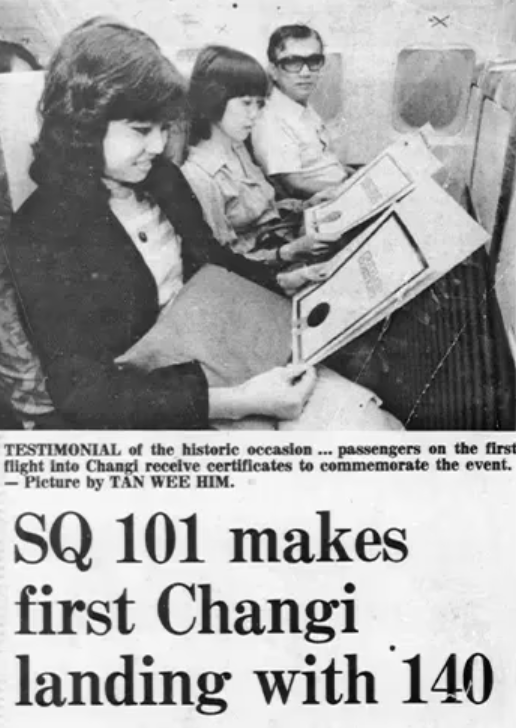
The last commercial flight (SQ28) left Paya Lebar Airport for Abu Dhabi and Frankfurt at 2300h on 30 June. It was the end of an era, and the switchover, done virtually overnight without a hitch, boiled down to meticulous planning. This trait, as seen early on, would be the X-factor that made Changi a world-class hub.
Ong Teng Cheong, then-Minister for Communications, shared how officials from the Civil Aviation Authority went to Taiwan, Japan and several other cities to observe how switching operations are managed in preparation for the big day.
“They went to Tokyo to see the move from Haneda to Narita. So, it’s a question of observing the experience of others and planning carefully for our own switching-over operation."
Ong Teng Cheong
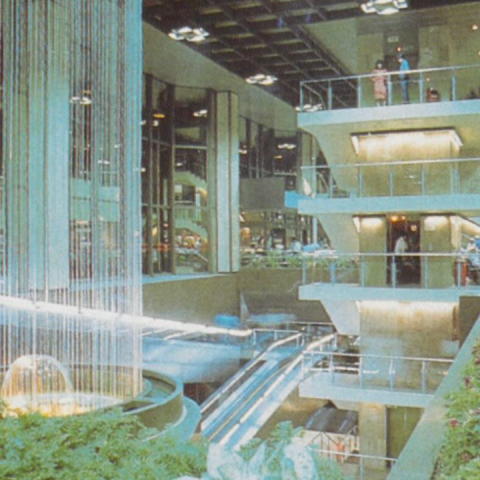
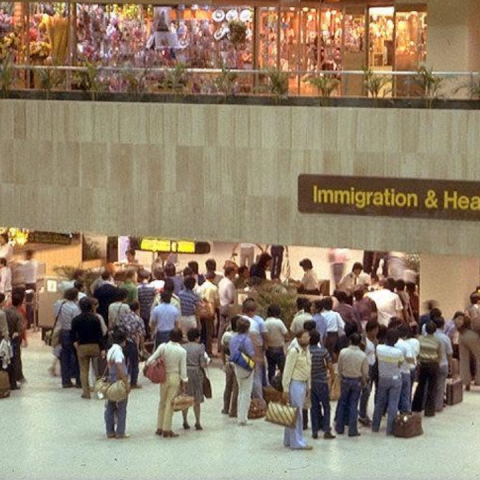
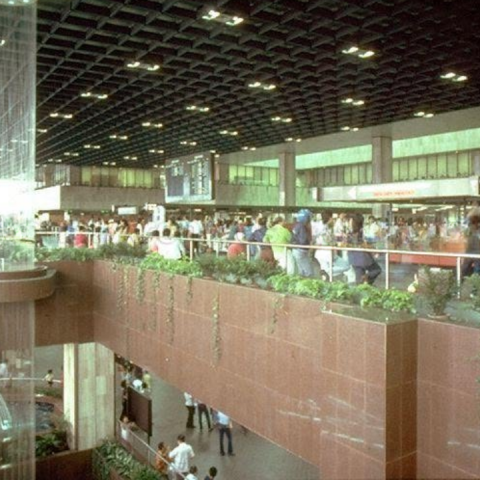
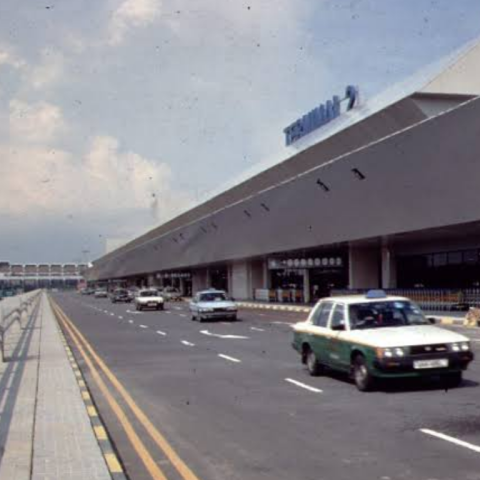
Instead of the tarmac, passengers walked directly from the aircraft to the terminal via an aerobridge, a novelty at the time. Taxi queues were also located indoors, away from the sweltering heat to make waiting times more comfortable.
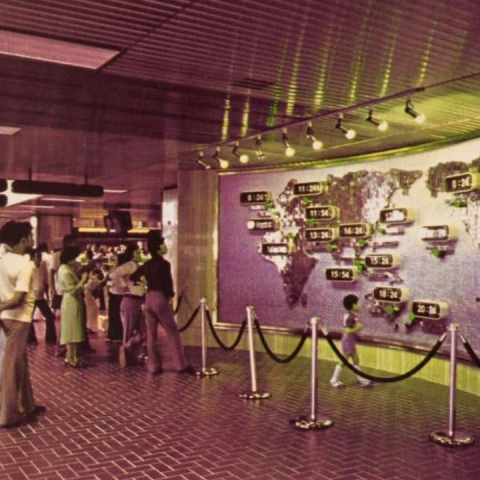
For the government, getting the passenger experience right was a priority from Day 1. The airport, after all, is the first and last impression visitors have of Singapore. In the days before the internet and social media, a good word-of-mouth review was the best advertisement Singapore could hope for.
To do so, the team of architects and engineers studied every idea, as then-Prime Minister Goh Chok Tong shared during the opening of Terminal 2 in 1991.
“Some ideas seemed trivial at first. But when looked at closely, it became clearer how important they were to the user friendliness and smooth running of the whole airport complex.”


“We decided that the airport must be functional, efficient. (But) at the same time, it should be something the people of Singapore could be proud of,” said Sim Kee Boon.
What’s more, Changi’s design philosophy also reflected a larger ambition. It was an airport built with the future in mind, with the hope that Singapore could exploit its geographic location and become an international hub.
“Air transport has been a multiplier of economic growth,” said Mr Lee Kuan Yew. An “open skies” policy to encourage as many carriers as possible to operate in Changi will help encourage that.


To achieve this goal, Changi had to keep evolving and building ahead of demand. It was therefore no surprise that the earliest master plan in the 1970s had already envisioned an airport with three terminals.
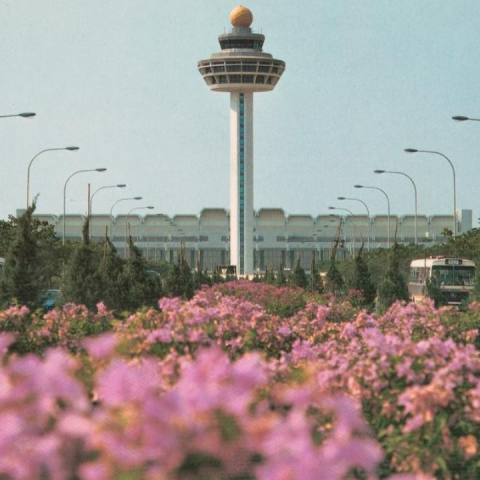
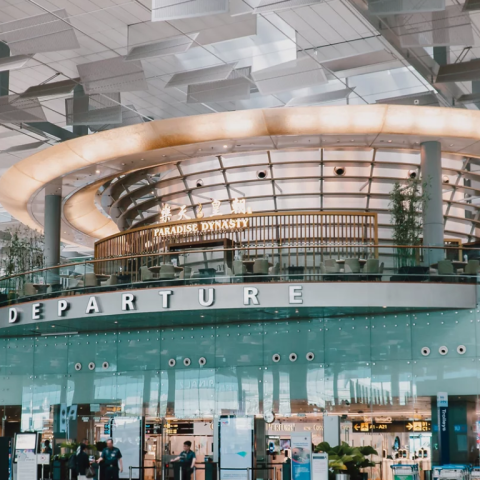
With the first terminal up and running, the wheels were set in motion for Changi’s growth. A second runway was completed in 1983, followed by three more terminals, giving Changi a combined capacity of 90 million today.
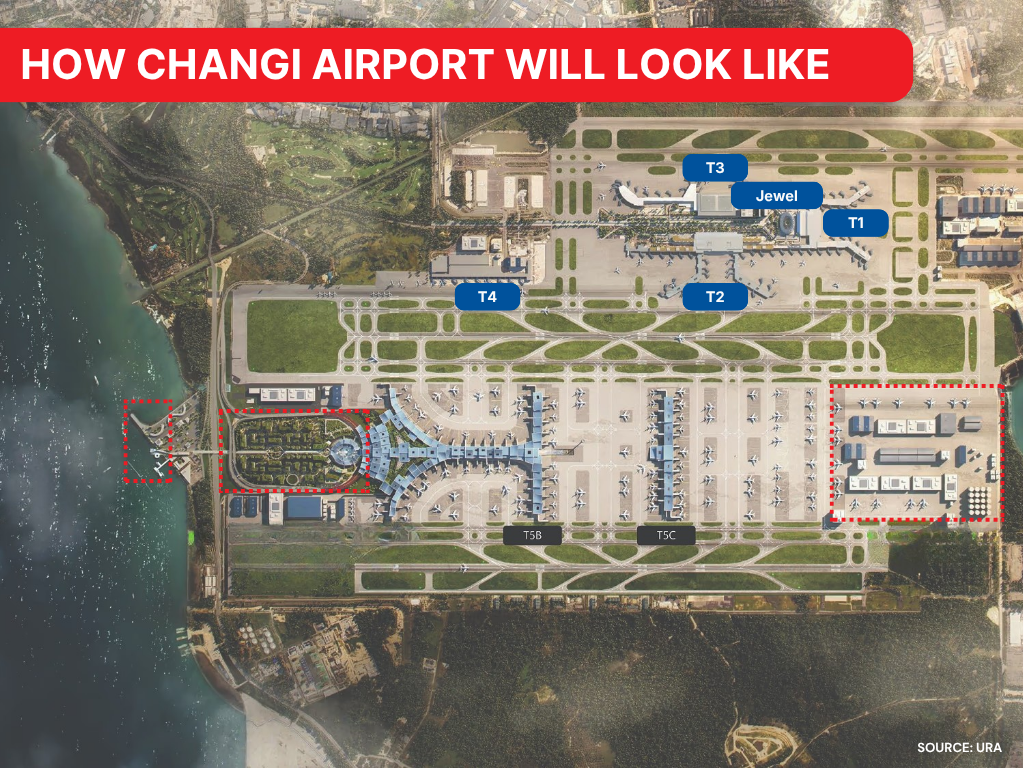
The airport that began as a bet on Singapore’s future has become one of the world’s great gateways. Yet the work does not stop here. Construction for a new Terminal 5, which will allow Changi to serve 50 million more passengers annually and increase its links to 200 cities, has already begun.
“Terminal 5 (T5) is a whole airport by itself, as big as today’s Changi Airport but connected together so it all operates as one.”
Enables seamless air-sea transfers to destinations in Malaysia and Indonesia such as Desaru and Batam.
A 40-hectare business and lifestyle hub for connection, work and play.
The mega-terminal will boost Changi’s capacity to 140 million passengers per year. An automated people mover system links T5 to T2 in 4 minutes.
This will boost Changi’s cargo and logistics capabilities from 3 million tonnes to 5.4 million tonnes per year.
While critics have argued that T5 could become nothing more than a white elephant if the projected passenger growth does not happen, what was the alternative for a small country dependent on trade and tourism when not building the terminal would cost us so much more?
T5 was conceived at a time when competition to become the region’s hub was heating up. Malaysia and Thailand had built new airports in 1998 and 2006, respectively, with the goal of serving 100 million passengers a year. This was not the time for Singapore to rest on its laurels. Instead, it would have to future-proof its aviation sector to stay in the lead.
According to the latest data, it contributes about 5 per cent of GDP and provides over 60,000 jobs for Singaporeans. It brings in tourists, business travellers and cargo, helping to support tens of thousands of jobs across tourism, logistics, hospitality and trade. Changi, in that sense, is the pulse that not only feeds our economy but helps bring in the ideas, people and goods that make Singapore a vibrant city.
If there was ever any doubt, the COVID-19 pandemic made clear how important Changi and the aviation sector are to Singapore. When air travel ground to a halt, it set off a domino effect across many other sectors.
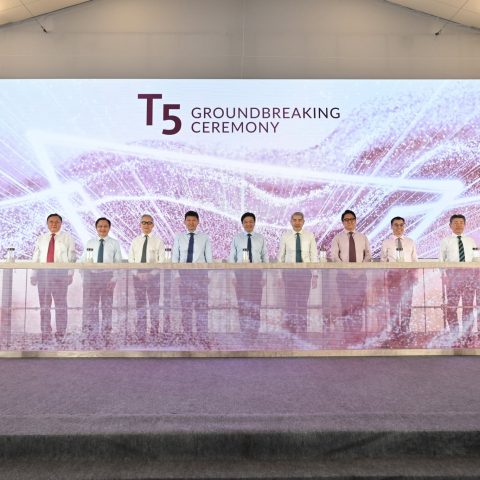
After a two-year hiatus, T5 held its groundbreaking in May last year. Besides connecting Singapore to even more far-flung regions of the world (and vice versa), T5 is also how Singapore can continue to generate meaningful jobs for its people.
For multiple generations of Singaporeans, Changi was never “just” an airport. It is home when we step off a flight and a source of pride that has put Singapore on the world map. It is also a living testament of a country that does not shy away from making difficult decisions, thinking beyond the immediate horizon and investing before the need becomes urgent.
Founding PM Lee Kuan Yew, who made the original gamble, described the returns from Changi as “incalculable”. Subsequent generations of leaders have built on this inheritance and kept the airport growing to secure the future for our next generation.
Despite global headwinds, the long-term trajectory for the aviation sector is bright. Air traffic, both passenger and cargo, is expected to grow, especially in the Asia-Pacific region. The construction of T5 is how Singapore can capture this growth and continue to thrive as a hub like no other in the region.
As Former Minister for Defence Howe Yoon Chong once asked during the opening of Changi Airport in 1981, “Can Singapore ever afford not to have such an airport?”
45 years on, we certainly know the answer to that.