
Chairperson Tin Pei Ling has outlined key priorities for the Government Parliamentary Committee (GPC) for Transport in this term of Parliament. These include improving the reliability of Singapore’s public transport system, enhancing its global connectivity, and using technology to strengthen the nation’s overall transport infrastructure.
In an interview with Petir, Ms Tin, Member of Parliament for Marine Parade-Braddell Heights GRC said that the GPC will address public transport issues affecting Singaporeans and work with relevant stakeholders to resolve these concerns.
“This affects everyone’s daily lives,” said Ms Tin. “The touch points are many and high impact. Despite best efforts, some friction or incidents may occur over time.”
She sympathised with those affected, noting, “For individuals involved, these incidents significantly affect their lives,” while clarifying that such occurrences represent only a small fraction of otherwise smooth operations.
She emphasised that collaborative efforts were important not only to “ensure real improvements in performance and reliability” of the transport system but also to enhance communication, support, and responses during incidents.
“At the end of the day, Singaporeans are reasonable and understand that there will be incidents now and then. The key is how we respond to help people navigate through disruptions as smoothly as possible,” Ms Tin said.
Ms Tin highlighted that the GPC’s second priority would be enhancing Singapore’s global connectivity, which is important for both the nation’s economic development and the wellbeing of its citizens.
She described how this connectivity spans multiple dimensions including land, sea, and air transport networks, which she characterised as “more strategic in nature”.
“This involves not just domestic policies but also diplomacy,” she explained. “While the ministry and various government departments handle most of this work, we at the GPC want to lend support where it is needed to fully develop such connectivity because it represents a strategic imperative for Singapore. We’re also prepared to provide industrial input, feedback, or suggestions wherever they might be helpful.”
Ms Tin noted that Singapore’s transport connectivity with other countries requires diplomatic “skilful manoeuvring” – a responsibility that both the leadership and entire government team must address, even though many factors lie beyond our direct control.
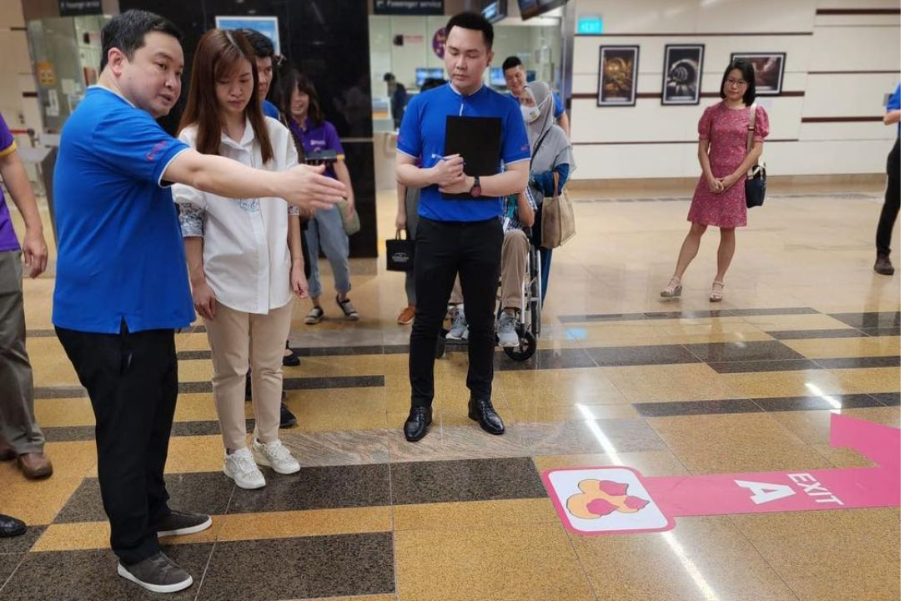
The GPC’s third priority, according to Ms Tin, is to explore how to better leverage technological capabilities to strengthen Singapore’s transport system in an increasingly digital world.
“How can we better use technology to improve lives, expand access, strengthen connectivity, and ultimately contribute to Singapore’s development?”
Using autonomous vehicles as an example, she questioned how Singapore could enhance point-to-point logistics access and address existing traffic management challenges, whether through policy changes or other solutions.
“This will require a lot of exploration and understanding as we determine how to work with stakeholders to make it happen. However, while pursuing this goal, we must, at the same time, ensure that we are protecting the interests of Singaporeans and Singapore.”