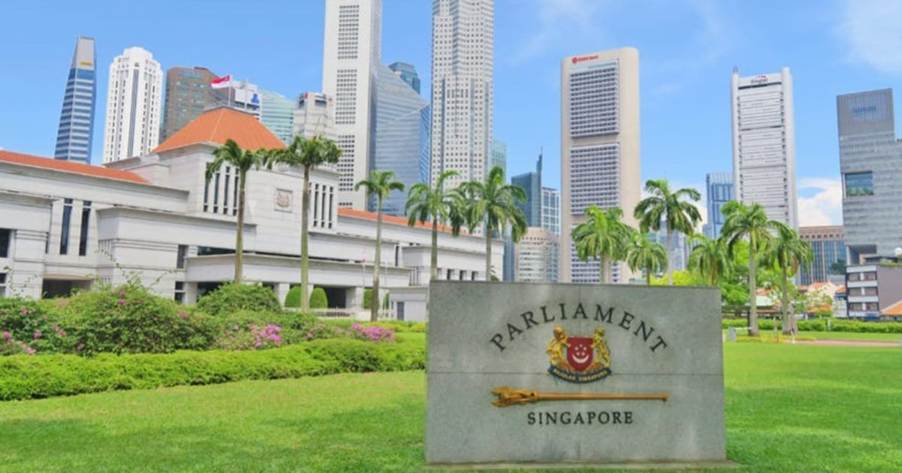

Members of Parliament from the People’s Action Party advocated for better support for small- and medium- sized enterprises (SMEs) in Singapore to grow and thrive.
During the debate on the Ministry of Trade and Industry’s spending plans on Mar 2, 10 PAP MPs proposed ways to better support local SMEs.
Tin Pei Ling (Marine Parade-Braddell Heights GRC) noted that SMEs face rising rent costs.
“Rental, manpower are among their largest cost components, and compliance burden is also a concern,” she said. She noted speculation that foreign capital inflows are pushing up commercial rents and crowding out local operators.
“What steps will the Ministry of Trade and Industry (MTI) take to ensure local SMEs remain the anchor in Singapore?” Ms Tin asked. She urged MTI to consider targeted measures such as rental relief schemes to help local businesses secure long-term premises.
To help SMEs manage rising costs and expand beyond Singapore’s shores, she asked if MTI would expand programmes to help SMEs further optimise costs in areas such as group procurement, energy efficiency grants, shared services, market access and trade facilitation.
Saktiandi Supaat (Bishan-Toa Payoh GRC), Chairperson of the Finance and Trade and Industry GPC, questioned whether current support schemes to support businesses through structural transition are “sufficiently deep to drive real transformation.”
“How are we ensuring that firms build internal capabilities — in management, innovation and operations — that generate sustained productivity gains and diffuse across the wider economy?” he asked.
Mr Saktiandi urged the government to continue refining fiscal tools that support transformation.
“Can we design targeted AI diffusion support for SMEs, tied to measurable outcomes such as productivity improvements, cost savings or new market access?” he proposed.
Denise Phua (Jalan Besar GRC) also asked how the government will help SMEs move beyond digital adoption to achieve sustained, measurable productivity growth — especially those who want to and can compete.
“Transformation must be real. Productivity gains must be tangible. And our SMEs must not merely cope — but compete,” she explained. “How will Government help bridge this implementation gap so that our SMEs can truly thrive?”
Ms Phua noted that SMEs are not equally positioned to transform at the same pace and asked if some prioritisation would be good.
‘In a resource-constrained environment, should we more deliberately prioritise SMEs that can scale, innovate, and uplift productivity meaningfully?” she said. “How do we avoid leaving behind firms that require capability-building before they can qualify for deeper transformation support?”
Edward Chia (Holland-Bukit Timah GRC), Deputy Chairperson of the GPC, emphasised that the government must recognise the unique challenges SMEs face during transformation. Many SMEs are family-run businesses navigating generational succession and ownership transitions, he said.
“I therefore suggest that our SME transformation framework integrates succession planning and family ownership transition as core components of enterprise upgrading,” he said.
He proposed for Enterprise Singapore to work more closely with chambers of commerce to create tailored approaches and expand support for family ownership transition. This support includes grants for succession planning, governance restructuring, and ownership transfers.
“By integrating succession support into SME transformation policies, we can strengthen long-term enterprise resilience while retaining the cultural and social value these businesses contribute to Singapore.”
Lee Hong Chuang (Jurong East-Bukit Batok GRC) pointed out that SMEs today often struggle not with the availability of support schemes, but with accessing them easily and having the “bandwidth and capability” to utilise them effectively.
Mr Lee proposed making access to support more proactive and intelligent. For example, when business owners log into government portals for licences, grants, or financing, an integrated AI assistant could guide and automatically suggest relevant programmes and schemes.
“Using secure login data, such a system could guide business owners in real time and outline the next steps clearly,” he said. “This would simplify navigation and help ensure that no SME is left behind simply because it lacked time or administrative capability.”
Ng Shi Xuan (Sembawang GRC) noted that a strong business ecosystem requires both investment from multinational companies and a resilient base of SMEs. He highlighted an enterprise ecosystem gap where larger firms surge ahead through technology and skill, while smaller enterprises struggle to access necessary tools and capabilities.
Mr Ng proposed offering SMEs year-long subscription to enterprise AI tools to narrow this gap. This would allow business owners to experiment, learn and integrate AI into daily operations before committing long-term.
“As we push ahead with AI and advance industry, we must ensure our SMEs are equipped to adapt alongside the industries we are transforming.”
New “EDGE” grant that makes it easier for businesses to tap funding

Responding to MPs’ questions, Senior Minister of State for Trade and Industry Low Yen Ling announced that the government has tailored a new “Business Refresh” package.
This suite of enhancement to existing schemes will equip and empower SMEs at every step of their journey to stay resilient, to grow, and thrive.
As part of the package, the government will launch a new EDGE grant that creates a “single shopfront” for Enterprise Singapore’s three flagship grants, she said. Companies will only need to submit a single application for the grants.
The new EDGE grant will support up to $100,000 per year for eligible activities. It will be launched in the second half of this year.
“Businesses will find it easier to navigate and apply for funding,” Ms Low said. “Businesses that require more support for customised project can continue to apply to Enterprise SG. They will always have the flexibility to embark on projects aligned to their specific needs.”
The package also includes support measures – more help for companies to venture abroad and for heartland shops to rejuvenate themselves.