PAP MPs have advocated for expanding education pathways as part of Singapore’s lifelong learning ecosystem. They also suggested ways to support students with Special Educational Needs,as well as enhancing lifelong learning.
During the debate on the Ministry of Education’s spending plans on Mar 3, 12 PAP MPs spoke on various topics and reaffirmed their commitment to ensure that Singaporeans have access to education at every stage of life.
Hamid Razak (West Coast – Jurong West GRC) highlighted the ITE Work-Study Diploma as a strong model for the future of learning. He proposed three ways to strengthen this pathway.
First, make progression routes from ITE to Work-Study Diploma and beyond more visible to students and parents. Second, give greater formal recognition to workplace-proven competencies. Third, pilot a scheme whereby top-performing ITE graduates and work-study learners can gain admittance to institutes of higher learning for further education.
“A future-ready education system is not one that sorts students early, but one that keeps doors open throughout life. If every pathway can lead forward, more Singaporeans will keep going further,” Dr Hamid said.
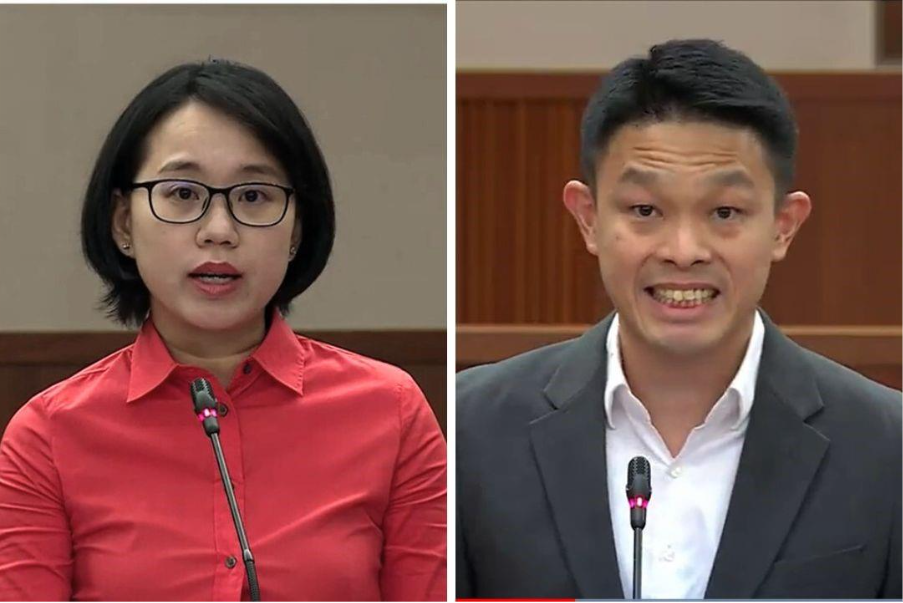
Hany Soh (Marsiling-Yew Tee GRC), Deputy Chairperson of the Government Parliamentary Committee for Education, asked about utilisation rates of ITEs, polytechnics and part-time courses, and whether there are plans to increase openings for working adults.
“During every ITE and polytechnic application period, many qualified residents are disappointed when their preferred courses are oversubscribed—even when their results meet the cut-off,” Ms Soh said. “I urge a comprehensive review of capacity to ensure no qualified student is left on the sidelines.”
Ms Soh added that education financing must be expanded to make pathways truly inclusive.
More support for students with Special Educational Needs: MPs

Denise Phua (Jalan Besar GRC) and Charlene Chen (Tampines GRC) called for greater support for students with Special Educational Needs (SEN) in mainstream and special education (SPED) schools.
Ms Phua highlighted two critical areas needing attention for SEN students in mainstream schools. First, inclusivity remains uneven.
She called for a clearer national tiered framework that defines what every classroom teacher must do, what school-based specialists provide, and what requires multi-disciplinary intervention. Second, teachers must intentionally teach life skills rather than treat them as optional add-ons.
For SPED schools, she urged the government to implement a deliberate manpower strategy as manpower creates the tightest bottleneck. She also stressed the need for a lifelong learning model that integrates academic foundations with work readiness and vocational exposure.
“SPED schools must be launch pads for adulthood, not endpoints. No young person should thrive for years in our SPED schools only to face a drop into uncertainty – that cliff is for us to level.”
Dr Chen said that as inclusion deepens in mainstream schools, the government must ensure support arrives early and scales quickly to reduce classroom pressure.
Ministry of Education officers currently support teachers in identifying social behavioural difficulties through observation and monitoring, she noted.
Dr Chen proposed strengthening this process by incorporating structured executive-function indicators into the existing Primary 1 screening framework.
“This is not diagnostic. It does not label children. It strengthens early planning. It allows schools to identify early on which cohorts may require heavier classroom support — before strain accumulates,” Dr Chen explained.
“When early intervention is effective, behavioural and learning gaps often narrow.”
She emphasised that early eduction and deployment support teachers, strengthen student outcomes, and give parents confidence that “inclusion remains both compassionate and workable”.
SkillsFuture taster sessions enable individuals to make better decisions: David Hoe
The merger of SkillsFuture Singapore and Workforce Singapore has brought lifelong learning to the forefront of MPs’ agenda.
David Hoe (Jurong East – Bukit Batok GRC) proposed having “SkillsFuture taster sessions” – simpler, lighter, and more decision-friendly options at lower costs or no cost.
Mr Hoe noted that Singapore offers a wide and growing menu of courses and subsidies under SkillsFuture. Taster sessions can provide a “broad roadmap of professional pathways”, especially for emerging and specialised areas where interest is high but understanding is often lacking.
He observed that people with stronger networks are more likely to know professionals working in emerging or high-value industries, who can advise on the skills to develop or courses to take to enter these fields.
“Those without the networks or social capital must spend more time, energy and resources figuring out which pathways to take,” he explained. “Our system can help reduce such search costs before decisions are made.”
“SkillsFuture taster sessions can help close the information gap and enable individuals to make better decisions.”
Choo Pei Ling (Chua Chu Kang GRC) argued that lifelong learning must deliver real mobility, not just participation.
She outlined three key concerns. First, outcomes should increasingly focus on sustained progression. “What ultimately matters are longer-term wage growth, employment stability and the quality of skills-job matching,” Dr Choo said.
Second, policymakers need a clear decision-making framework. While a single agency simplifies the journey for learners, jobseekers, and workers, policy priorities sometimes diverge.
“As the new agency will report to both MOE and MOM, how can decision-making gridlocks be prevented?” she asked.
Third, incentives must align properly. ” If retraining does not shift progression pathways, workers will hesitate—regardless of subsidies,” she cautioned.