
To build a truly ‘we-first’ society, Singapore must channel its resources to uplift its most vulnerable.
Over the course of the Committee of Supply debates, PAP MPs have focused on supporting lower-wage families and persons with disabilities.
In an impassioned speech, MP Xie Yao Quan (Jurong Central SMC) called for greater efforts to keep social mobility alive.
The starting points between children from higher- and lower-income families are widening, said Mr Xie. We must “help children at the bottom keep up” and “close the opportunities gap that compounds through life”.
MPs Mariam Jafaar (Sembawang GRC) and Melvin Yong (Radin Mas SMC) echoed similar sentiments. Both called for enhancements to the ComLink+ scheme to support families towards stability and upward mobility.
MP Denise Phua (Jalan Besar GRC), a long-time advocate for disability rights, has called for funding reform, with support based on lifespan instead. This can reduce the post- age 18 cliff that many Persons with Disabilities (PWDs) now face.
“Adulthood is far longer than childhood. A true lifespan model…is the assurance families are asking for.”
Support for lower-income families

Responding to concerns raised by MPs, Minister of State for Social and Family Development Zhulkarnain Abdul Rahim said the government would “redouble efforts to enhance social mobility”.
Over the years, the ComLink+ scheme, which supports around 11,000 families, has been regularly enhanced. Starting this year, all ComLink+ families will receive a new $500 cash payout every quarter, all that is required is that these families take steps toward employment and education goals.
Alongside broad-based initiatives such as SkillsFuture, the government is also rolling out more targeted support to help ComLink+ families secure better-paying work.
One such initiative is the ComLink+ Skills Upgrading Support Pilot, launched in January. Under the new scheme, individuals aged 18 to 39 receive basic living allowances while they pursue full-time education or vocational training. They will also receive a $500 incentive for every three months they remain in training.
“As a society, we need to ensure that no family is trapped by their circumstances (and) no child is defined by their starting point. This is not just a social policy, but a moral responsibility,” said Mr Zhulkarnain.
Uplifting Persons with Disabilities (PWDs) and their families
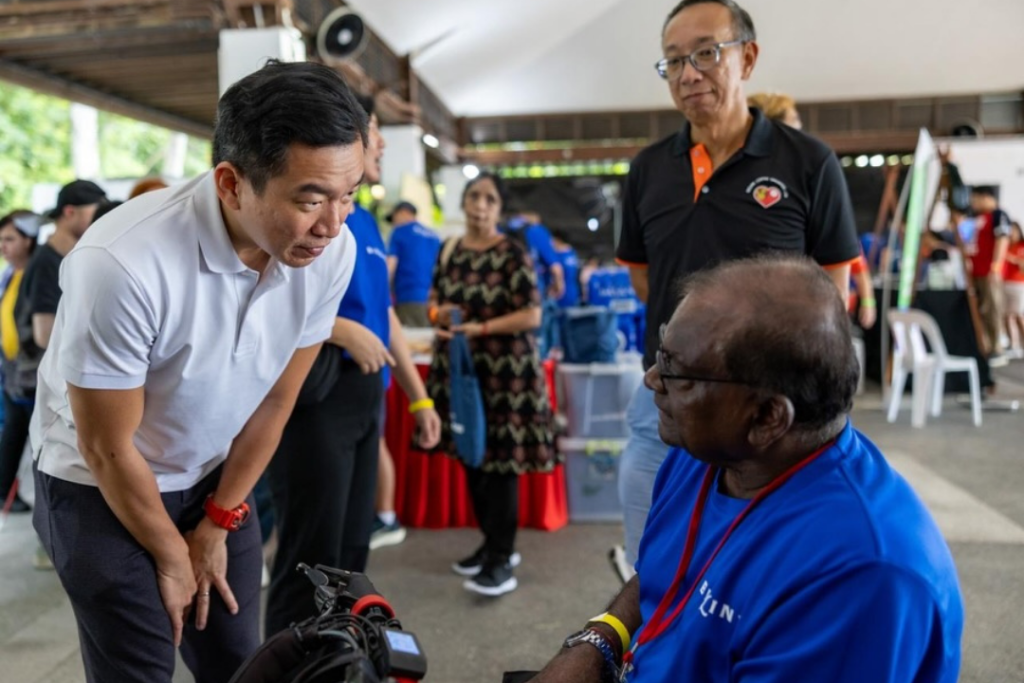
For PWDs and their families, Day Activity Centres (DACs) and Sheltered Workshops (SWs) help provide training and foster friendships in adulthood.
To shorten waiting times at these facilities, the government has pledged to add 1,000 more spaces at DACs and SWs by 2030.
There will also be more support to help PWDs live independently.
Households with per capita income up to $4,800 will now be eligible for subsidies to purchase assistive technology devices and to access community and residential disability services.
“PWDs are not passive recipients of support, they are partners in our shared future,” said Senior Parliamentary Secretary Eric Chua.
Instead, let us shape a “heartful society” and build an inclusive Singapore where everybody can thrive, added Mr Chua as he rounded up the debate.