The PAP Government has affirmed its commitment that the transition to an AI powered economy will not come at the expense of workers and their jobs. It will support workers to seize new opportunities and ensure that displaced workers bounce back.
“The Government has set up clear ambitions to strengthen an AI-enabled economy. But for many Singaporeans on the ground, two questions remain: How can I take part in the AI growth and benefit from it? How can I translate it into fair opportunities for me?” said NTUC Secretary-General Ng Chee Meng, who is also MP for Jalan Kayu SMC.
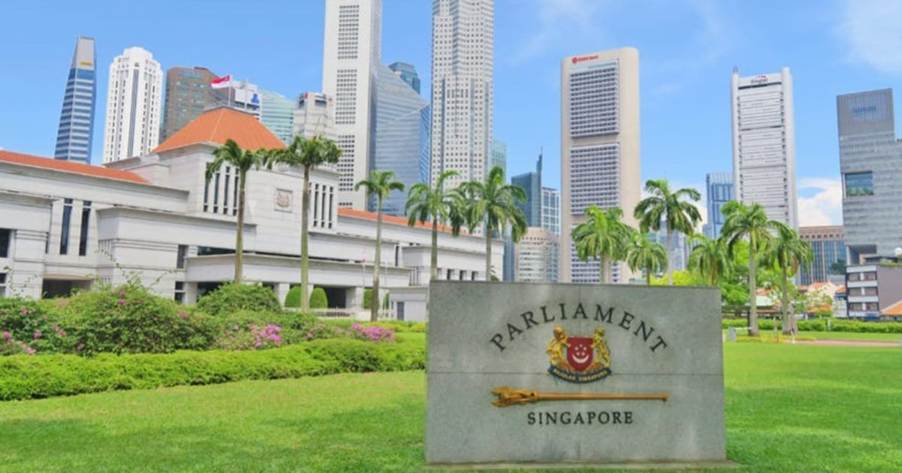
MP Ng brought the worker-centric Motion “An Artificial Intelligence Transition with no Jobless Growth” to Parliament, supported by fellow PAP MPs Saktiandi Supaat (Bishan-Toa Payoh GRC) and Yeo Wan Ling (Punggol GRC) as well as NMP Mark Lee.


Source: MDDI / YouTube, Ng Chee Meng / Facebook
MP Ng called for strengthening outreach to institutes of higher learning (IHLs) so that students can plan their career moves earlier and seize opportunities. For PMEs and mid-career workers, the NTUC Learning Hub will scale up AI training to serve more than 1 million training places over the next few years.
To help workers bounce back, MP Ng called for earlier retrenchment notification so that the e2i career centres can step in earlier for support and training, and for expanding financial support while PMEs transition to new jobs.
“This JSS [Jobs Support Scheme] is pegged to a median income of about $5000. But in the AI era, many PMEs earning above this level may face the same displacement risks and the same need for structured transition support,” said MP Ng. “Adjusting coverage closer to the PME median gross income levels would better reflect the realities of the AI-driven disruption.”
MP Saktiandi spoke on the need to keep access to AI “sustained and affordable”, especially for low-income workers, freelancers, as well as SMEs. This will allow AI to be a force for “inclusive growth”.
MP Yeo called for redesigning jobs while taking worker input into account, reinterating that AI is “not about replacing people but about changing roles”.
Supporting PMEs and foregrounding human judgement
PAP MPs spoke up strongly in support of MP Ng’s motion.
“I hope the Government will consider raising [the Job Seeker Support Scheme] threshold to the gross median in resident PME income — currently at $8,400 as of 2025 — or consider some other suitable schemes of equivalence to address the needs of impacted PMEs,” said MP Patrick Tay (Pioneer SMC), who is one of our Party’s foremost champions for workers.


Source: MDDI / YouTube
“On PMEs specifically, the [Economic Strategy Review (ESR)] Committee recognises that they may face greater job uncertainties and will recommend more targeted support. This includes considering enhancements to the Job Seeker Support Scheme, as Mr. Patrick Tay suggested,” said Minister of State for Digital Development and Information Jasmin Lau.
“ESR is studying ways to encourage earlier retrenchment notifications, as raised by Mr Ng Chee Meng,” she added.
The ESR is a special Government taskforce set up to chart new areas of growth and create new jobs for Singaporeans.


Source: MDDI / YouTube
MP Alex Yeo (Potong Pasir SMC) called the Government to foreground — and not neglect — the human element in AI use.
“AI can generate content, summarize and answer in seconds,” he said. “We need a workforce that can not only use the AI tool to obtain these outcomes, but to work with AI as a collaborative partner, while applying [their own] judgment, reason, creativity and context.”
“For the second half of this year, Singaporeans who enroll in the selective skills future AI courses will receive six months of free access to premium AI tools,” responded Minister for Manpower Tan See Leng. “By tying subsidies to training, we are better able to target those who are more serious about leveling up the use of AI, and we help them to make optimal and responsible use of such powerful tools.”
MP Hamid Razak (West Coast-Jurong West GRC) spoke about ground anxieties from older PMEs, who wonder if their skills still have a place. “Many people cannot just stop their work to train or retrain. They are not asking for guarantees. They are asking simply for a fair chance and a system that they can navigate,” he said.
The new Skills and Workforce Development Agency (SWDA) will help “deliver more timely and effective support”, said Minister Tan. “SWDA will bring the skills and employment facilitation and capabilities of SSG (SkillsFuture Singapore) and WSG (Workforce Singapore) under one roof, making it more seamless, more integrated for individuals and employers to obtain the appropriate support.”
“IMDA will also be expanding the tech skills accelerator program to develop AI-bilingual workers, starting with accountancy, legal and HR professionals. More details will be shared in due course,” continued Minister Tan.
“We have forged a firm commitment to keep our workers and enterprises at the heart of national efforts to seize new opportunities brought about by AI,” said MP Ng in his rounding-up speech.
“To every worker, blue- and white-collar alike, this House stands with you.”