
Parliament passed a private member’s motion on Sept 9, with MPs proposing initiatives to reduce food waste, increase demand for local produce, and supporting local food production, amongst others to enhance food resilience in Singapore.
Four MPs from the Government Parliamentary Committee (GPC) for Sustainability and the Environment, committee chair Poh Li San, deputy chair, Nadia Ahmad Samdin, and members Valerie Lee and Ng Shi Xuan tabled the motion.
They urged the Government to enhance food resilience and reduce food waste, and ensure that Singaporeans have access to affordable food despite geopolitical uncertainties and climate risks.
During the debate, Valerie Lee (Pasir Ris-Changi GRC) and Lee Hui Ying (Nee Soon GRC) called for more support for food rescue initiatives, such as blast chillers to store food for longer periods.
Ms Lee said storage bottlenecks pose a major challenge to food rescue groups such as Food Rescue Sengkang and Fridge Restock Community SG.
Food surplus is often available for only a short window, requiring food rescuers to mobilise volunteers and refrigerated transport, then sort and distribute within hours, she said.
“Could the government work with relevant agencies to identify suitable land or spaces for community food rescue storage, especially to support existing rescue networks?” she asked.
She suggested adapting interim spaces, shared facilities or under-utilised areas for food storage, pointing to unused space around Changi as an example.
Senior Parliamentary Secretary for Sustainability and the Environment Goh Hanyan said the Government will consider these suggestions to strengthen support for enterprises, food charities, and community initiatives as part of the ongoing Zero Waste Masterplan review.
MPs also proposed ways to redirect surplus food to reduce waste. Ms Poh (Sembawang West) proposed creating a nationwide community-dining ecosystem that would serve fresh, hot meals made from rescued food to seniors and lower-income families at convenient neighbourhood locations.
“In a free market, it is not possible to control food prices. However, this initiative would help to substantially lower food expenses for vulnerable groups and ensure they will always have access to affordable food,” she said.
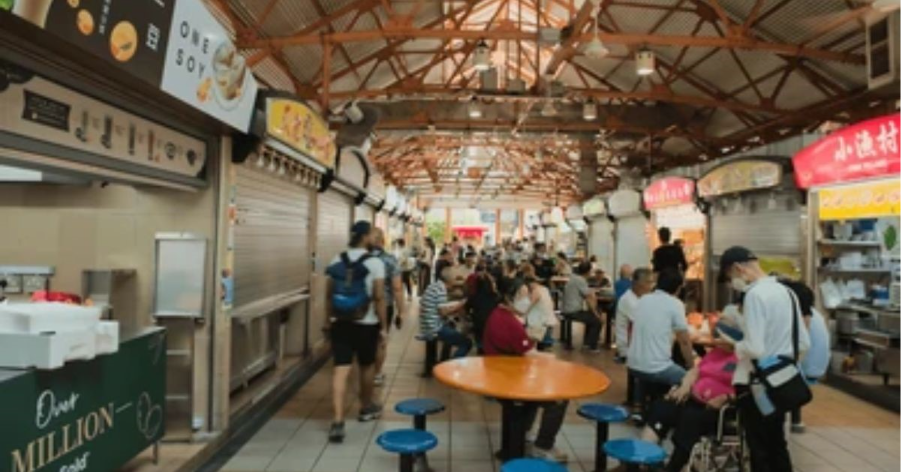
Joan Pereira (Tanjong Pagar GRC) urged the Government to work with community partners to redistribute surplus food from hawker centres to lower-income and elderly residents. She emphasised prioritizing hawker centres in mature Housing Board estates, where higher proportions of these groups live.
Ms Lee Hui Ying had also asked if the government will clarify that food past quality date-marks can still be safe for consumption. These dates—labelled “best before” or “best consumed by”—indicate when a product will be at its best flavour or quality.
Ms Goh said the Singapore Food Agency (SFA) is studying the safety and feasibility of allowing food past quality-based date-marks to be donated while maintaining food safety standards.
“This could enable more edible food to be redistributed rather than discarded,” she said, adding that SFA will share details in 2027.
The Ministry has studied this issue since enacting the Good Samaritan Food Donation Act and Food Safety and Security Act. SFA has stepped up engagement with businesses this year to better understand date-marking practices.

MPs also proposed changes including more support for local food production.
Ms Nadia (Ang Mo Kio GRC) and Ms Joan asked whether the Government would fund farms’ operating expenses and infrastructure needs to ensure they remain viable.
Ms Poh (Sembawang West) proposed raising the national budget for local food production as part of the total defence strategy. This could help local farmers mitigate high land, manpower and utilities costs.
Minister for Sustainability and the Environment Grace Fu said Singapore’s approach focuses on helping farms build the capabilities and scale needed to become commercially sustainable, rather than permanently offsetting higher operating costs.
Since 2019, more than $240 million has been set aside to support local production. The Agri-food Cluster Transformation Fund, established in 2021, helps farms adopt technologies and build capabilities, resulting in productivity improvements.
MPs also suggested ways the authorities can grow demand for local produce.
Cai Yinzhou (Bishan-Toa Payoh GRC) asked if the Singapore Agro-Food Enterprises Federation (SAFEF), a not-for-profit organisation that promotes farmers’ interests, can broker long-term contracts that give farmers reliable buyers before they stock their ponds with fish.
Ms Fu said the government helps local farms become more productive and competitive while strengthening offtake channels and encouraging Singaporeans to buy local.
For instance, SFA is supporting SAFEF’s effort to aggregate supply from farms and match it with demand by developing new channels for institutional buyers and caterers serving large organisations.
Ms Fu said Singapore has built a food system that has “weathered a pandemic, conflicts, and climate stresses.”
“This resilience is the result of deliberate choices and collective effort by the government, the industry, and our people. It must be renewed with every generation,” she added.
“Our commitment is clear: whatever happens beyond our shores, our essential food needs will be met.”