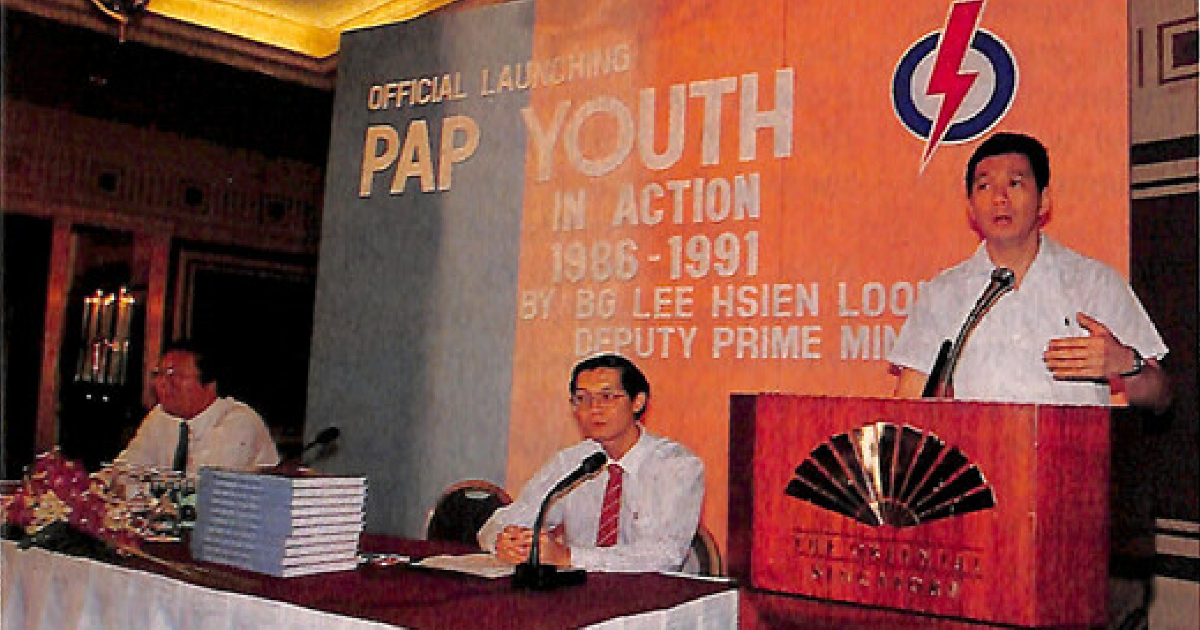
Young PAP (YP), the PAP’s Youth Wing, will celebrate its 40th anniversary this year.
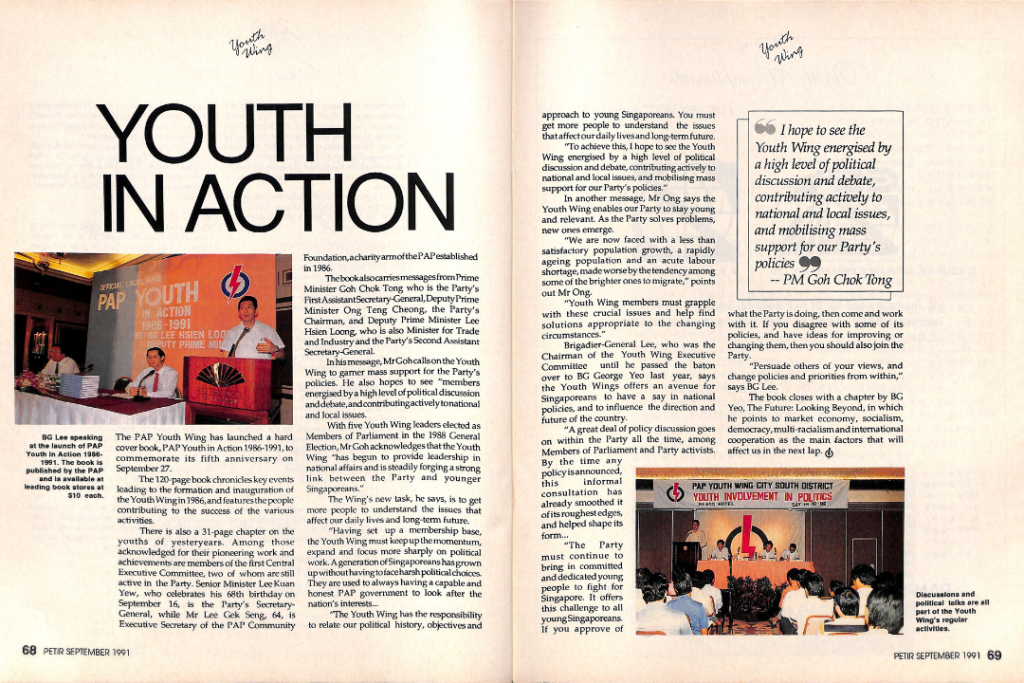
In this Petir article from 1991, YP’s early days and what it hoped to achieve are clearly expressed.
At a book launch commemorating its fifth anniversary, then-Prime Minister Goh Chok Tong called on Youth Wing members to be “energised by a high level of political discussion and debate” and “contribute actively to national and local issues”.
Over the years, YP members have been the voice of young Singaporeans, raising awareness on issues ranging from mental health to climate change, and most recently with AI, tackling youth job insecurity and reskilling. They continue to speak up and drive meaningful change for Singapore.
September 1991
The PAP Youth Wing has launched a hard cover book, PAP Youth in Action 1986–1991, to commemorate its fifth anniversary on September 27.
The 120-page book chronicles key events leading to the formation and inauguration of the Youth Wing in 1986, and features the people contributing to the success of the various activities.
There is also a 31-page chapter on the youths of yesteryears. Among those acknowledged for their pioneering work and achievements are members of the first Central Executive Committee, two of whom are still active in the Party. Senior Minister Lee Kuan Yew, who celebrates his 68th birthday on September 16, is the Party’s Secretary-General, while Mr Lee Gek Seng, 64, is Executive Secretary of the PAP Community Foundation, a charity arm of the PAP established in 1986.
The book also carries messages from Prime Minister Goh Chok Tong, who is the Party’s First Assistant Secretary-General; Deputy Prime Minister Ong Teng Cheong, the Party’s Chairman; and Deputy Prime Minister Lee Hsien Loong, who is also Minister for Trade and Industry and the Party’s Second Assistant Secretary-General.
In his message, Mr Goh calls on the Youth Wing to garner mass support for the Party’s policies. He also hopes to see “members energised by a high level of political discussion and debate, and contributing actively to national and local issues.”
With five Youth Wing leaders elected as Members of Parliament in the 1988 General Election, Mr Goh acknowledges that the Youth Wing “has begun to provide leadership in national affairs and is steadily forging a strong link between the Party and younger Singaporeans.”
The Wing’s new task, he says, is to get more people to understand the issues that affect our daily lives and long-term future.
“Having set up a membership base, the Youth Wing must keep up the momentum, expand and focus more sharply on political work. A generation of Singaporeans has grown up without having to face harsh political choices. They are used to always having a capable and honest PAP government to look after the nation’s interests…
“The Youth Wing has the responsibility to relate our political history, objectives and approach to young Singaporeans. You must get more people to understand the issues that affect our daily lives and long-term future.
“To achieve this, I hope to see the Youth Wing energised by a high level of political discussion and debate, contributing actively to national and local issues, and mobilising mass support for our Party’s policies.”
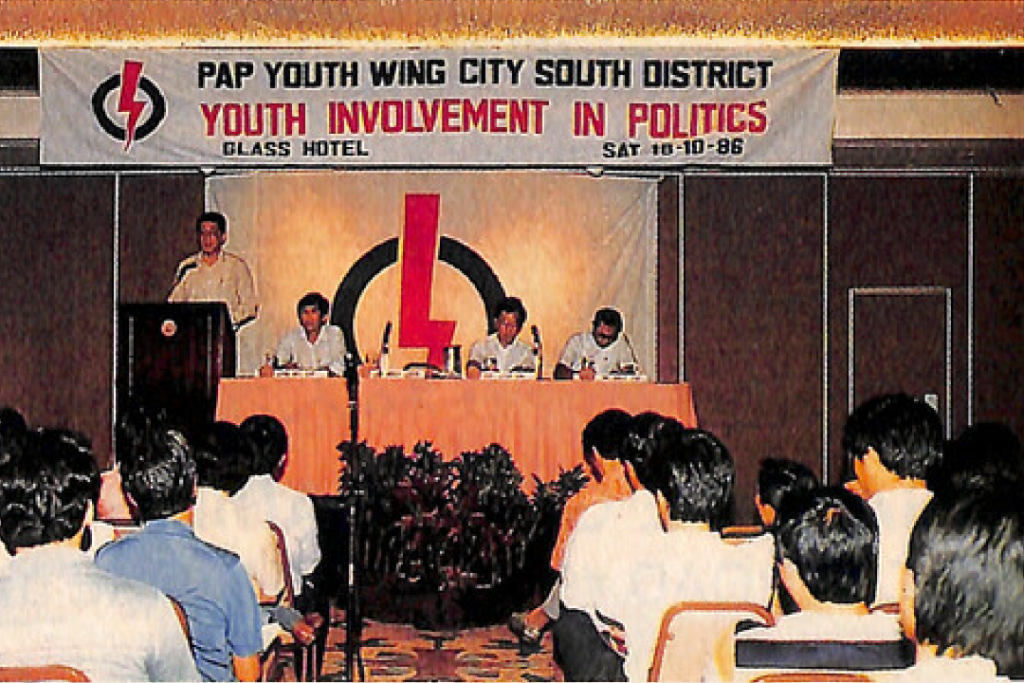
In another message, Mr Ong says the Youth Wing enables the Party to stay young and relevant. As the Party solves problems, new ones emerge.
“We are now faced with a less than satisfactory population growth, a rapidly ageing population and an acute labour shortage, made worse by the tendency among some of the brighter ones to migrate,” points out Mr Ong.
“Youth Wing members must grapple with these crucial issues and help find solutions appropriate to the changing circumstances.”
Brigadier-General Lee, who was the Chairman of the Youth Wing Executive Committee until he passed the baton to BG George Yeo the previous year, says the Youth Wing offers an avenue for Singaporeans to have a say in national policies, and to influence the direction and future of the country.
“A great deal of policy discussion goes on within the Party all the time, among Members of Parliament and Party activists. By the time any policy is announced, this informal consultation has already smoothed it of its roughest edges, and helped shape its form.
“The Party must continue to bring in committed and dedicated young people to fight for Singapore. It offers this challenge to all young Singaporeans. If you approve of what the Party is doing, then come and work with it. If you disagree with some of its policies, and have ideas for improving or changing them, then you should also join the Party.
“Persuade others of your views, and change policies and priorities from within,” says BG Lee.
The book closes with a chapter by BG Yeo, The Future: Looking Beyond, in which he points to market economy, socialism, democracy, multi-racialism and international cooperation as the main factors that will affect Singapore in the next lap.