By Winston Ng
Origins of the Symbiosis
In 1952, a young lawyer named Lee Kuan Yew took on a brief that would quietly shape a nation. The Singapore Union of Postal and Telecommunications Workers was on the verge of a strike against the colonial government. They needed someone to draft their public statements and fight their case in the press. Mr Lee stepped forward.
For two weeks, the union contested the Commissioner for Posts in the papers. Public sentiment swung firmly toward the workers. The Colonial government conceded, granting higher wages and better terms of service.
It was a small victory. But its significance would echo for decades.
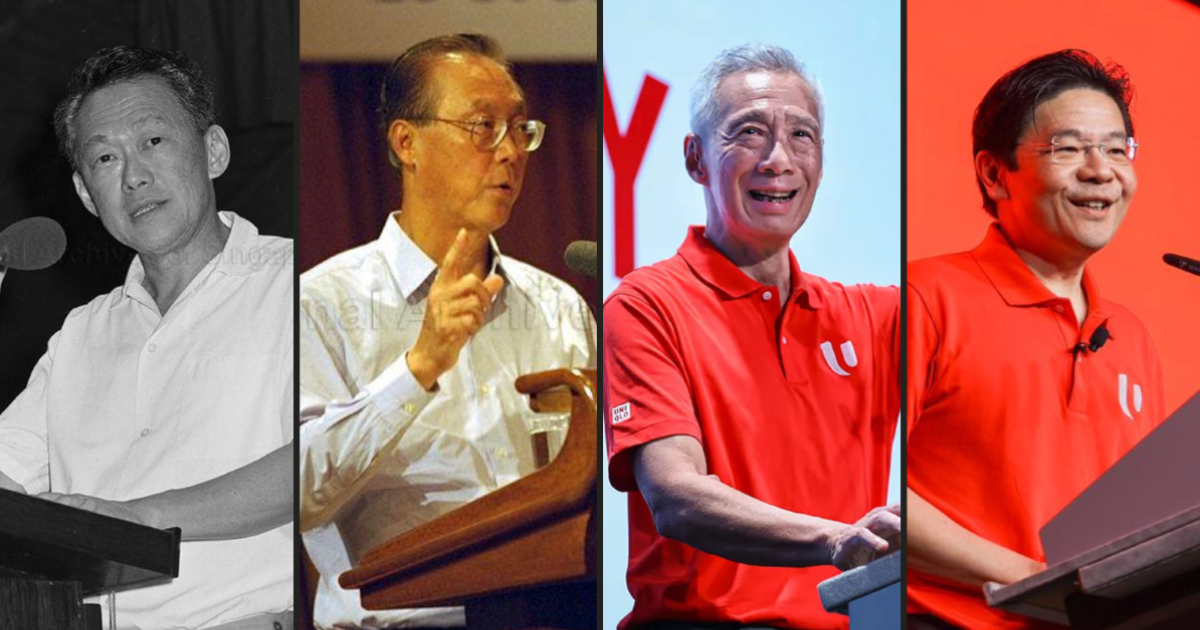
Mr Lee went on to become legal advisor to countless other unions. Those bonds, forged in the heat of colonial-era labour disputes, became the very foundation of what followed. When the People’s Action Party was formally inaugurated on 21 November 1954 at the Victoria Memorial Hall, 1,500 people attended. Two-thirds of them were PAP supporters from the unions. More than half of the party’s first Central Executive Committee pro tem members came from the trade union movement.
As Mr Lee Kuan Yew himself later recalled: “We had grown up in the unions; we had built up our political following working on and through workers’ problems, fighting against unfair treatment and injustice.”
The PAP was not a party that later went looking for union support. It was born from it.
“The PAP will always stand solidly by the NTUC and by workers. You are at the heart of what we do. You are the reason why the PAP was founded. You are the reason why the PAP exists today.”
then-PM Lee Hsien Loong at the 2021 May Day Rally
That relationship was tested in 1961, when disagreements over the Malaysian merger split both the party and the labour movement. The National Trades Union Congress (NTUC) emerged from that rupture, starting with just 12 unions against a rival body’s 82. It was a difficult beginning. But the NTUC endured, and it grew.
The real turning point came in November 1969, when the NTUC convened a landmark four-day Modernisation Seminar at the Singapore Conference Hall, attended by all 47 of its affiliated unions. Senior PAP leaders including Lee Kuan Yew, Goh Keng Swee, and S. Rajaratnam spoke candidly to the delegates. They laid out the harsh realities Singapore faced and made the case for a new kind of unionism; one built on collaboration rather than confrontation.
The seminar produced a formal commitment to that vision. It laid the foundation for Singapore’s tripartite model, a framework in which unions, government, and employers work together in the interest of workers and the nation.
Deepening the symbiosis
The institutionalisation deepened over the following decade. In September 1980, NTUC Secretary-General Lim Chee Onn was appointed Minister without Portfolio, creating a formal channel for workers’ voices to be heard at the Cabinet table before decisions were made. PAP Members of Parliament took on advisory roles in affiliated unions. Union leaders joined statutory boards. The exchange of people and perspectives flowed in both directions.
“That way when worker issues arise, PAP MPs and leaders will have a solid feel and understand the ins and outs of issues and why workers are worried, what their concerns are. And PAP MPs can speak up on behalf of workers in Parliament and show them that they have a voice in the PAP.”
then-PM Lee Hsien Loong at the 2020 PAP Conference urging PAP MPs to engage workers deeply
Today, the vast majority of PAP parliamentarians serve as advisors to unions across the NTUC. They work alongside union leaders to understand the challenges workers face, make policy recommendations in Parliament, support union events, and participate in industry focus groups. Following the 2025 General Election, first-term PAP parliamentarians continue this tradition, keeping the symbiotic relationship between NTUC and PAP warm and strong.
“This symbiotic relationship applies at all levels. Unionists do not just turn up for Party Conferences; they also serve in the constituencies as branch activists. At the leadership level, I keep in close touch with your Secretary-General, the POHs who are in the Labour Movement, and the MPs who are from the Labour Movement. We meet regularly to discuss all major policy issues and take in their views and concerns.”
then-PM Lee Hsien Loong at the 2023 NTUC National Delegates’ Conference
“I want to give all of you my word as the Secretary-General of the PAP: The PAP will never step away from the Labour Movement. We will walk with you as Brothers and Sisters, as comrades, side by side. We will work with you, shoulder to shoulder, for a better and brighter Singapore. This is my promise to you. This is my promise to all workers of Singapore!”
PM Lawrence Wong at the 2025 May Day Rally
The COVID-19 period is arguably the most vivid demonstration of how the PAP-NTUC symbiosis benefits Singaporeans. Targeted policies such as the Jobs Support Scheme (JSS) and SGUnited Jobs & Skills Package rolled out during the Covid period were prime examples of the Labour Movement working in tandem with the PAP government.
When a crisis hits, the PAP and NTUC don’t need a lengthy meeting to figure out who does what — they already trust each other, they share the same goals, and they each bring something different to the table. Together, they formed a complete system: policy designed at the top, delivered and enforced at the ground. Because of the symbiotic relationship, the PAP government and NTUC could react much faster than other countries to protect workers’ livelihoods.
“NTUC was at the frontline of all this – you led the charge to protect our workers. You worked with companies to minimise retrenchments, and to negotiate fair retrenchment benefits. You helped our displaced workers find new roles through the Jobs Security Council. You provided assistance to those who needed it through the NTUC Care Fund and the Self-Employed Person Income Relief Scheme.”
PM Lawrence Wong at the 2025 May Day Rally outlining the contributions of the Labour Movement
What began in a colonial-era courtroom, with a lawyer and a union on the brink of a strike, has become something enduring generation after generation: a partnership that continues to place workers at the centre of Singapore’s story.