
The PAP Women’s Wing will make recommendations to reduce barriers of time and cost for parents. These include more financial support for parents beyond their child’s first seven years and enhance childcare-related leave.
These and other recommendations will be submitted to the Marriage and Parenthood Reset workgroup for consideration.
The recommendations stem from listening sessions the Women’s Wing has held with the public since May. Many Singaporeans have given thier feedback through these listening sessions on supporting marriage and parenthood.
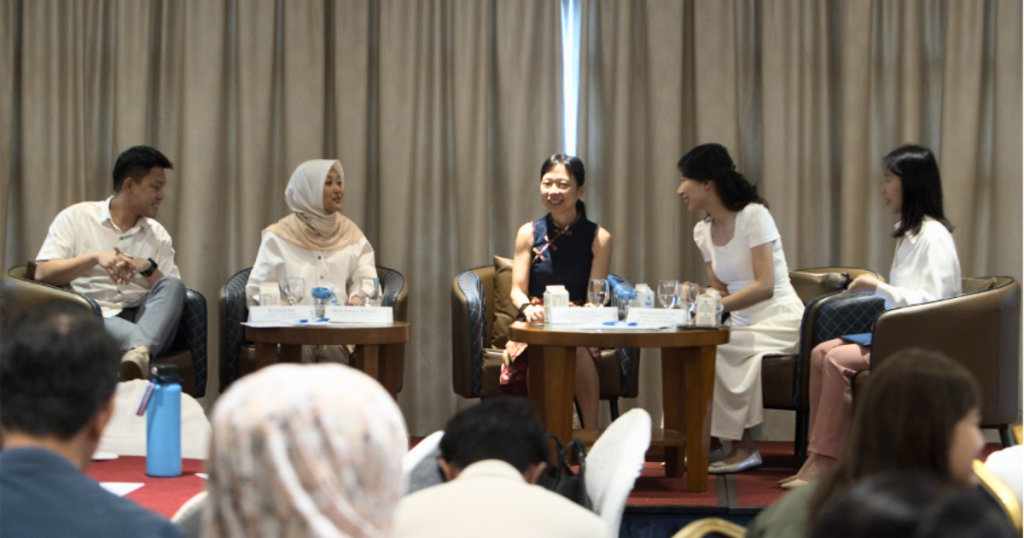
At the sixth session on July 26 at Junction 8 Mall, PAP Women’s Wing vice-chairwoman Gan Siow Huang said that concerns surrounding costs, time, and health emerged consistently across the five previous sessions, which drew more than 500 attendees.
“We know that childcare costs can be quite challenging for families with young children, so we hope that cash payouts, financial support such as Baby Bonus can be extended beyond the first seven years of a child’s life – perhaps even into their teenage years,” said Ms Gan, adding that this could help to better reflect and cover the cost of raising a child today.
The PAP Women’s Wing will also push to extend financial support such as the Baby Bonus Scheme to single unmarried parents in Singapore and to reduce out-of-pocket childcare and infant care fees for parents.
“Even with subsidies for anchor operator centres, middle-income households still pay substantial out-of-pocket costs for childcare and infant care,” said Ms Gan, who is Minister of State for Foreign Affairs, and Trade and Industry.
Parents worry about balancing family care with their careers, Ms Gan said. This challenge is especially acute for those with multiple or older children, who find existing childcare leave insufficient.
“We hope that more can be done to enhance child-related leave for working parents,” she added.
Child-related leave also creates costs for employers. Ms Gan said the Government can do more to support employers in this area, enabling them to better support their employees.
The group will also push the Government to reduce the cost of fertility screening and treatment, said Ms Gan. More Singaporeans are marrying later in life, and more couples need medical help to conceive.
“PAP Women’s Wing calls on the government to do more, strengthen the support for families to overcome challenges on cost, time, and health, so that couples in Singapore will have more confidence to start and raise families,” Ms Gan said.
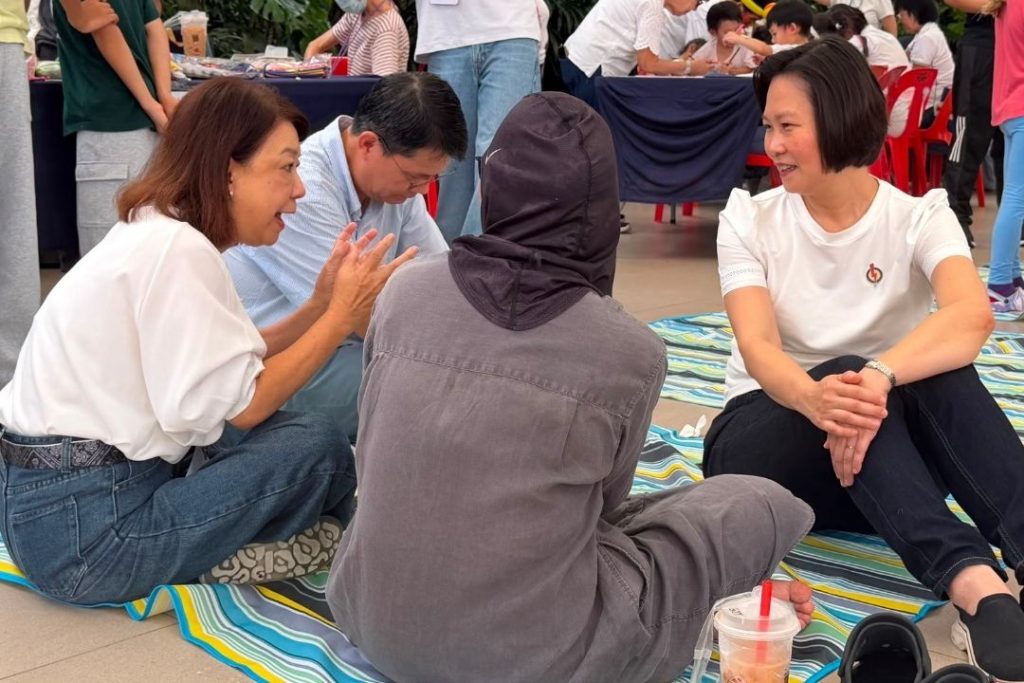
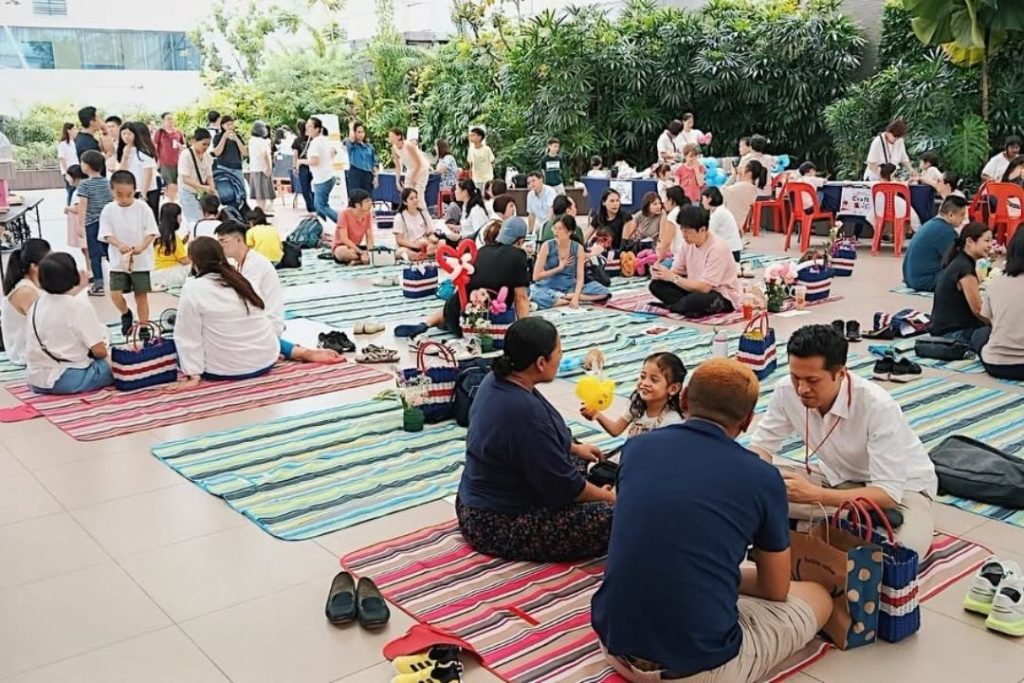
The Bishan session was titled “Making it Work”, and adopted an informal picnic format, where families spoke freely.
It was organised by Elysa Chen (Bishan-Toa Payoh GRC), PAP Women’s Wing Central District Adviser, and Nadia Ahmad Samdin (Ang Mo Kio GRC), PAP Women’s Wing Head (Equipping), who are, themselves, parents of young children.
Ms Nadia said that the team designed a resource toolkit which asks parents probing questions relating to parenting. The questions include: “What do you want for yourself?”, “What kind of support do you want?”, as well as “What kind of changes do you need to make in society?”
“The idea is to take people through a journey,” Ms Nadia said. “We hope that these questions, which invite reflection, can be useful for others as well. We do our best to consider how we can make Singapore more family-friendly and support others in their fertility journey.”
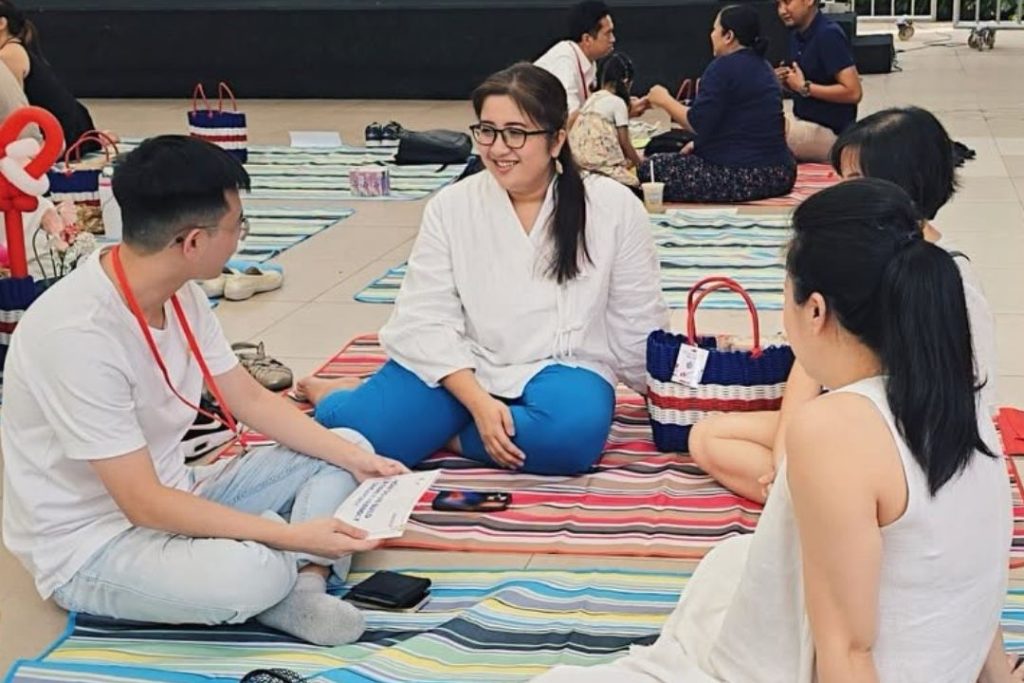
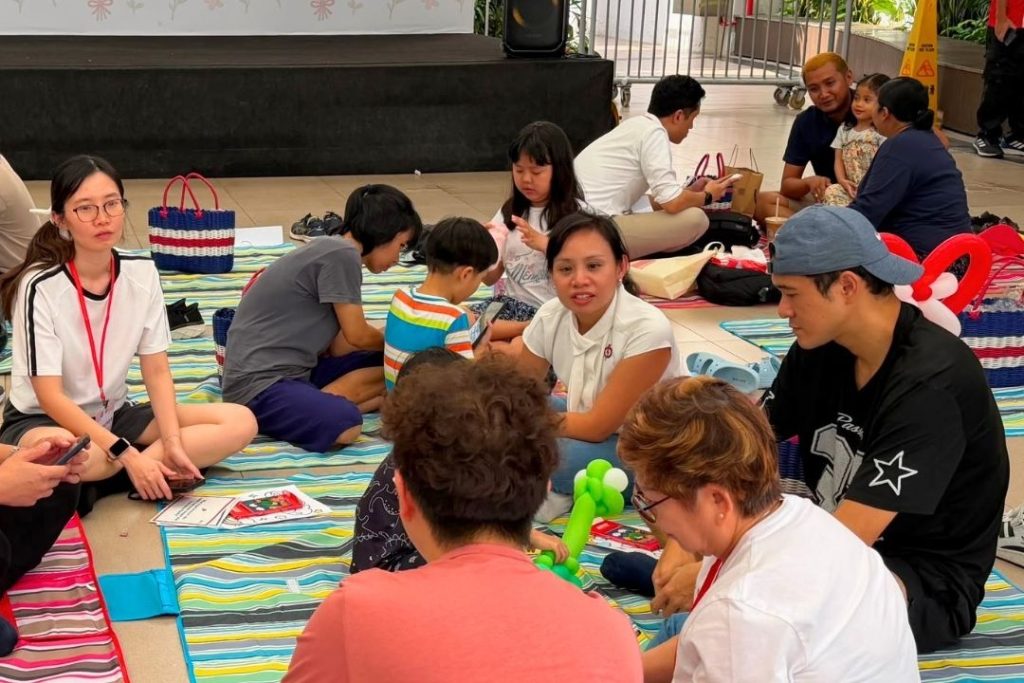
About 120 attendees, including families, came to the session to share their views. Ms Chen shared that several participants identified time and money as key challenges for parenting and building a family. Some participants are single parents or caregivers, and one even has four generations living under one roof.
“I hope that as a society, we become more caring and sensitive to the needs of families,” she said. “Let families inspire us, let children bring us joy, and together we can build a family-friendly Singapore that we can keep up and have.”
Rash, a father of a three-year-old daughter whose wife is expecting their second child, said the session is a good platform that gives parents a valuable opportunity to be heard.
“I hope the government can provide more childcare leave and reduce the financial burden of raising children for lower and middle-income families,” he said.
Mr Chng and his wife, a stay-at-home mother, have two daughters aged four and six. He hopes the government will improve support for such mothers.
“The government offers a $150 childcare subsidy for stay-at-home mothers but $300 for working mothers. This sends a conflicting signal when the government also wants families to have more children,” he said. He added that his family prefers not to hire a helper and believes the government should avoid one-size-fits-all solutions.
Two additional engagement sessions will take place in September. The PAP Women’s Wing will submit its recommendations to the Government’s inter-agency Marriage and Parenthood Reset Workgroup by early 2027.