The National Day Rally (NDR) often sets out the big picture. But for many Singaporeans, the questions that follow are more immediate: How will these policies affect my family? Where will we live? Can we afford to raise children? And how will Singapore continue to develop while protecting the places and spaces that make the country special?
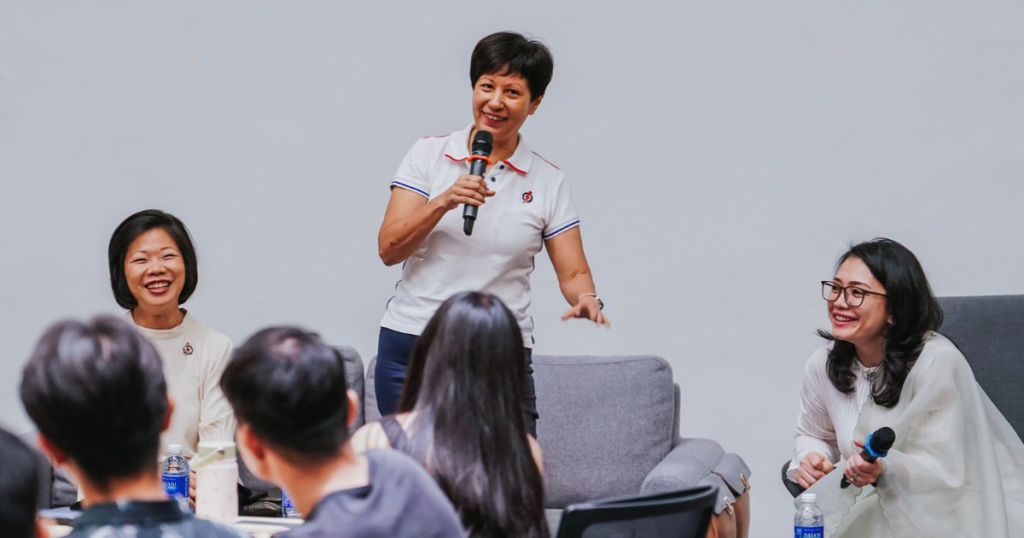
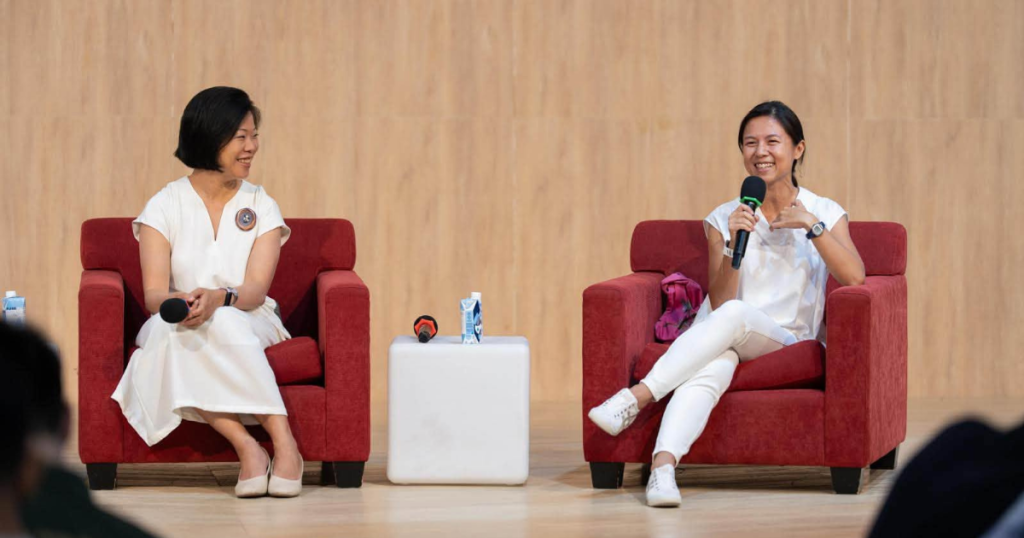
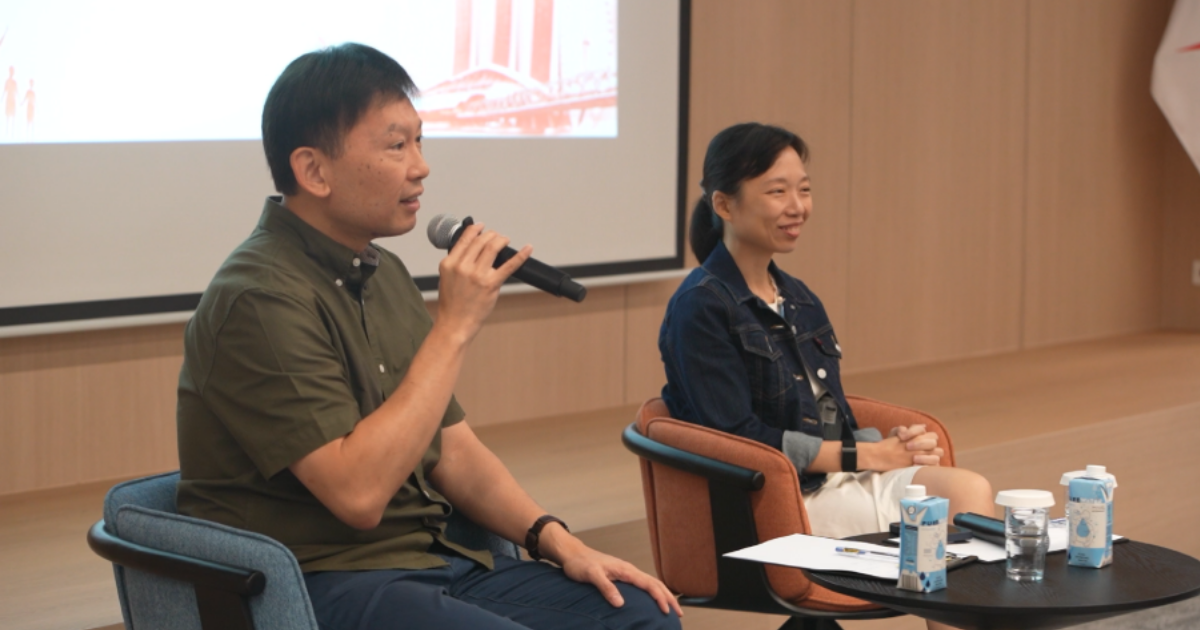
These were among the issues discussed at a post-NDR dialogue on Sunday (30 August), where Minister for National Development Chee Hong Tat and Acting Minister for Manpower Jasmin Lau reflected on the policies announced by Prime Minister Lawrence Wong.
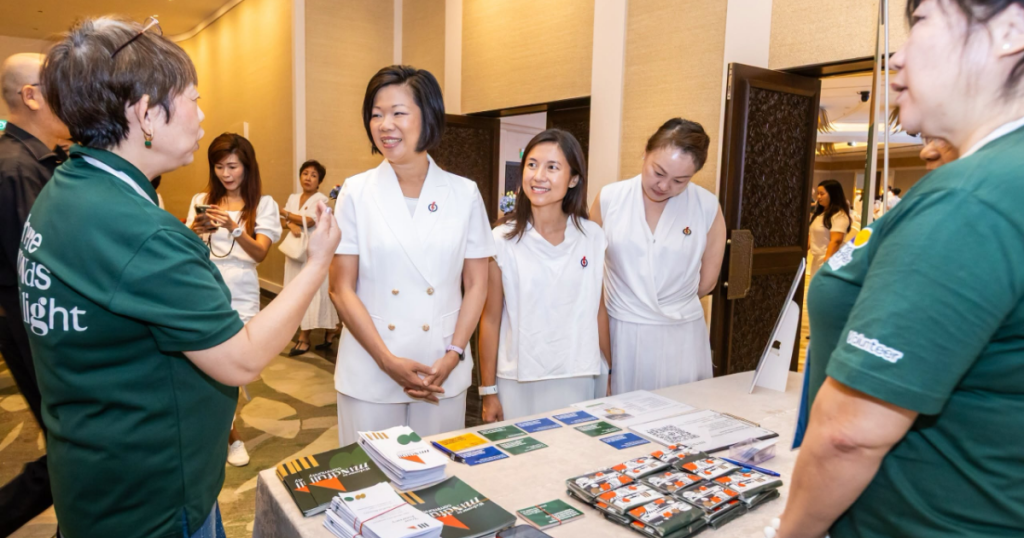
Moderated by Shawn Loh, Head of Research and Advocacy at the PAP Policy Forum and MP for Jalan Besar GRC, the fireside chat brought the ministers together with over 150 activists to discuss housing, parenthood, nature and Singapore’s future.
Supporting parents and making it easier to raise children
For Ms Lau, one of the most important themes from the NDR was how Singapore can better support parents as they raise their children.
That means giving every baby, regardless of the circumstances they are born into, the best chance to succeed, said Ms Lau. Every Singaporean child will receive almost $$70,000 in direct financial support by the time they turn 17, and for the first time, this includes children born to unmarried or single parents.
“At this point, I don’t think we are in a stage where we can pick which babies we want and we can’t,” said Ms Lau candidly.
“Every single Singaporean baby is extremely precious.”
From her portfolio overseeing the Ministry of Manpower, Ms Lau shared that she has received a lot of feedback centred on childcare leave — and on how workplaces can make it easier for parents to take the leave they are entitled to.
Responding to a question about the scope of such leave, Ms Lau said that parents should absolutely take time off to create core memories with their children.
“This is not about taking childcare leave to play. This is about taking childcare leave to build a relationship with your children because we hardly see them in the course of our work,” shared Ms Lau.
While she acknowledged that there can be practical concerns stemming from leaders having to explain the situation to others, or from colleagues having to cover for one another, Ms Lau urged us to think of the policy as something that would help strengthen Singapore and benefit all of us.
Policies that give parents more time with their children are ultimately an investment in Singapore’s future generations, said Ms Lau. More importantly, by making family-friendly practices a normal part of working life, we can generate a virtuous cycle.
“Those of us who are parents…when our children are older, we will pay back in so many other ways. We will do our part for future parents or for singles caring for their elderly. That’s the kind of society that we are trying to build.”
PAP has always been a party that values nature and heritage
The discussion also touched on the plans to develop Singapore, while keeping sustainability and the environment central. This connects to the broader question of how the country can continue to grow while remaining a City in Nature.
Minister Chee highlighted that conservation and development need not be treated as competing goals. It is not a choice between “developing everything” or “don’t touch at all – zero development”, he said.
“If you look at what we have done over the years, since the days of Mr Lee Kuan Yew, we have always been a party that values nature (and) heritage.”
Mr Chee pointed to the preservation of historic shophouses in Chinatown as an example of how Singapore has chosen to retain important parts of its heritage even when redevelopment could have made more efficient use of scarce land.
That same approach, he said, is taken towards nature.
“Almost half of Singapore’s land area, 47%, is greenery. And we don’t intend to stop here,” said Mr Chee.
Singapore will add another 1,000 hectares of green spaces, bringing the total area of greenery to 8,800 hectares within the next decade. This will include more parks and green spaces closer to homes, which provide an additional third space for individuals to relax or for the community to get together.
“By 2030, we will add more than 25 new parks and 50km of additional park connectors. Our vision is for all households in Singapore to be within a ten-minute walk to a park,” said Mr Chee.
Mr Chee shared that the Kranji Nature Corridor, when completed, will connect the Central Catchment Nature Reserve with the Mandai Mangrove and Mudflat Nature Park. The government understands the importance of sustainability, not just for Singaporeans, but for living creatures that we have a responsibility for.
“This connectivity is important because […] it’s contiguous, it’s linked up that I think it’s important for the flora and fauna. So this has to be a science based approach that we want to work closely with our nature group partners and our stakeholders,” said Mr Chee.
“We want to consult them for their views on how to do this. Within government and Nparks, we will also have the expertise, but we supplement this with partnership with our nature groups and our experts.”
This includes any other potential developments. To date, the government continues to engage with nature groups to understand the environmental impact.
“We want to make sure that we incorporate their expert views as we design the final plans,” said Mr Chee.
“We’ll try to preserve as much of the marine biodiversity as possible (and) minimise and mitigate the impact.”
Building more homes for Singaporeans
Housing was another major part of the discussion, with activists raising questions about how Singapore can meet the different housing aspirations of Singaporeans.
As more singles choose to live near their parents while maintaining their own households, there has been a growing demand for homes even as the overall population is not growing rapidly.
To address this, Mr Chee shared that the government intends to increase the number of two-room flexi flats by 50% over the next three years.
“I intend to ramp up the supply to meet the strong demand from seniors and singles, and hopefully this will improve the application rates,” said Mr Chee.
Another participant noted that allowing singles to apply for HDB flats at a younger age could make them more attractive on the dating market and improve our fertility rate.
While the suggestion drew laughter from the crowd, Mr Chee said the idea had to be considered alongside housing availability, since increasing demand without increasing supply could lead to more competition for flats.
“But I’m sympathetic to this group of singles who say, can you please allow me to apply earlier?” shared Mr Chee.
With more young people seeking space and independence, Mr Chee said the government is exploring various ideas, including more affordable rental options. A new co-living arrangement with private operators, announced in July as part of the SG Youth Plan, is one example that aims to plug this gap.
A common thread that ran through the discussion revolved around how we can continue building a better future for Singaporeans at every stage of life.
For families, that means creating more support for parents and making it easier for them to spend time with their children. For housing, it means building ahead to meet changing household needs. For nature and heritage, it means finding ways to preserve Singapore’s green spaces and historic places while continuing to develop the country.
These ambitions may not always be easy to balance, but they reflect what Singapore has always done best — looking ahead, making thoughtful choices and building for the long term.