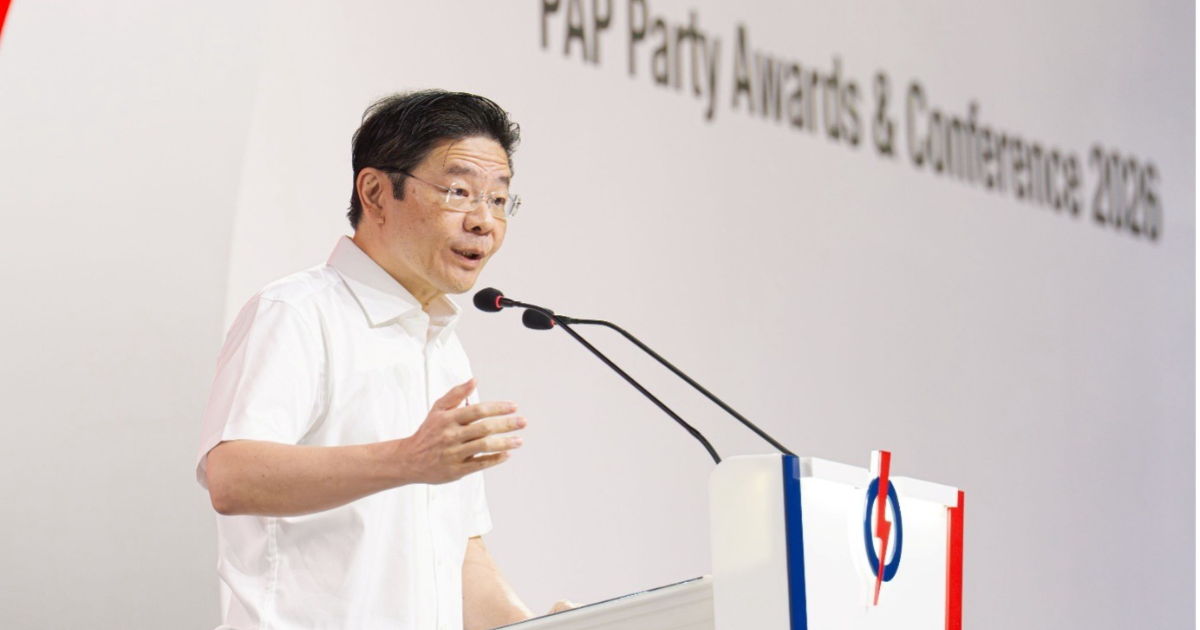
“A mandate is not an entitlement. It is a responsibility to deliver what we promised. That is why we must never take the trust of Singaporeans for granted.”
At the PAP Party Awards and Conference on Sunday (Oct 25), Secretary-General Lawrence Wong laid out what the Party must do to maintain that trust and prepare Singapore for the road ahead.
Sec-Gen Wong, who is also Prime Minister, stressed that the PAP must be a Party that “listens, acts and delivers” and always “puts Singapore and Singaporeans first”.
Failing to do so will result in grave consequences. History has shown that when the social contract between people and government breaks down, the result is often widespread unrest. That is a path Singapore must not go down.
In his address, PM Wong reiterated the Government’s commitment to address concerns over retirement, education and housing. He also pledged to tackle the cost-of-living pressures by creating better jobs and strengthening support for those in need.
“Our task is not just to keep the economy growing but to ensure that growth growth translates into better lives for all Singaporeans,” he said.
A Government that delivers must think long-term
Besides addressing the issues of today, a government must be able to think long-term and foresee the problems of tomorrow. That, according to PM Wong, is what it means to deliver a better life from one generation of Singaporeans to the next.
This require weighing difficult trade-offs and making plans for the future, even when the decisions may be unpopular. PM Wong referred to recent announcements from Indonesia that gas exports to Singapore would be cut.
“We have been preparing for such risks. That’s why we invested in LNG (Liquid Natural Gas) terminals to import natural gas from different countries, without having to rely on pipelines.”
The government makes long term plans for Singapore’s energy needs. This includes studying potential sources of clean energy, including nuclear energy. Decisions like these require weighing the risks and trade-offs carefully, while making sure that safety must always come first.
PM Wong also warned that Singapore cannot make decisions based only on what is popular at the moment, nor let populist politics take root.
“We cannot simply tell everyone what they want to hear, or promise everyone what they hope to get,” said PM Wong. “Above all, we must never allow our politics to become so divided that we lose the ability to work together for the sake of Singapore.”
PM Wong pointed to the shifting sands of opposition positions on housing and foreign manpower as examples of how parties can change their stance to appeal to voters.
Describing their approach as “not always coherent”, PM Wong noted that the Workers’ Party had called for fewer flats to be built in 2019 when resale flat prices were falling, only to criticise the Government for not building enough flats four years later.
The WP has done so “without acknowledging its earlier position, or fully accounting for the impact of Covid disruptions on housing supply”, said PM Wong.
This was hardly the first time WP performed a volte-face.
Back in 2012, the WP had called for more flexibility when the Government tightened foreign worker policies. Later, it reversed positions by proposing zero growth in the foreign workforce. Most recently, they have reversed this position again, by calling for quotas to be eased when SMEs faced manpower shortages.
While such policy flip-flops might garner support, it is important to understand the wider consequences of any change, said PM Wong. Even a relatively small adjustment to Work Permit and S Pass rules, for instance, can lead to substantial increases in the number of foreign workers across the economy.
“This is part of opposition politics,” said PM Wong. “It is easier to argue for a particular position when you do not have to reconcile all the competing demands, or take responsibility for the outcome.”
As the governing Party, the PAP cannot afford such a philosophy. Instead, it must always consider the interests of Singapore and Singaporeans as a whole, not just those who speak up most loudly, but also those whose concerns are less visible.
“We have to weigh the competing needs, make difficult choices, and take responsibility for the consequences. That is our approach.”
PAP must remain Party for all Singaporeans
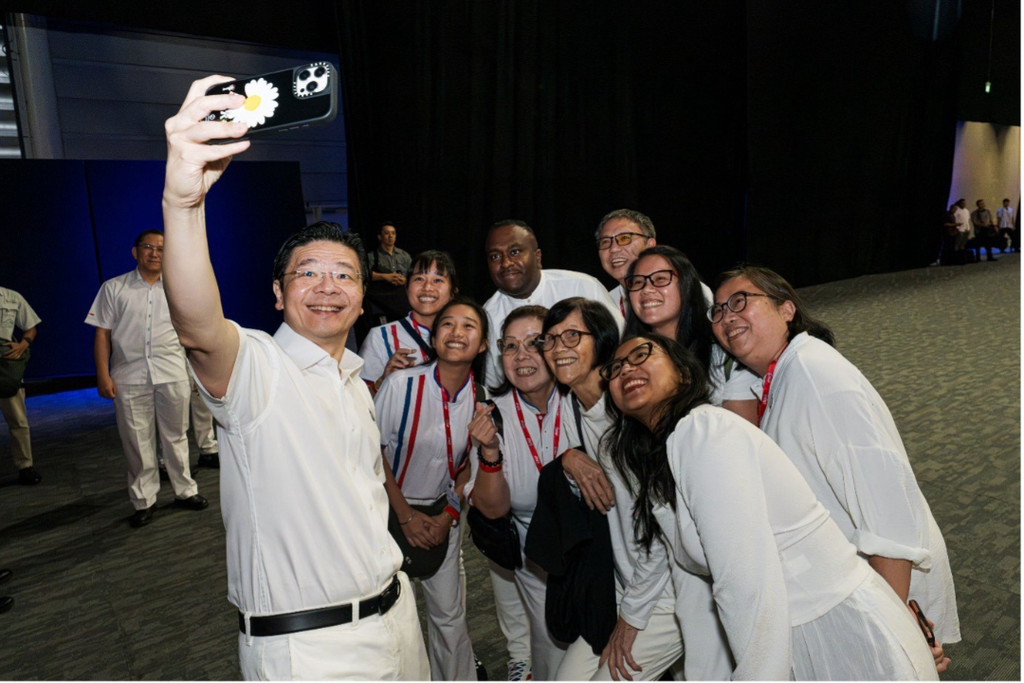
At a time when political parties around the world are increasingly drawn towards narrower, more hardline and populist positions, PM Wong called on the PAP to remain a broad-based Party – one that listens to Singaporeans from all walks of life, embraces different perspectives, and continues to evole to meet the changing needs and aspirations of our people.
PM Wong said the PAP will continue to expand its networks and create more opportunities for people from different backgrounds and professions to engage with the Party.
He also credited the effort of PAP activists who are our eyes and ears on the ground – listening to Singaporeans, understanding their concerns, and helping the Government improve its policies.
“Over the past year, our activists have been discussing the issues that matter to Singaporeans. These conversations matter… sometimes it will show us that things are not working as we intended – and we must change the policies.”
Concluding his speech, PM Wong urged the Party to work hard at building trust with Singaporeans.
“We have to earn it – through what we deliver, how we conduct ourselves, and how well we serve Singaporeans and connect with them,” he said.
By listening, learning and planning long-term, that is how the PAP can remain relevant to Singaporeans across generations and communities.