Stories that we dig out From The Archives are a good reminder of the legacy of service that generations of PAP MPs, activists and volunteers have contributed to.
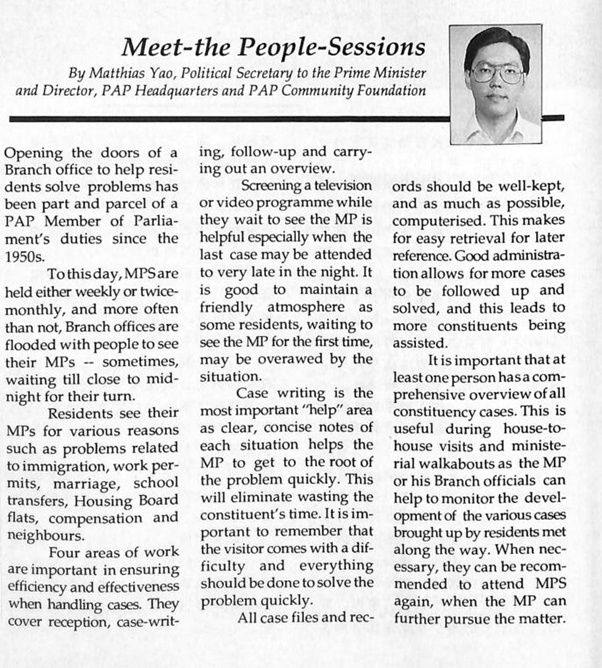
In this Petir article from 1991, Mr Matthias Yao wrote about best practices in conducting Meet-The-People Sessions. He highlighted the importance of putting residents at ease, with many seeking help for the first time.
“Residents see their MPs for various reasons such as problems related to immigration, work permits, marriage, school transfers, Housing Board flats, compensation and neighbours,” wrote Mr Yao.
Mr Yao’s words remind us that the things that truly matter to people, do not change. A better life, better opportunities, jobs, love and family, education for their children, housing.
To our PAP volunteers today, who show up every week to set up the chairs, write appeal letters, listen to residents and solve their problems – know that your work continues a remarkable tradition of service, helping people in ways that truly matter.
____________________
Feb 1991
By Matthias Yao, Political Secretary to the Prime Minister and Director, PAP Headquarters and PAP Community Foundation
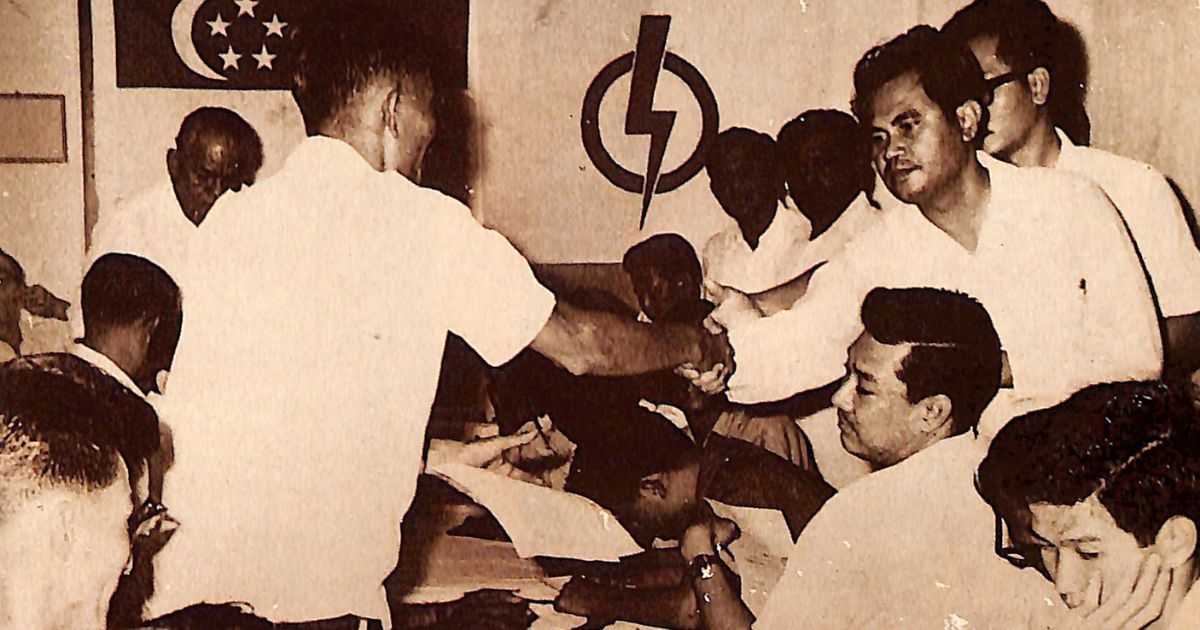
Opening the doors of a Branch office to help residents solve problems has been part and parcel of a PAP Member of Parliament’s duties since the 1950s.
To this day, MPs are held either weekly or twice-monthly, and more often than not, Branch offices are flooded with people to see their MPs — sometimes, waiting till close to midnight for their turn.
Residents see their MPs for various reasons such as problems related to immigration, work permits, marriage, school transfers, Housing Board flats, compensation and neighbours.
Four areas of work are important in ensuring efficiency and effectiveness when handling cases. They cover reception, case-writing, follow-up and carrying out an overview.
Screening a television programme while they wait to see the MP is helpful especially when the last case may be attended to very late in the night. It is good to maintain a friendly atmosphere as some residents, waiting to see the MP for the first time, may be overawed by the situation.
Case writing is the most important “help” area as clear, concise notes of each situation helps the MP to get to the root of the problem quickly. This will eliminate wasting the constituent’s time. It is important to remember that the visitor comes with a difficulty and everything should be done to solve the problem quickly.
All case files and records should be well-kept, and as much as possible, computerised. This makes for easy retrieval for later reference. Good administration allows for more cases to be followed up and solved, and this leads to more constituents being assisted.
It is important that at least one person has a comprehensive overview of all constituency cases. This is useful during house-to-house visits and ministerial walkabouts as the MP or his Branch officials can help to monitor the development of the various cases brought up by residents met along the way. When necessary, they can be recommended to attend MPS again, when the MP can further pursue the matter.